

Becoming a neurosurgeon is one of the most respected and rewarding jobs in Nepal. These doctors do operations on the brain and spine that save lives every day. With this big duty also comes high pay, making neurosurgery one of the top-paying jobs in the medical field. If you want to know how much a neurosurgeon earns in Nepal, this guide will give you a clear picture.
Table of Contents
- The Critical Role of Neurosurgery
- Understanding the Role of a Neurosurgeon in Nepal
- What Neurosurgeons Do
- Working Together with Other Doctors
- Becoming a Neurosurgeon in Nepal
- Long Years of Study and Training
- Learning New Skills and Keeping Up-to-Date
- Average Salary Ranges
- Salary Progression by Experience Level
- Public vs. Private Hospitals: Big Differences in Pay
- Urban vs. Rural Work: How Location Affects Salary
- Key Factors Affecting Neurosurgeon Salary in Nepal
- 1. Special Skills and Extra Focus Areas
- 2. Modern Surgery Methods
- 3. Reputation, Patients, and Recommendations
- 4. Emergency Work
- 5. Hospitals and Equipment
- Beyond the Base Salary
- 1. Extra Money for Good Work
- 2. Private Check-Ups and Extra Work
- 3. Teaching, Research, and Learning
- 4. Extra Benefits to Keep Top Doctors
- The Future Scope for Neurosurgeon Salaries in Nepal
- More Need for Special Doctors
- New Technology and How It Helps Pay
- Opportunities from Patients from Other Countries
- Government Rules and Changes
- Conclusion
The Critical Role of Neurosurgery
Neurosurgery is one of the hardest and most advanced parts of medicine. In Nepal, neurosurgeons save lives by treating people with brain tumors, spinal cord injuries, strokes, and other serious problems. Their work is very delicate and needs steady hands, quick thinking, and calmness even in very hard times. Because they deal with life-and-death cases, neurosurgeons are some of the most important and respected doctors in hospitals.
Becoming a neurosurgeon is not easy, it takes many years of study, training, and practice. The journey starts with an MBBS degree and then continues with special studies in neurosurgery. This long and costly process is the reason why neurosurgeons are among the highest-paid doctors in Nepal. In this guide, we will explain their salary, career growth, and the main things that affect how much they earn in government and private hospitals.
Understanding the Role of a Neurosurgeon in Nepal
What Neurosurgeons Do
In Nepal, neurosurgeons look after some of the hardest health problems. They treat people with brain tumors, spinal cord injuries, strokes, and serious accidents. Their job is not only to do surgery. First, they check the patient and find what is wrong. Then they give advice on treatment, do operations if needed, and also care for the patient after surgery. They often do big life-saving operations like brain surgery and spine surgery. Because of these important jobs, neurosurgeons are seen as very important and are also among the best-paid doctors in Nepal.
Working Together with Other Doctors
Neurosurgeons do not work alone. To treat patients well, they work together with other doctors. They join with radiologists who read scans, oncologists who treat cancer, and anesthesiologists who give medicine to make patients sleep during surgery. In big hospitals in Kathmandu, Pokhara, and other cities, this teamwork helps patients get the right test results and safe treatment. Working in a team also helps the neurosurgeon become more trusted, treat more patients, and earn more money.
Becoming a Neurosurgeon in Nepal
Long Years of Study and Training
To become a neurosurgeon in Nepal, a doctor must first complete an MBBS degree. After that, they need to study further with special training in neurosurgery, like MS or MD. This training includes many years of working in hospitals as a resident, learning by doing surgeries and helping senior doctors. It is very competitive because only a few doctors get the chance to become neurosurgeons. Because it takes many years of study and practice, neurosurgeons earn more money than a regular MBBS doctor in Nepal.
Learning New Skills and Keeping Up-to-Date
Medicine keeps changing, and neurosurgery also changes with new technology and methods. Neurosurgeons must keep learning to stay good at their work. Many take extra training or fellowships in special areas like children’s brain surgery, spine surgery, or blood vessel surgery in the brain. Learning new skills helps them do better surgeries, take care of patients safely, and also earn more money. Continuous learning is a big part of being a successful neurosurgeon.
Average Salary Ranges
There is not much official information about how much neurosurgeons earn in Nepal. But it is estimated that a neurosurgeon can earn between NPR 2,50,000 and more than NPR 10,00,000 per month. The big difference in pay happens because it depends on many things. These include how much experience the doctor has, the city they work in, and whether they work in a government hospital or a private hospital. Compared to an average doctor in Nepal, neurosurgeons earn more because they have special skills. They do very difficult surgeries that often save people’s lives.
Salary Progression by Experience Level
A neurosurgeon’s salary usually grows as they gain experience, skills, and reputation:
- Junior Consultant (1–4 years): In the beginning, neurosurgeons earn less because they are still learning, usually around NPR 80,000 to 200,000 per month. They help senior doctors during big surgeries and may do smaller operations by themselves. The main focus at this stage is to learn and gain experience.
- Mid-Career (5–10 years): After some years, neurosurgeons become more skilled and their salary increases to around NPR 200,000 to 500,000 per month. They can handle difficult surgeries on their own and also earn extra money by giving private consultations or doing smaller surgeries outside their hospital.
- Senior Consultant (10+ years): Senior neurosurgeons are very experienced and usually earn around NPR 500,000 to 1,000,000+ per month. They lead teams, guide junior doctors, and do the most difficult surgeries. Many also earn extra from private hospitals, visiting clinics, or teaching in medical colleges.
Public vs. Private Hospitals: Big Differences in Pay
Neurosurgeons working in government hospitals get a fixed salary every month. They also get benefits like pensions, health insurance, and job security. The pay is steady but not very high. Private hospitals and clinics usually pay more. They give extra money for surgeries, consultation fees, and performance bonuses. Some private hospitals share income from expensive operations. Because of this, many neurosurgeons choose to work in private hospitals or combine government work with private consultations to earn more.
Urban vs. Rural Work: How Location Affects Salary
Where a neurosurgeon works also affects how much they earn. In big cities like Kathmandu and Pokhara, salaries are higher because there are many private hospitals, better facilities, and patients who can pay more. In rural areas, salaries are lower, but living costs are also lower. Working in rural hospitals can be very rewarding because neurosurgeons help people in areas with fewer medical services. Sometimes, the government also gives extra rewards to doctors who work in remote places.
Key Factors Affecting Neurosurgeon Salary in Nepal
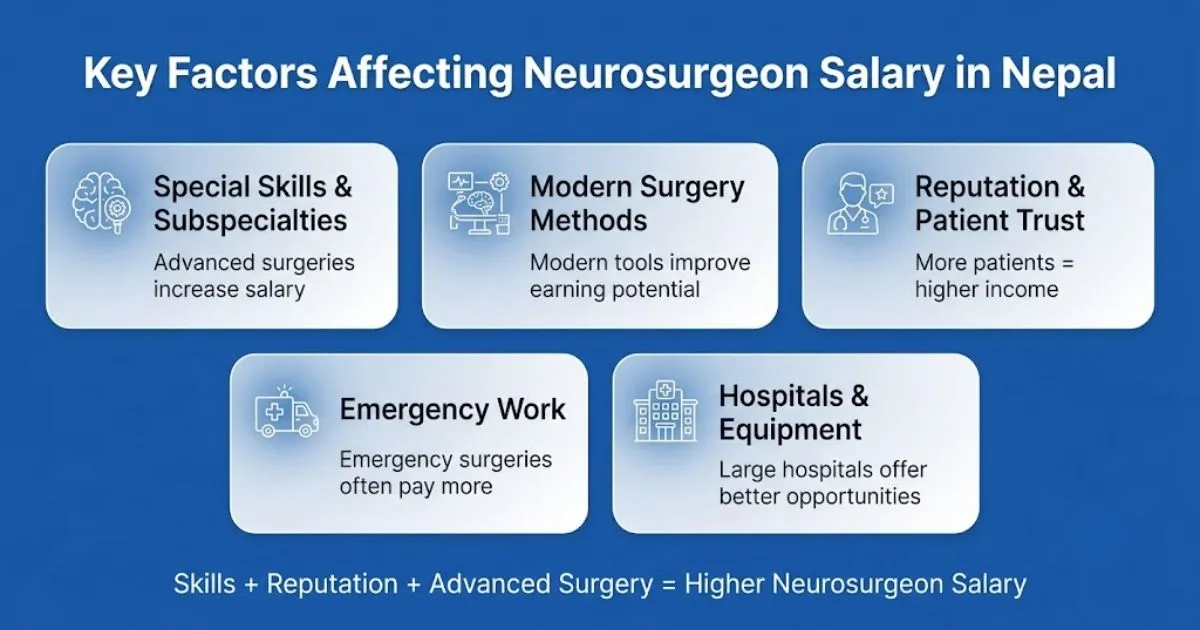
Neurosurgeon salary in Nepal is not the same for every doctor. It can be different from one person to another. It depends on things like their skills, experience, type of hospital they work in, and how many special surgeries they do. Doctors who are more skilled and work in well-equipped hospitals usually earn more money than others.
1. Special Skills and Extra Focus Areas
Some neurosurgeons focus on special areas like brain cancer surgery (neuro-oncology), spine surgery, or blood vessel surgery in the brain (vascular surgery). These special areas are called subspecialties. Surgeons who can do these hard surgeries are needed more because very few doctors can do them. Hospitals and patients are ready to pay more for these special surgeries. Surgeons with these skills can also work in more hospitals, teach students, or do research. This helps them earn more money.
2. Modern Surgery Methods
Neurosurgeons who learn to use new tools and modern surgery methods can earn more money. For example, minimally invasive surgery uses smaller cuts. Smaller cuts help patients get better faster and make surgery safer. Neuronavigation is a new tool. It helps surgeons operate on the brain and spine very accurately. Surgeons who use these tools get more patients, earn more money, and are trusted more by hospitals and people.
3. Reputation, Patients, and Recommendations
Having a good reputation is very important for earning more money. When patients trust a neurosurgeon, they come back for check-ups and tell their friends and family. Other doctors also send patients to trusted surgeons. More patients and more recommendations mean the neurosurgeon can do more surgeries and consultations. This directly increases their income. A good reputation takes time, skill, and careful attention to patients.
4. Emergency Work
Neurosurgeons often work at night, on weekends, or during emergencies. Emergency surgeries, like accidents, brain bleeding, or spine injuries, are very hard and often pay more. Many neurosurgeons earn a big part of their income from these emergency surgeries. Working extra hours and handling emergencies helps increase earnings. It also makes the surgeon more respected and trusted by patients and other doctors.
5. Hospitals and Equipment
Where a neurosurgeon works affects how much they earn. Hospitals with modern machines and better facilities, like Norvic, Grande, or other big hospitals in Kathmandu, can charge more for surgeries. Neurosurgeons in these hospitals can do advanced surgeries and help more patients. Better equipment lets surgeons handle difficult surgeries, which helps them earn more money.
Beyond the Base Salary
1. Extra Money for Good Work
Many private hospitals give extra money to neurosurgeons for doing a good job. This is called performance-based pay. It can include bonuses or a share of the money earned from surgeries, check-ups, or special treatments. For example, a neurosurgeon who does more hard surgeries or sees more patients can get extra money. These bonuses help increase their total monthly income. Hospitals give this extra money to make doctors work better and take good care of patients.
2. Private Check-Ups and Extra Work
Many neurosurgeons also run their own private clinics or work as visiting doctors in other hospitals. This lets them see more patients and earn more money. For example, a neurosurgeon may work in one hospital and also see private patients in another clinic. This is very common in Nepal. Doing private check-ups and extra work can sometimes double or even triple a neurosurgeon’s total income, depending on how many patients they see and surgeries they do.
3. Teaching, Research, and Learning
Some neurosurgeons earn extra money by teaching students or doing research projects. Teaching helps students learn important skills, and hospitals or colleges pay doctors for this work. Research projects, like studying new surgery methods or patient treatments, also give extra money. These activities not only give more income but also help neurosurgeons improve their skills, learn new ways to do surgery, and stay updated with new medical knowledge. Being more skilled and respected can help them earn even more in the future.
4. Extra Benefits to Keep Top Doctors
Hospitals want to keep the best neurosurgeons, so they give extra benefits along with salary. These can include housing allowances, transport facilities, and health insurance for the doctor and their family. Some hospitals also give help for training, workshops, or going to medical conferences. These benefits make working in a hospital better and give doctors safety and comfort. A strong benefits package adds to a neurosurgeon’s total income, not just their salary, and helps hospitals keep the best doctors in Nepal.
The Future Scope for Neurosurgeon Salaries in Nepal
More Need for Special Doctors
Nepal will need more neurosurgeons in the future. This is because more people are getting older and more people are learning about brain and spine problems. Many patients will need help with brain injuries, strokes, tumors, and spine problems. Because there will be more patients, neurosurgeons will have more work, and their pay may increase. Hospitals and clinics will try to hire the best doctors, which can also help experienced neurosurgeons earn more money.
New Technology and How It Helps Pay
Neurosurgery is always changing because of new tools and methods. Doctors who know and use new medical tools, like small-cut surgeries (minimally invasive) and neuronavigation, will be needed more. Hospitals want doctors who can use these tools safely and do surgeries better. As these new ways of surgery grow in Nepal, neurosurgeons who know modern technology can earn more money. Being good at new tools and methods makes a doctor more valuable and respected.
Opportunities from Patients from Other Countries
Nepal can attract patients from nearby countries who want good treatment at lower prices. Some people may travel to Nepal for brain or spine surgery because it is cheaper than in their own country but still safe and good. This is called medical tourism. Neurosurgeons who treat these patients can earn extra money because patients from other countries often pay more. Hospitals may also give extra bonuses to surgeons who take care of medical tourists well.
Government Rules and Changes
The future of neurosurgeon pay will also depend on government rules and health policies. If the government spends more money on hospitals, raises doctor salaries, or improves healthcare, neurosurgeons may earn more, especially in government hospitals. Changes in rules can also affect benefits, working conditions, and how doctors are paid. Doctors need to know about these changes to plan their careers and income in the future.
Conclusion
Neurosurgeons in Nepal are some of the highest-paid doctors. How much they earn depends on their experience, special skills, and the hospital they work in. Doctors in government hospitals get a steady salary and benefits, but the pay is smaller. Doctors who work in private hospitals or have their own clinics can earn much more money.
If you want to become a neurosurgeon and earn well, there are some important things to do. First, build a good reputation by treating patients carefully and safely. Second, learn advanced skills in areas like brain or spine surgery and new surgical methods. Third, work in private hospitals or run a private clinic to earn extra money. By doing these things, neurosurgeons in Nepal can earn the most and have a successful career.