


Doctors play an important role in keeping people healthy by diagnosing diseases, providing treatment, and saving lives. In Nepal, becoming a doctor requires years of study, training, and dedication. The salary of doctors varies based on their experience, specialization, and workplace.
In this guide, you will learn about the average doctor salary in Nepal, salary based on different positions, and the factors that affect doctors' earnings.
Table of Contents
- Doctor Salary in Nepal
- Entry-Level Doctors (0–2 Years)
- Mid-Level Doctors (3–7 Years)
- Senior Doctors (8+ Years)
- Specialist Doctors
- Government vs. Private Hospital Doctor Salary in Nepal
- Factors Affecting Doctor Salaries in Nepal
- 1. Experience
- 2. Specialization
- 3. Employer Type
- 4. Location
- 5. Bonuses and Raises
- Salary in Nepal vs. Other Countries
- Salaries in Australia, UAE, and the US
- Challenges for Nepali Doctors Abroad
- Career Growth and Future Opportunities
- Conclusion
Medical Profession in Nepal
The medical profession in Nepal is highly respected but requires years of dedication, education, and training. To become a doctor, students must complete an MBBS degree, followed by an internship and licensing process before they can officially start practicing. Doctors play a vital role in diagnosing illnesses, treating patients, and improving the overall health of the community. However, many young doctors still face challenges such as limited job opportunities, heavy workloads, and demanding working conditions.
Nepal also faces a shortage of medical professionals. In 2021, there were about 8.67 doctors for every 10,000 people, which shows that the country still needs more trained healthcare workers. Doctors working in major cities like Kathmandu usually have better career opportunities because there are more hospitals, medical colleges, and healthcare facilities. As the healthcare sector continues to grow, the demand for qualified doctors in Nepal is expected to increase in the future.
Doctor Salary in Nepal
The average doctor salary in Nepal ranges from NPR 40,000 to NPR 500,000+ per month. The salary depends on the doctor's experience, education, specialization, and workplace. Fresh MBBS doctors usually earn less at the beginning, while experienced doctors and specialist doctors can earn much higher salaries.
Entry-Level Doctors (0–2 Years)
Entry-level doctors are usually fresh MBBS graduates who have completed their internship. During their internship, most hospitals provide a stipend of about NPR 15,000 to NPR 25,000 per month. After getting their medical license, junior doctors or Medical Officers usually earn around NPR 40,000 to NPR 80,000 per month, depending on whether they work in a government hospital, private hospital, clinic, or rural health center. Doctors working in remote areas may also receive extra allowances.
Mid-Level Doctors (3–7 Years)
Doctors with a few years of experience usually earn NPR 80,000 to NPR 150,000 per month. Their salary increases as they gain more experience and treat more patients. Many doctors also earn extra income from night shifts, emergency duties, or overtime. Some are also studying for a specialist degree, which can help increase their salary.
Senior Doctors (8+ Years)
Senior doctors with more than 8 years of experience usually earn around NPR 150,000 to NPR 250,000 per month, depending on the hospital, their experience, and their position. Doctors working in private hospitals may also earn extra income from consultations and other medical services.
Specialist Doctors
Doctors who have completed postgraduate degrees such as MD or MS and specialize in fields like surgery, cardiology, gynecology, or dermatology earn the highest salaries in Nepal. Specialist doctors usually earn around NPR 200,000 to NPR 500,000+ per month, depending on their specialty, experience, hospital, and number of patients. Those working in top private hospitals or running their own clinics can earn even more.
Here is a breakdown of doctor salaries in Nepal based on different positions:
Government vs. Private Hospital Doctor Salary in Nepal
Doctors working in government hospitals usually have better job security and receive benefits like a pension, provident fund, paid leave, and other government allowances. A government doctor in Nepal usually earns NPR 50,000 to NPR 150,000+ per month, depending on their experience, position, and hospital. Doctors working in remote areas may also get extra allowances.
Private hospitals usually offer a higher salary, but it depends on the hospital and the doctor's experience. A doctor working in a private hospital usually earns NPR 40,000 to NPR 500,000+ per month. Specialist doctors and consultants usually earn more because of their skills, experience, and the number of patients they treat. However, most private hospitals do not provide pension benefits like government hospitals.
Both government and private hospitals are good places to work. Government hospitals are a better choice for people looking for a stable job with good benefits. Private hospitals can offer higher salaries, especially for experienced doctors and specialists.
Factors Affecting Doctor Salaries in Nepal
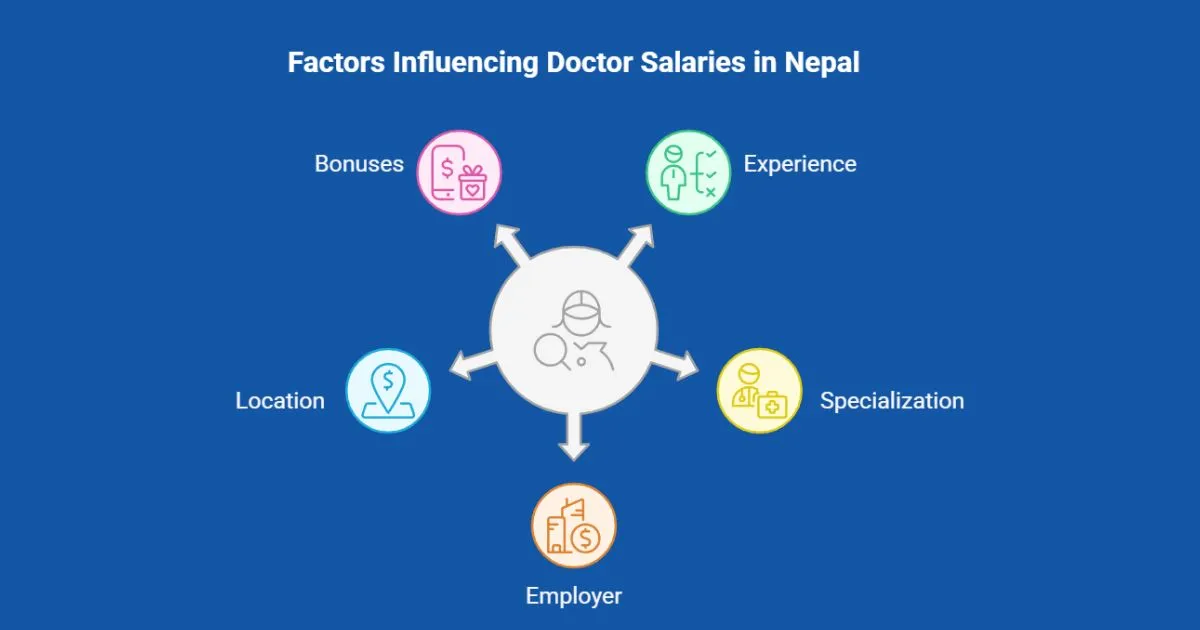
Many factors affect how much a doctor earns in Nepal. A doctor's experience, education, specialization, employer, and work location all play an important role. Doctors with more experience and higher qualifications usually earn more. The type of hospital and the city or district where they work can also make a big difference in their salary.
1. Experience
Experience is one of the biggest factors that affects a doctor's salary. Fresh MBBS graduates usually earn less at the beginning of their career. As they gain more experience, improve their skills, and treat more patients, their salary gradually increases.
2. Specialization
Doctors who complete postgraduate degrees such as MD or MS and specialize in fields like surgery, cardiology, gynecology, or dermatology usually earn more than general doctors. Specialists are in higher demand, especially in large hospitals and private healthcare centers.
3. Employer Type
The type of employer also affects salary. Government hospitals usually offer better job security, pension, and other benefits. Private hospitals may offer higher salaries, especially for experienced doctors and specialists. NGOs and international health organizations may also provide competitive salaries for specific healthcare projects.
4. Location
The place where a doctor works also affects their salary. Doctors working in cities like Kathmandu, Pokhara, and Lalitpur usually earn more because there are more hospitals and higher patient demand. Doctors working in rural or remote areas may receive extra government allowances and other incentives.
5. Bonuses and Raises
Doctors in Nepal generally receive fewer bonuses compared to their counterparts in other countries. Many doctors feel that low pay and limited opportunities for growth make their jobs challenging, and bonuses can play an important role in improving motivation and job satisfaction. Recognizing this, the government has plans to increase salaries under the new Labor Act, which could help make compensation more competitive and encourage doctors to continue working in Nepal rather than seeking opportunities abroad.
Currently, not all doctors receive bonuses, and the distribution is uneven. Around 67% of doctors received a bonus last year, typically ranging from 5% to 9% of their annual salary, based on their performance and the policies of their employer. However, about 33% of doctors did not receive any bonus at all, highlighting a significant gap in how extra compensation is awarded. Ensuring fair and consistent bonus distribution could help improve morale and make the medical profession in Nepal more attractive for both current and future doctors.
Salary in Nepal vs. Other Countries
Doctors in Nepal usually earn NPR 40,000 to NPR 500,000+ per month, depending on their experience, specialization, and workplace. Doctors working in countries like Australia, the UAE, and the US earn much higher salaries. Because of the better pay and career opportunities, many Nepali doctors choose to work abroad.
Salaries in Australia, UAE, and the US
Doctors in Australia usually earn NPR 700,000 to NPR 3,000,000+ per month. In the UAE, doctors earn around NPR 500,000 to NPR 2,000,000+ per month. Doctors in the US receive some of the highest salaries, usually between NPR 1,500,000 to NPR 5,000,000+ per month. However, doctors must pass licensing exams and meet the country's requirements before they can start working.
Challenges for Nepali Doctors Abroad
Many doctors leave Nepal for countries like Australia, the UAE, the UK, and the US because they can earn much more and enjoy better working conditions. This has created a shortage of experienced doctors in Nepal, especially in rural areas. To solve this problem, the government is working to improve salaries, benefits, and working conditions for doctors in Nepal.
Career Growth and Future Opportunities
The medical field in Nepal offers many opportunities for career growth. After completing MBBS, doctors can continue their studies and specialize in areas such as surgery, pediatrics, cardiology, orthopedics, or general medicine. Specializing in a specific field helps doctors gain deeper knowledge and advanced medical skills, which allows them to treat more complex health problems and build a stronger professional career.
With more experience and higher qualifications, doctors can work in government hospitals, private hospitals, medical colleges, and research institutions. Some doctors also choose to open their own clinics or provide healthcare services in local communities. As Nepal’s healthcare system continues to grow and more hospitals and medical facilities are established, the demand for skilled and specialized doctors is expected to increase in the coming years.
Conclusion
The medical profession in Nepal is challenging but highly respected. Becoming a doctor requires years of study, medical training, and strong dedication. Doctors play a very important role in diagnosing diseases, treating patients, and improving the overall health of society. Even though the job can be demanding, it remains one of the most valued professions in the country. As Nepal’s healthcare sector continues to develop, there will be more opportunities for doctors in different medical fields. For students who want to pursue a medical career, understanding the education path, responsibilities, and future opportunities can help them prepare better and build a successful career in the healthcare industry.