

If you are thinking about becoming a teacher in Nepal, or you already teach and want to know if you are being paid fairly, salary is probably one of your biggest questions. Teacher salary varies depending on your qualification, experience, teaching level, and whether you work in a government school, private school, or college.
In this guide, you will learn about teacher salary in Nepal, including government and private school salaries, salary differences, and the factors that affect teacher earnings.
Table of Contents
- Teacher Salary in Nepal
- Government Teacher Salary in Nepal
- Private School Teacher Salary in Nepal
- Factors Affecting Teacher Salary in Nepal
- 1. Educational Qualification
- 2. Teaching Experience
- 3. Location (Urban vs Rural)
- 4. Subject Specialization
- Government vs Private School Teacher Salary Comparison
- How to Become a Teacher in Nepal
- 1. Complete Your Education
- 2. Get Teaching Qualification (B.Ed or Training)
- 3. Prepare for Teaching License (Government Teachers)
- 4. Apply for Teaching Jobs
- 5. Gain Experience and Improve Skills
- Career Growth and Future Scope for Teachers
- Conclusion
Teacher Salary in Nepal
The salary of a teacher in Nepal generally ranges from NPR 20,000 to NPR 100,000 per month, depending on the teacher's qualification, experience, teaching level, and type of institution. Teachers working in government schools generally receive salaries according to the government pay scale, while private school teachers, +2 teachers, and university lecturers may have different salary structures.
Government Teacher Salary in Nepal
The government teacher salary in Nepal is based on the teacher's level and category. Government teachers receive a basic salary along with applicable allowances and benefits. The salary generally increases with teaching level, qualification, category, and experience.
Primary Level Teacher Salary (Class 1–5)
The salary of a primary level government teacher in Nepal generally ranges from NPR 34,426 to NPR 60,874 per month, depending on the teacher's category and qualification. Primary teachers teach students from Class 1 to 5 and usually handle subjects such as Nepali, English, Mathematics, and Social Studies.
Lower Secondary Teacher Salary (Class 6–8)
The salary of a lower secondary government teacher in Nepal generally ranges from NPR 48,387 to NPR 63,904 per month. These teachers teach students from Class 6 to 8 and may specialize in subjects such as Mathematics, Science, English, or Social Studies.
Secondary Level Teacher Salary (Class 9–10)
The salary of a secondary level government teacher in Nepal generally ranges from NPR 60,874 to NPR 74,958 per month, depending on their category and position. Secondary teachers usually teach specialized subjects and help students prepare for the SEE examination.
Higher Secondary Teacher Salary (+2 Level)
The salary of a higher secondary teacher in Nepal generally ranges from around NPR 55,000 to NPR 80,000 per month. The actual salary can vary depending on the teacher's qualification, experience, subject, and institution.
University Lecturer Salary
The salary of a university lecturer in Nepal generally ranges from around NPR 55,000 to NPR 100,000 or more per month, depending on the position, qualification, experience, and university. Lecturers and professors may also receive additional benefits according to their institution.
Here is the overall salary breakdown for government teachers in Nepal based on their teaching level and category.
Allowances and Benefits for Government Teachers
Beyond the basic salary figures, government teachers receive several additional benefits that private school teachers usually do not get in the same form:
- Dearness allowance: A fixed cost of living adjustment paid every month.
- Remote area allowance: Teachers posted in remote, hilly, or mountainous districts get an extra monthly amount, sometimes several thousand rupees, depending on how remote the posting is.
- Festival allowance: Equal to one month's basic salary, paid once a year before Dashain.
- Provident fund: Both the teacher and the government contribute 10 percent of basic salary each month into a retirement savings fund.
- Pension after 20 years: Teachers who complete at least 20 years of continuous government service qualify for a lifetime pension, generally calculated as around half of their final basic salary plus dearness allowance.
- Gratuity: A one time lump sum payment at retirement based on years of service.
- Paid leave: Generous annual, sick, maternity, and paternity leave, plus school vacation periods.
- Job security: Permanent government teachers can only be removed through a formal disciplinary process, unlike private contracts that can end with simple notice.
Private School Teacher Salary in Nepal
The salary of private school teachers in Nepal depends on the school, teaching level, qualification, experience, and location. Teachers in smaller schools generally earn less, while experienced and qualified teachers in reputed schools and colleges can earn significantly more.
Salary in Private Schools (Class 1–10)
Teachers in small private schools who teach classes 1 to 10 usually earn between NPR 15,000 to NPR 30,000 per month. Fresh graduates and teachers with limited experience often start at the lower end of this range. As they gain teaching experience and improve their qualifications, they can move to better-paying schools.
Salary in Private Colleges (Bachelor & +2 Level)
Teachers in private colleges teaching +2 and Bachelor-level courses can earn around NPR 40,000 to NPR 100,000 or more per month. Salary depends on qualification, experience, subject, college reputation, and teaching workload. Experienced lecturers and teachers handling multiple courses or specialized subjects may earn considerably more. If you are thinking about becoming a teacher in Nepal, or you already teach and want to know if you are being paid fairly, salary is probably your biggest question.
Factors Affecting Teacher Salary in Nepal
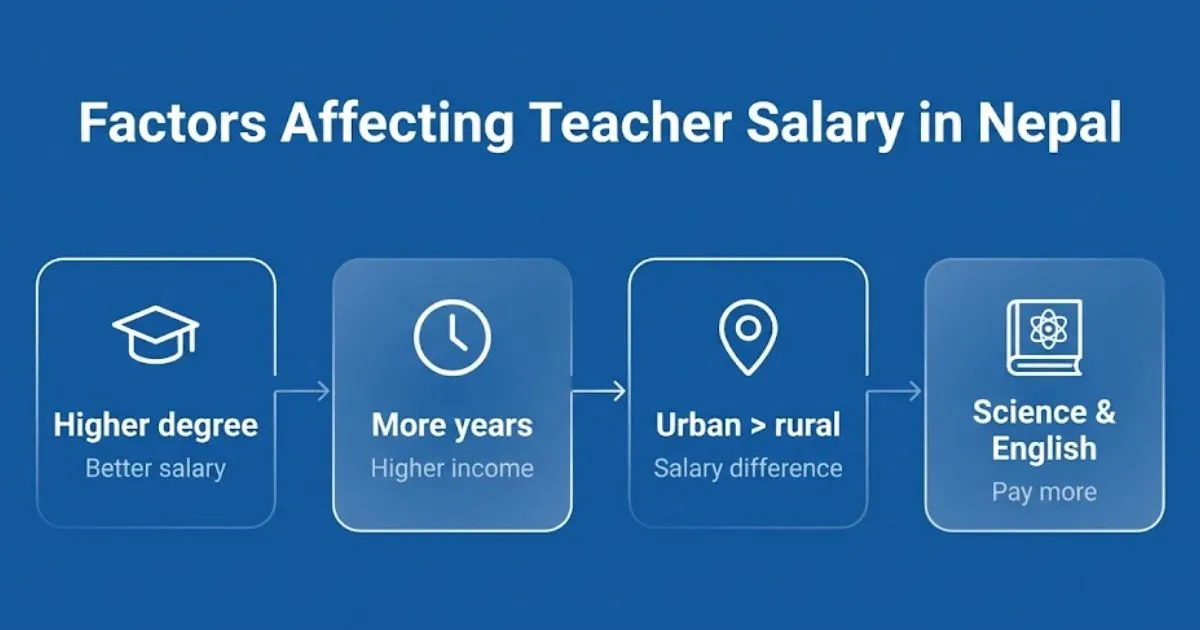
Teacher salary in Nepal is not fixed for everyone. It depends on several important factors such as education level, experience, working location, and subject expertise. Understanding these factors helps to know why some teachers earn more than others in different schools and areas.
1. Educational Qualification
Educational qualification is one of the most important factors that affects teacher salary in Nepal. Teachers with higher qualifications like a Master’s degree or a teaching license usually earn more than others. Schools prefer teachers who have strong academic backgrounds and special training. Because of this, qualified teachers get better job opportunities and higher salaries.
2. Teaching Experience
Teaching experience plays a very important role in increasing teacher salary over time. Teachers who have more years of experience become more skilled, confident, and better at handling students. Schools also value experienced teachers more, so they are often paid higher salaries. As teachers continue working and gaining experience, their income gradually increases.
3. Location (Urban vs Rural)
The location where a teacher works also affects how much salary they receive in Nepal. Teachers working in cities usually earn more than those working in rural or village areas. This is because urban schools have better facilities, higher fees, and more resources. In rural areas, schools may have limited budgets, so salaries are often lower.
4. Subject Specialization
Subject specialization is another key factor that affects teacher salary in Nepal. Teachers who teach subjects like Science, Mathematics, and English are usually in high demand. Because these subjects are very important for students’ future, schools are willing to pay more for skilled teachers. As a result, teachers in these subjects often earn higher salaries compared to others.
Government vs Private School Teacher Salary Comparison
Government and private school teachers in Nepal differ not only in salary but also in job security, salary growth, benefits, and recruitment process. The following comparison gives a quick overview of the major differences between government and private school teaching jobs.
How to Become a Teacher in Nepal
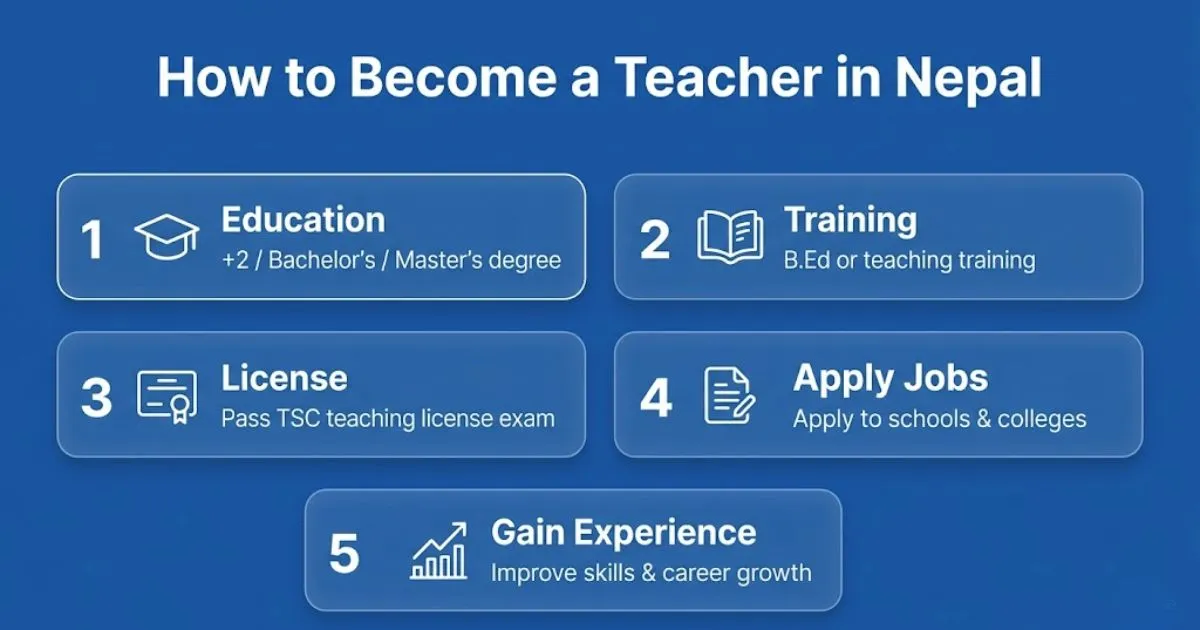
Becoming a teacher in Nepal is a basic process if you follow the right steps. You need proper education, some training, and basic teaching skills. It may take a few years, but with the right plan, you can build a stable and respected career in teaching.
1. Complete Your Education
First, you need to complete your basic education. To become a school teacher, you should at least pass +2 (Class 12). For better opportunities, many schools prefer candidates with a Bachelor’s degree in Education (B.Ed). If you want to teach at a higher level like college or university, you will need a Master’s degree.
2. Get Teaching Qualification (B.Ed or Training)
After completing your studies, it is better to get a teaching qualification like B.Ed. This course helps you learn how to teach, manage a classroom, and understand students. Some schools may also accept short teaching training, but having a B.Ed gives you better job chances and higher salary.
3. Prepare for Teaching License (Government Teachers)
If you want to become a government teacher in Nepal, you must pass the teaching license exam. This exam is conducted by the Teacher Service Commission. Without this license, you cannot apply for government teaching jobs.
4. Apply for Teaching Jobs
Once you have the required education and training, you can start applying for jobs in Nepal. You can apply to private schools, colleges, or government vacancies. Fresh graduates usually start in private schools to gain experience and then move to better opportunities.
5. Gain Experience and Improve Skills
After getting a job, focus on gaining experience and improving your teaching skills. Good communication, subject knowledge, and classroom management are very important. As you gain experience, you can earn a higher salary and get better positions in the future.
Career Growth and Future Scope for Teachers
Teaching offers good career growth in Nepal if you continue learning and gaining experience. A teacher can start as an assistant teacher and slowly move to senior teacher, then to roles like coordinator or even principal. With each step, responsibilities increase, and salary also improves. This makes teaching a stable career with clear growth opportunities over time.
To grow in this career, teachers should keep improving their skills through training programs, workshops, and further studies. Learning new teaching methods helps them become better at their job and increases chances of promotion. Experienced teachers can also move to higher education, such as colleges or universities, and work as lecturers or professors. These roles offer better salary, respect, and long-term career benefits.
Conclusion
Teacher salary in Nepal is not the same for everyone. It depends on experience, education, and the type of school. Government jobs give stable income and benefits, private schools are good for starting a career, and international schools give the highest salary. If you want to become a teacher, focus on your studies, gain experience, and improve your skills. By choosing the right place to work and learning continuously, you can build a good and stable career in teaching.