

Many people in Nepal dream of working in the government because it is a safe and respected job. It gives a steady salary and long-term benefits. One of the first jobs to start a career in the government is Kharidar. Kharidars are entry-level staff in the निजामती सेवा (Nijamati Sewa). They are very important because they help run government offices smoothly.
They manage files, help senior officers, and assist people who visit the office. In this way, they act as a bridge between the government and the people, making their work very useful and giving a secure income. This guide will help you understand everything about Kharidar salary in Nepal, including the pay scale, allowances, and benefits.
Table of Contents
- Overview of the Kharidar Role
- The Kharidar Position
- Defining Kharidar
- Kharidar as a Non-Gazetted Post
- Kharidar Salary in Nepal
- How Kharidar Salaries Are Set
- Grade-Wise Salary Progression for Kharidar
- 1. Dearness Allowance (Mahangi Bhatta)
- 2. Transportation Allowance
- 3. Festival Allowance (Dashain Bonus)
- 4. Other Allowances and Benefits
- Kharidar Salary Comparison with Other Government Positions
- Kharidar Career Growth and Long-Term Financial Benefits
- How You Can Move Up in Your Career
- Long-Term Benefits: PF, Gratuity, and Pension
- Job Security
- Conclusion
Overview of the Kharidar Role
The Kharidar is usually the first step for anyone starting a career in Nepal’s civil service. They are part of the main team that keeps the government working every day. Kharidars help deliver government services, handle office work, and follow rules and policies at the local level. They make sure that the government work reaches the people properly. If someone wants to join the government, it is important to understand the Kharidar job. Knowing their work, duties, and benefits helps people plan for a safe and successful career in civil service.
Kharidars are the base of government offices. Every day, they manage files, keep records, assist senior officers, and help citizens. Because they are the first people who meet the public, they make sure that government services and policies reach the people correctly. This role is very important for Nepal government jobs because it keeps offices organized and ensures that work runs smoothly.
The Kharidar Position
Defining Kharidar
Kharidars are government staff who do important daily office work. Their jobs include managing files (Darta/Chalani), writing letters, keeping records, helping senior officers, and talking to people who come to the office. They work in many places like ministries, departments, and district offices all over Nepal. Kharidars are like the main support of the office, because they make sure all government work is done properly and on time. They help the government give services to the people correctly, which makes their work very important for keeping offices running smoothly.
Kharidar as a Non-Gazetted Post
A Kharidar is a Non-Gazetted Second Class employee, officially called Rajpatra Anankit Ditiya Shreni (रा.प. अनं. द्वितीय श्रेणी). This means Kharidars do not make big decisions like Gazetted officers, but they are very important for office work and helping senior staff. In the civil service hierarchy, Kharidars are below Nayab Subba (NaSu) and above Mukhiya. Even though their work may seem simple, it is very important for making sure the government office works properly every day. Without Kharidars, offices cannot function well.
Kharidar Salary in Nepal
How Kharidar Salaries Are Set
The government of Nepal decides the salaries of employees, including Kharidars, every year. The Ministry of Finance works with the Pay Commission (Talab Aayog) to suggest fair salaries. The changes are announced in the annual budget speech. When deciding salaries, the government considers the country’s economic condition, inflation, and requests from employee unions. This process makes sure that salaries stay updated and fair for all government staff.
Grade-Wise Salary Progression for Kharidar
When someone joins as a Kharidar, they usually start at Grade 7 where there salary is around NPR 32,902. Every year, they get a grade increment, which means their salary goes up a little. As they work more years, they can move to higher grades and earn more money.
This system helps Kharidars get more salary with experience. For example, a Kharidar who starts at Grade 7 gets a fixed increase every year. Over time, the salary keeps growing steadily. Later, if they are promoted to Nayab Subba (NaSu), their salary goes up even more because the job has more responsibility.
Here is the salary structure of Kharidar based on grade levels:
Kharidar Allowances and Additional Benefits
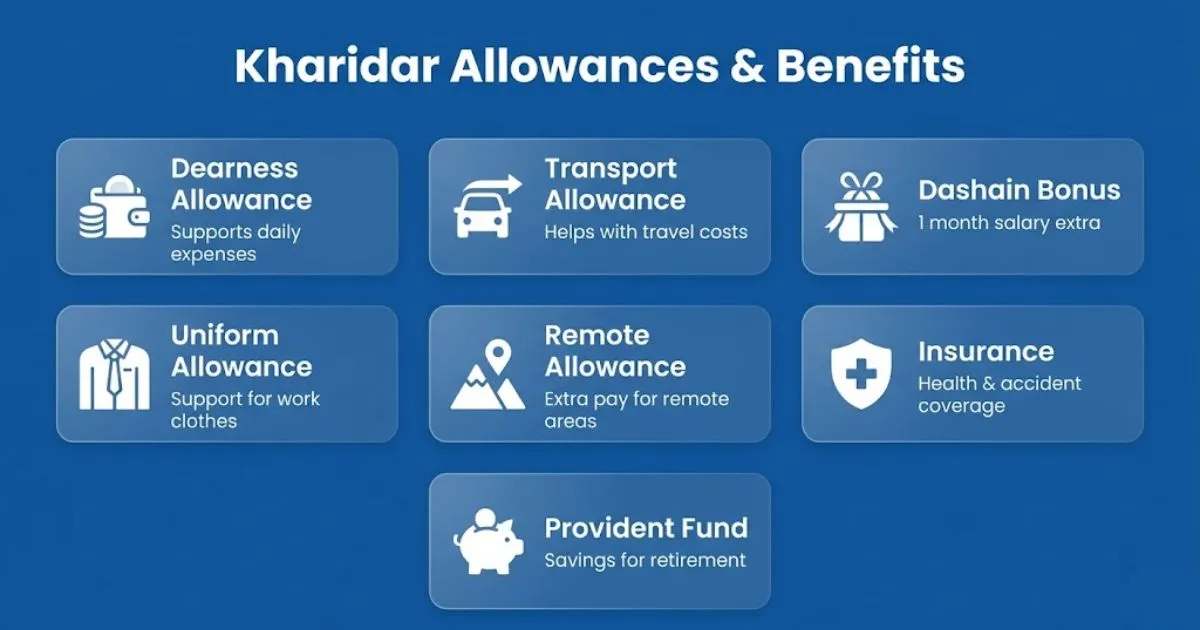
Kharidars in Nepal get extra allowances along with their monthly salary. These benefits help them manage daily expenses, travel costs, and special festival spending. They also get financial support for health, insurance, and retirement savings. Overall, these allowances make their job more secure and help improve their monthly income.
1. Dearness Allowance (Mahangi Bhatta)
Kharidars get a Dearness Allowance, called Mahangi Bhatta, to help with the increasing cost of daily things like food, transport, electricity, and other essential items. Without this allowance, rising prices can make it hard for employees to manage their everyday life.
For the latest fiscal year 2082/2083, the Mahangi Bhatta is approximately NPR 5,000 per month, which has gone up from NPR 2,000 last year. This allowance helps Kharidars keep their salary useful even when prices go up. It makes sure that they can buy what they need without worrying too much about inflation. This allowance is given to all government employees and is an important part of the total salary, showing that the government supports employees to live comfortably.
2. Transportation Allowance
Kharidars also get a transport allowance every month. This money helps them pay for traveling to and from their office. The usual amount is upto NPR 2,000 per month, but it can be slightly different depending on where a Kharidar works.
For example, those working in big cities may have to spend more on transportation, while those in rural or small towns may spend less. This allowance ensures that commuting does not become a financial burden, especially for Kharidars who travel long distances daily. It makes it easier for employees to reach work on time without worrying about the cost of travel.
3. Festival Allowance (Dashain Bonus)
Kharidars also receive a festival allowance, often called the Dashain Bonus, to help with extra expenses during festivals. This allowance is equal to one month’s basic salary and is usually paid before the Dashain festival.
This bonus is very useful because it helps employees buy gifts, celebrate with their family, and manage festival spending. For many employees, this is one of the most important benefits, as it gives them extra money to enjoy the holiday season without stress.
4. Other Allowances and Benefits
- Uniform Allowance: Every year, Kharidars get money to buy official uniforms or clothes needed for office work. This ensures they can dress properly for their duties without spending from their own pocket.
- Remote Area Allowance: If a Kharidar is posted in a remote or hard-to-reach area, they get extra pay. This allowance rewards them for working in areas with fewer facilities and higher living challenges.
- Insurance: The government provides health and accident insurance to Kharidars. This means that if they get sick or meet with an accident, they can get medical help without paying all the costs themselves.
- Provident Fund (PF / Sanchaya Kosh): A part of the salary, 10%, is saved automatically in the Provident Fund. The government also adds another 10%. Over many years, this fund grows with interest and gives Kharidars a large sum of money after retirement. This helps employees feel safe and secure about their future.
Kharidar Salary Comparison with Other Government Positions
Government job salaries in Nepal depend on position, rank, and job responsibility. Lower-level posts have lower salary, while higher posts receive better salary and more allowances. As the position increases, both basic salary and total income also increase. The table below shows a clear comparison of Kharidar salary with other government positions.
Kharidar Career Growth and Long-Term Financial Benefits
How You Can Move Up in Your Career
A Kharidar can grow in their job over time. You can get promoted either by passing internal exams held by the government or by being recognized for your work experience and good performance. The usual career path starts with Kharidar. After gaining experience and performing well, you can move to Nayab Subba (NaSu). From there, the next steps are Section Officer, Under Secretary, Joint Secretary, and finally Secretary, which is one of the highest positions in the civil service. Every promotion comes with more responsibilities, but it also brings higher salary, better allowances, and more benefits. This makes working hard and gaining experience very rewarding over time.
Long-Term Benefits: PF, Gratuity, and Pension
Being a Kharidar also comes with important long-term benefits. One of the most valuable is the Provident Fund (PF or Sanchaya Kosh). Each month, a small part of your salary is saved, and the government adds the same amount. Over 20 to 30 years, this fund grows a lot because of interest, giving you a good amount of money when you retire. You also get gratuity, which is a special payment based on how many years you worked. On top of that, you receive a pension, which is a fixed monthly income after retirement. These benefits give financial stability and make the job very safe for the long term.
Job Security
Another very important advantage of being a Kharidar is job security. Unlike jobs in private companies where employees can be fired or salaries can be cut, government jobs are almost risk-free. Once you become a Kharidar, your job is safe, and you can work without worrying about losing it. This brings mental peace and helps you plan your life, save money, and feel secure about your future. When you combine steady salary, regular allowances, promotions, and retirement benefits, being a Kharidar becomes a very safe, respected, and financially smart career in Nepal.
Conclusion
A Kharidar job in Nepal offers a stable government salary and good job security. Along with the basic salary, employees also receive benefits like Mahangi Bhatta (cost of living allowance), transport allowance, and festival bonus. After deductions such as Provident Fund (PF) and Social Security Tax, the take-home salary becomes slightly lower. Besides the monthly salary, Kharidar also get long-term benefits like provident fund, gratuity, and pension after retirement. Because of the steady salary, benefits, and promotion opportunities, the Kharidar position is considered a secure and respected government job in Nepal.