

Every year, thousands of skilled and qualified candidates in Nepal lose good job opportunities. Not because they lack the right degree or skills. Not because they are unfit for the role. They miss out because of small, avoidable mistakes made before, during, or after the interview.
Recruiters and hiring managers are not just checking your qualifications on interview day. They are watching how you prepare, how you speak, how you behave, and how you handle pressure. A strong CV can get you into the interview room, but your performance during the interview often decides whether you get the job.
In this guide, you'll learn the most common job interview mistakes candidates make in Nepal and practical tips to avoid them.
Why First Impressions Matter So Much
Most interviewers form an opinion about a candidate within the first two or three minutes. This is not fair, but it is human nature. Your handshake, your smile, your greeting, and the way you walk into the room all create an impression before you even answer the first question.
This does not mean you need to be perfect. It means you need to be prepared, polite, and confident from the moment you enter the building. A strong first impression makes the interviewer want to hire you. A weak one makes them look for reasons to reject you, even if your answers are good later.
Mistakes Before the Interview
1. Not Researching the Company
When a candidate does not know what the company does, it tells the employer that the candidate is not really interested in this specific job — they are just applying everywhere. Interviewers often ask, "What do you know about our company?" and a blank or vague answer puts you at a disadvantage right away.
Spend at least 30 minutes before the interview reading the company's website, social media pages, and recent news about them. Learn their main products or services, their mission, and their major clients or projects.
Example: If you are interviewing at a bank, know their main services, whether they have won any recent awards, and roughly how many branches they have across Nepal.
2. Arriving Late or Poorly Managing Your Time
Being late on the day you are trying to make your best impression suggests you may also be late once you start the job. Rushing to the interview after waking up late or finishing preparation at the last minute often shows in your body language and answers, making you seem tired or unfocused.
Prepare your documents, clothes, and travel plan the night before, and plan to reach the interview location 15 to 20 minutes early. Account for Kathmandu traffic, bandhs, or unexpected delays.
Example: If your interview is at 10 AM in a busy area like New Baneshwor, leave at least an hour before, especially during peak traffic hours.
3. Dressing and Grooming Poorly
Your clothing tells the interviewer whether you understand the culture of their industry and whether you take the opportunity seriously. Wearing casual clothes like jeans and t-shirts to a bank or corporate interview can create doubt about your professionalism, even if your answers are excellent. Untidy hair, wrinkled clothes, or strong body odour can create a negative impression before you even speak.
Dress slightly more formal than the company's daily dress code, keep your clothes clean and ironed, and pay attention to basic grooming.
Example: For an IT company interview, smart-casual (collared shirt, trousers) may be enough. For a bank interview, a formal suit is safer.
4. Bringing Incomplete Documents
Missing documents like your citizenship copy, academic certificates, or CV copies show poor planning. Prepare a document folder a day before with your CV, cover letter, citizenship, academic certificates, experience letters, and passport-size photos, all properly arranged.
5. Not Knowing Your Own CV or Resume
If you cannot explain something written on your own CV, it raises doubts about whether the information is even true. Interviewers often ask follow-up questions on your CV, and struggling to answer basic questions about your own projects makes you look unprepared or dishonest.
Re-read your CV carefully before the interview and be ready to explain every point, especially gaps, project details, and achievements.
Example: If your CV mentions "Increased sales by 20%," be ready to explain how you achieved that and over what time period.
Mistakes During the Interview
1. Giving a Generic "Tell Me About Yourself" Answer
This is usually the first question, and a weak answer sets a poor tone for the rest of the interview. Reading your CV word-for-word or giving a very generic answer wastes this important opportunity.
Prepare a short, structured answer covering your education, relevant experience, key strengths, and why you are interested in this role. Keep it under two minutes.
2. Talking Too Much, Too Little, or Not Listening
Talking too much makes the interviewer lose interest, while very short answers (just "yes" or "no") make it hard to judge your skills. Answering a different question than what was asked, or interrupting the interviewer, shows poor listening skills.
Listen to the full question before answering, and aim for balanced answers of about 1 to 2 minutes. If unsure, politely ask the interviewer to repeat or clarify.
3. Speaking Negatively About Previous Employers
Criticising your previous workplace or people makes the interviewer wonder if you will speak badly about their company in the future. If asked why you left your last job, focus on positive reasons like seeking growth or new challenges, rather than blaming your old employer or colleagues.
4. Using a Mobile Phone During the Interview
Checking your phone, texting, or letting it ring during an interview shows disrespect and poor focus. Switch your phone to silent mode or turn it off completely before entering the interview room.
5. Weak Body Language and Communication
Avoiding eye contact, slouching, or fidgeting can make you appear nervous or disinterested, even if that is not your intention. Struggling to explain your thoughts clearly or using too many filler words also makes it hard for the interviewer to understand you.
Sit up straight, maintain natural eye contact, and speak slowly and clearly. If English is difficult for you, simple sentences are fine — clear communication matters more than complicated vocabulary.
6. Showing Too Little Confidence, or Too Much
Constant apologising, a very soft voice, or giving up on a question without attempting it can make employers doubt your ability to handle work pressure. On the other hand, boasting too much or dismissing the interviewer's questions can come across as arrogant.
Practice mock interviews beforehand so you can answer confidently while staying humble and respectful.
7. Giving Dishonest or Exaggerated Answers
Experienced interviewers can often spot exaggerated claims through follow-up questions, and once dishonesty is suspected, trust is broken immediately. Vague statements like "I am a hard worker" also do not convince anyone without proof.
Be honest about your skill level, and support your claims with short, specific examples from your studies, internships, or previous jobs.
Example: Instead of saying "I am good at teamwork," say "During my internship, I worked with a team of 4 people to complete a project two days before the deadline."
8. Not Asking Questions, or Discussing Salary Too Early
When a candidate says "No questions" at the end, it can suggest a lack of genuine interest. Bringing up salary before the interviewer does can also make it seem like money is your only priority.
Prepare 2 to 3 thoughtful questions in advance, such as asking about the team or growth opportunities, and let the interviewer raise salary first. If asked directly, give a realistic, researched range.
Mistakes After the Interview
1. Not Thanking the Interviewer or Following Up
Leaving without a simple thank you can seem abrupt, even if unintentional. While not always required in Nepal's job market, a short follow-up email can show professionalism, especially for corporate, IT, and INGO roles.
Always thank the interviewer before leaving, and if you have their email, send a short thank-you message within a day.
2. Ignoring Online Interview Etiquette for Virtual Interviews
Poor internet connection, background noise, an untidy background, or joining late for an online interview creates the same negative impression as being late in person.
Test your internet, camera, and microphone beforehand, choose a quiet, well-lit space, and join the call 5 minutes early.
Interview Mistake vs How to Avoid It
Here is a quick summary of the most common mistakes covered above, paired with the simple fix for each one. Use this as a fast revision before your interview.
Good Practice vs Bad Practice
Sometimes it helps to see the same situation handled two different ways. This table compares how a well-prepared candidate behaves against a common mistake in the same moment.
Before Interview vs During Interview vs After Interview
Good interview preparation is not just about the few minutes inside the room. It stretches across three stages, and this table breaks down what to focus on at each one.
Employer Expectations vs Common Candidate Mistakes
There is often a gap between what employers hope to see and what candidates actually show up with. This table highlights that gap so you know exactly what to correct.
Practical Ways to Improve Your Interview Performance
Knowing the mistakes to avoid is only half the work. The other half is preparing yourself so well that you naturally avoid them on interview day. Here are five simple areas to focus on before your next interview.
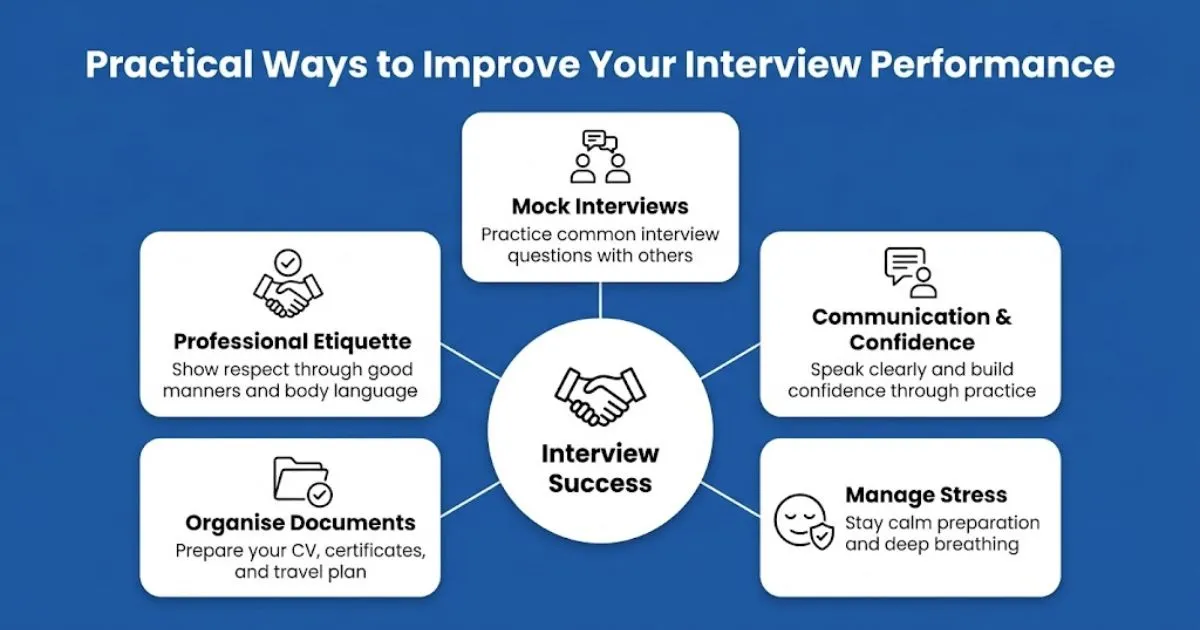
1. Practice With Mock Interviews
Most interviews repeat the same core questions, such as "Tell me about yourself," "Why do you want this job," and "What are your strengths and weaknesses." Write short answers for these in advance, then practice saying them out loud.
Ask a friend, family member, or senior to act as the interviewer and ask you these questions. Their honest feedback will help you notice mistakes you cannot see in yourself, like speaking too fast or repeating filler words.
2. Build Communication and Confidence
Communication and confidence go hand in hand. If you speak in short, clear sentences, you sound more confident, even if your English is not perfect. Reading Nepali or English news aloud for a few minutes daily can slowly improve your fluency and pronunciation.
Confidence also comes from preparation, not from pretending to know everything. The more you practice your answers, the calmer and clearer you will sound in the real interview.
3. Manage Interview Stress
Feeling nervous before an interview is completely normal, and most interviewers expect it. The problem is only when nervousness stops you from answering properly.
Before entering the room, take a few slow, deep breaths. Remind yourself that the interviewer is a normal person doing their job, not someone trying to trap you. This small mindset shift can calm your nerves quickly.
4. Organise Documents and Travel Plans
A large part of interview stress comes from last-minute problems, such as a missing document or getting stuck in traffic. Avoid this by preparing everything the day before.
Keep your CV, citizenship, certificates, and photos in one folder, arranged in a logical order. Also check your travel route in advance, especially if the interview location is new to you or falls in a busy area.
5. Follow Professional Etiquette
Small manners leave a big impression. Greet the interviewer politely, sit only after you are invited to, and keep your body language calm and respectful throughout the conversation.
These small habits do not need extra preparation. They only need awareness, and they can quietly separate you from other candidates with similar qualifications.
Conclusion
Avoiding these common mistakes will not guarantee a job offer, but it will remove the small, avoidable barriers that often stand between qualified candidates and the roles they deserve. Prepare well, stay honest, and present yourself with calm confidence. That is often what separates a good candidate from a hired one.
If you are looking for job opportunities, explore various jobs on NecoJobs and apply for the ones that match your skills and experience.