

What is HR?
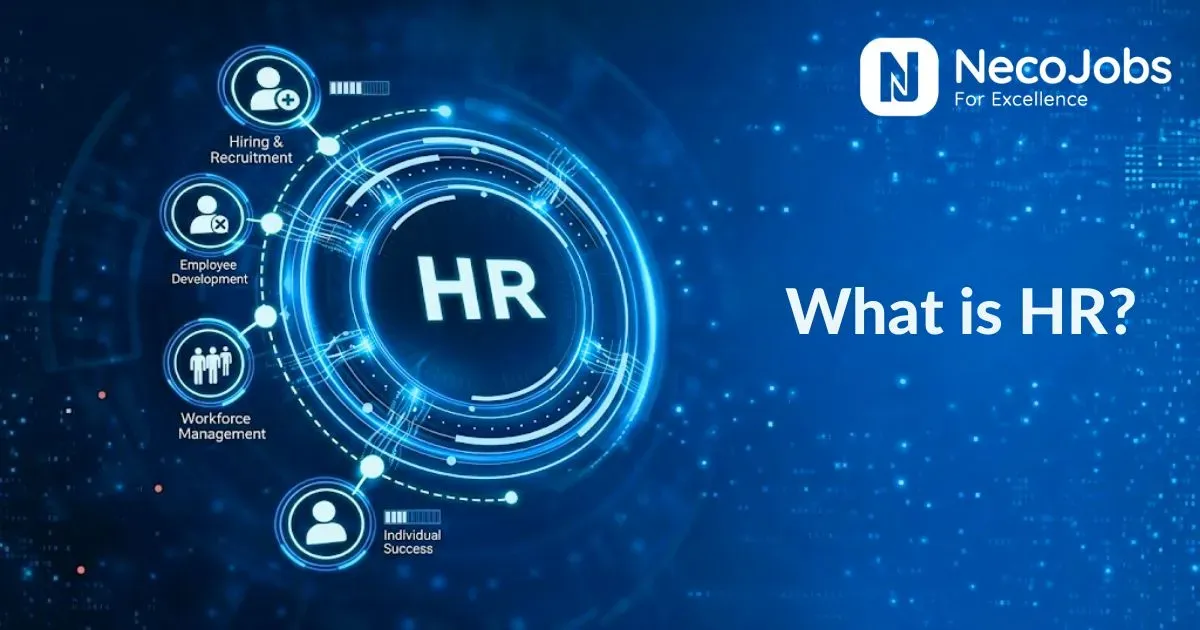
Human Resources (HR) is a critical department within any organization, responsible for managing the employee lifecycle. This includes recruiting, hiring, onboarding, training, and development.
HR also handles compensation, benefits, performance management, and employee relations, ensuring a positive and productive workplace. By addressing workplace issues, mediating conflicts, and ensuring compliance with labour laws, HR plays a crucial role in maintaining organizational health.
Overall, HR is essential for aligning the workforce with the organization's goals and enhancing employee satisfaction and performance.
Table of Contents
- Meaning of Human Resources
- Key Functions of HR
- 1. Recruitment and Staffing
- 2. Training and Development
- 3. Compensation and Benefits
- 4. Employee Relations
- 5. Compliance
- 6. Performance Management
- 7. Organizational Development
- 8. Health and Safety
- Why HR is Required
- Talent Acquisition and Retention
- Employee Development
- Compliance and Risk Management
- Organizational Effectiveness
- Strategic Alignment
- Skills Required for a Good HR Professional
- Communication
- Interpersonal Skills
- Ethical Decision-Making
- Problem-Solving
- Organizational Skills
- Adaptability
- Attention to Detail
- Conflict Resolution
- Strategic Thinking
- Conclusion
Meaning of Human Resources
Human resources (HR) are in charge of hiring, onboarding, and training new hires as well as putting employee procedures into place within a business. HR departments are essentially in charge of overseeing every aspect of an employee's employment with a company, from the time they apply for a job until they start working there and eventually leave.
HR is responsible for managing the administration of benefits in certain companies. HR departments are there to add value to a company by giving managers and staff unbiased advice on issues relating to people.
This work is accomplished by combining project work, long-term strategic planning, and daily employee support. An effective HR division selects the best candidates for open positions and takes the necessary steps to maintain their satisfaction and outcomes.
Also, Check out:- Top HR Software for Nepali Businesses.
Key Functions of HR
1. Recruitment and Staffing
HR specialists write job descriptions, publish job openings, review applications, hold interviews, and choose applicants. They manage job offers, negotiate salaries, and assist with onboarding. Effective recruitment ensures a skilled and competent workforce.
2. Training and Development
HR plans workshops, seminars, and training sessions to improve employees' performance and understanding. They also create leadership development, succession planning, and career advancement programs, boosting job satisfaction and retaining top talent.
3. Compensation and Benefits
HR manages payroll, bonuses, incentives, and benefits like paid time off, retirement plans, and health insurance. This ensures fair and competitive compensation packages, helping to attract and retain employees.
4. Employee Relations
HR handles workplace issues, resolves disputes, addresses complaints, and promotes open communication. Effective employee relations foster positive working relationships, increase morale, and reduce turnover.
5. Compliance
HR ensures the company complies with employment laws and internal policies, conducts audits, and implements compliant policies. They oversee reporting, documentation, and employee education on regulatory matters, protecting the company from legal risks.
6. Performance Management
HR monitors and enhances worker performance by setting goals, conducting evaluations, providing feedback, and developing improvement plans. They also manage disciplinary actions, raises, and promotions based on performance reviews.
7. Organizational Development
HR works to improve the organization's structure, culture, and processes through leadership development, succession planning, and talent management. They conduct organizational assessments and implement strategies to enhance collaboration, communication, and employee engagement.
8. Health and Safety
HR promotes a safe and healthy workplace by implementing health and wellness programs, providing safety training, and ensuring adherence to occupational health and safety regulations. This includes developing safety policies and promoting employee well-being.
Why HR is Required
HR performs vital tasks essential to an organization's success. These include recruitment, training, performance management, employee relations, compensation, compliance, and organizational development.
HR ensures the company attracts and retains talent, advances workforce development, complies with laws, fosters a positive work environment, and aligns HR strategies with business goals. Here are some detailed reasons why HR is indispensable:
Talent Acquisition and Retention
HR manages recruitment strategies to attract and retain skilled employees. This involves effective hiring processes, conducting interviews, and onboarding new hires to integrate them smoothly into the company culture.
Employee Development
HR supports employees through training, career development, and performance management. They offer skill enhancement opportunities, career growth pathways, and constructive feedback to foster a motivated and proficient workforce.
Compliance and Risk Management
HR ensures the organization adheres to labour laws, regulations, and internal policies. By mitigating legal risks, managing employee relations, and implementing fair practices, HR protects the organization's reputation and avoids liabilities.
Organizational Effectiveness
HR optimizes workforce productivity, promotes a positive work environment, and enhances employee satisfaction. They facilitate communication, manage organizational change, and promote diversity and inclusion initiatives.
Strategic Alignment
HR aligns human capital strategies with business goals. Collaborating with leadership, they develop workforce plans, succession strategies, and organizational development initiatives that drive growth and sustainability.
Skills Required for a Good HR Professional
To excel in HR, several key skills are essential:
Communication
Effective verbal and written communication skills are crucial for interacting clearly and professionally with employees, managers, and external contacts.
Interpersonal Skills
Strong interpersonal skills help build relationships, empathize with employees, and resolve conflicts effectively.
Ethical Decision-Making
Upholding ethical standards in handling sensitive information, managing employee relations, and making decisions that impact individuals and the organization is vital.
Problem-Solving
The ability to analyze issues, identify root causes, and propose effective solutions is essential for addressing employee concerns, improving processes, and managing conflicts.
Organizational Skills
Strong organizational abilities are needed to manage multiple tasks, prioritize responsibilities, and meet deadlines in a dynamic work environment.
Adaptability
HR professionals must be flexible and able to adapt quickly to new situations and evolving business needs.
Attention to Detail
Accuracy is crucial in tasks like payroll processing, benefits administration, and maintaining employee records to ensure compliance and data integrity.
Conflict Resolution
Mediation skills are necessary to facilitate constructive dialogue, resolve disputes, and foster positive relationships among employees and teams.
Strategic Thinking
Understanding the organization's goals and aligning HR practices to support strategic objectives requires critical and strategic thinking.
Find the Latest HR Jobs in Nepal
Conclusion
Human Resources (HR) is fundamental to managing an organization's most valuable asset: its people. HR functions, from recruitment and training to compliance and employee relations, ensure organizations attract, develop, and retain talented employees while fostering a positive workplace environment.
HR professionals align HR strategies with business objectives, promote employee well-being, and ensure legal compliance. As workplaces evolve, HR remains critical for navigating challenges, fostering growth, and cultivating an employee-friendly culture.
For more insights on enhancing HR practices, consider enrolling in our Advanced HR Training. This course covers essential HR skills and strategies to help you excel in your role and contribute to your organization's success.
Frequently Asked Questions
What is Human Resources (HR)?
Why is HR important in an organization?
What are the key functions of HR?
What skills are required to be a good HR professional?
How does HR contribute to employee development?
What is the role of HR in compliance and risk management?
How does HR manage employee relations?
Enhance Your Skills
Take your career to the next level with our specialized training programs. Learn in-demand skills, get certified, and stand out in today's competitive job market.
Explore Training ProgramsFind Your Dream Job
Discover exciting new opportunities matching your skills and experience. Browse through thousands of verified job listings updated daily across industries.
Search JobsLatest Blogs


Reviews & Feedback
No reviews yet. Be the first to share your thoughts!