

Health Assistants (HAs) are very important people in Nepal’s health system. They mostly work in villages or small health centers where doctors may not be there all the time. HAs help by giving basic medical care, treating common sicknesses, and helping in emergencies. They also teach people how to stay healthy and prevent diseases. If you want to know about their salary and job, this guide will explain everything clearly and simply so anyone can understand.
Table of Contents
- Understanding the Role of Health Assistants (HAs)
- Salary of Health Assistants
- Salary for Intern HA
- Salary for Junior HA
- Salary for Mid-Level HA
- Salary for Experienced HA
- Government vs. Private Sector Salaries
- Government HA Salary Packages
- Private Sector HA Salary Packages
- Factors Influencing HA Salaries
- Experience and Expertise
- Government Allowances and Benefits
- Skills Essential for Health Assistants
- 1. Medical Knowledge
- 2. Effective Communication
- 3. Decision Making
- 4. Teamwork and Collaboration
- Salary Comparisons with Other Medical Roles
- Health Assistants vs. Staff Nurses
- Health Assistants vs. Community Medical Assistants
- Tools and Resources for Job Seekers
- Networking and Job Fairs
- Conclusion
Understanding the Role of Health Assistants (HAs)
Health Assistants are health workers who help many people by giving medicine and treating simple sicknesses like fever, cough, diarrhea, and infections. They work in small health posts in villages or clinics in cities. They also teach people about clean water, good food, and ways to avoid diseases. Besides treating patients, HAs check pregnant mothers, give vaccines to children, and help during health emergencies like accidents or sudden illness.
To become a Health Assistant, a person must pass a test called the Nepal Health Service Examination and follow some rules about school and age. HAs work with doctors to give treatment and help stop diseases from spreading in the community. They play a big role in making health care easier to reach for many people, especially in places far from big hospitals.
Salary of Health Assistants
Salary for Intern HA
Intern Health Assistants are new workers who are still learning. They usually earn around NPR 5,000 to NPR 10,000 per month, and in some cases, internships may even be unpaid, especially in rural areas. Sometimes they get help with housing or travel, especially if they work far from cities. This time is important because it helps them learn and get ready for better jobs. Interns also gain practical experience by working with senior HAs and doctors, which is important for their future career.
Salary for Junior HA
Junior Health Assistants get a regular salary and usually earn around NPR 15,000 to NPR 30,000 per month. They can earn more if they work extra hours or in risky areas where allowances are provided. Juniors working with NGOs or INGOs may also receive bonuses or additional benefits. With experience and added responsibilities, some junior HAs can earn up to NPR 35,000 or more per month.
Salary for Mid-Level HA
Mid-level Health Assistants earn more than juniors, with salaries ranging from NPR 30,000 to NPR 50,000 per month. They can increase their income through overtime work and risk allowances, especially in remote or difficult locations. Those working with international organizations or managing health posts may earn even higher. They also take on more responsibilities like supervising staff and organizing health programs.
Salary for Experienced HA
Experienced Health Assistants usually earn the highest, with salaries ranging from NPR 50,000 to NPR 70,000 or more per month. Those working with international organizations or in senior positions can earn even higher with added benefits. They receive extra pay for overtime and risky work, along with support for housing and travel. Their higher salary reflects their experience, skills, and responsibilities, including training junior staff and supporting doctors.
Government vs. Private Sector Salaries
Government HA Salary Packages
Government Health Assistants get fixed salary based on official levels. The basic pay at level 5 is NPR 36,242 monthly and can go up to NPR 45,000 to NPR 60,000+. They also get extra money for things like uniforms, medical help, and if they work in remote areas. Working in government jobs means stable monthly payments, paid holidays, and other benefits like festival bonuses and pensions after retirement. These benefits help workers feel safe and supported.
Private Sector HA Salary Packages
Health Assistants working in private hospitals or international groups can earn over NPR 20,000 to NPR 70,000 per month depending on their job and the organization. These jobs may not be as secure as government jobs but often give extra help like housing and travel allowances. Experienced HAs in private or international groups usually earn more than in government. Private jobs may also give chances to work on special health projects or get faster promotions.
Factors Influencing HA Salaries
Many things change how much Health Assistants earn. Experience is very important. The location of the job also matters — working in difficult or dangerous places gives extra pay. The kind of employer, like the government or NGO, changes the salary too. Working extra hours gives overtime pay, which adds to your total income. Extra benefits like money for housing and travel also help increase your overall earnings. Education and skills can also affect salary, as HAs with more training or certificates may get better pay.
Experience and Expertise
Having more experience usually means getting a higher salary. Health Assistants (HAs) who have worked for many years, have leading roles, or work with international groups can earn over NPR 70,000 a month. To become an HA, a person must pass a government exam and be between 20 and 45 years old. In some rural areas, two years of experience is needed. HAs must know about different diseases and how to treat them. They also need to keep learning to stay up to date with new health information and medicines.
Government Allowances and Benefits
The government HAs got many extra payments like Grade Pay, Medical Allowance, Uniform Allowance, and Dearness Allowance.Health Assistants who work in remote or risky areas get extra money called Remote Area Allowance. With all the extra payments, government HAs can earn between NPR 45,000 to NPR 60,000 every month. They also get paid time off, extra money during festivals, and a retirement pension. This makes government jobs secure and good. These benefits help them take care of their families and plan for the future.
Skills Essential for Health Assistants
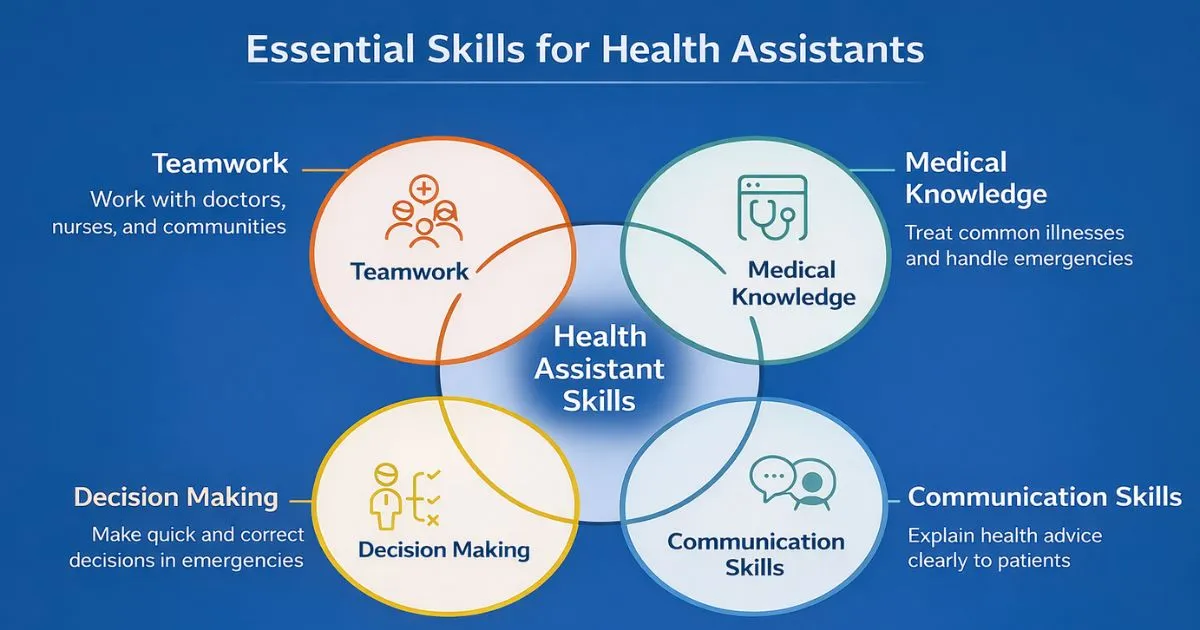
Health Assistants should know how to care for patients properly. They must speak clearly to give health advice. In emergencies, they need to make quick decisions. They also work together with doctors, nurses, and volunteers to help more people. Good listening helps them understand what patients need. Being patient and kind is also important to earn trust from the community.
1. Medical Knowledge
HAs learned how to treat common illnesses and manage emergencies.They also take part in health programs like giving vaccines to prevent diseases. Passing the Nepal Health Service Exam proves they have the right medical knowledge. They also learn how to take care of pregnant women, children, and older people.
2. Effective Communication
Good communication skills help HAs share health tips in a simple way so patients can understand and follow them. It also helps them work well with other health workers and volunteers to make the community healthier.
3. Decision Making
HAs must quickly choose the best treatment for patients, especially in emergencies. Quick decisions help save lives. They also decide when to send serious patients to bigger hospitals for better care.
4. Teamwork and Collaboration
HAs work together with nurses, doctors, and community volunteers. This teamwork helps deliver better health care in villages and towns. They join health meetings and plan programs to fight diseases and improve health services.
Salary Comparisons with Other Medical Roles
Health Assistants earn different salaries compared to Staff Nurses and Community Medical Assistants (CMAs). Knowing these differences helps people choose the right career path.
Health Assistants vs. Staff Nurses
Staff Nurses often get bonuses and flexible pay, while HAs have fixed pay with allowances. HAs mostly works alone in rural health posts treating common sickness and emergencies, while nurses give care and health education continuously. Both jobs are important but different. Nurses usually work more in hospitals, while HAs serve in smaller health centers.
Health Assistants vs. Community Medical Assistants
CMAs usually earn less, around NPR 20,000 to NPR 30,000 each month. They do simple health checks and assist doctors and Health Assistants. Their training takes less time. CMAs can study more to become HAs and get higher pay. For many, being a CMA is the first step in a health career.
Tools and Resources for Job Seekers
To become a Health Assistant in Nepal, you must pass the Nepal Health Service Exam and show documents like citizenship and education certificates. Many groups like PHASE Nepal hire HAs regularly. Selection is based on education, experience, and interviews. Good preparation and practice help candidates succeed.
Networking and Job Fairs
Attending job fairs and joining professional health groups can help you find Health Assistant jobs in Nepal. Talking to current Health Assistants gives good advice on how to prepare and find work. Building good contacts in health circles increases chances to get a good job.
Conclusion
Health Assistants are very important in Nepal’s health system, especially in villages and remote areas. They treat common sicknesses, help in emergencies, and support health programs that keep people healthy. How much they earn depends on their experience, where they work, and who they work for, but there are many chances to grow and earn more. Becoming an HA is a good job for those who want to help others and have a steady career. Begin your preparation today to become a Health Assistant in Nepal. With hard work and learning, you can have a bright future in this respected and helpful job.