

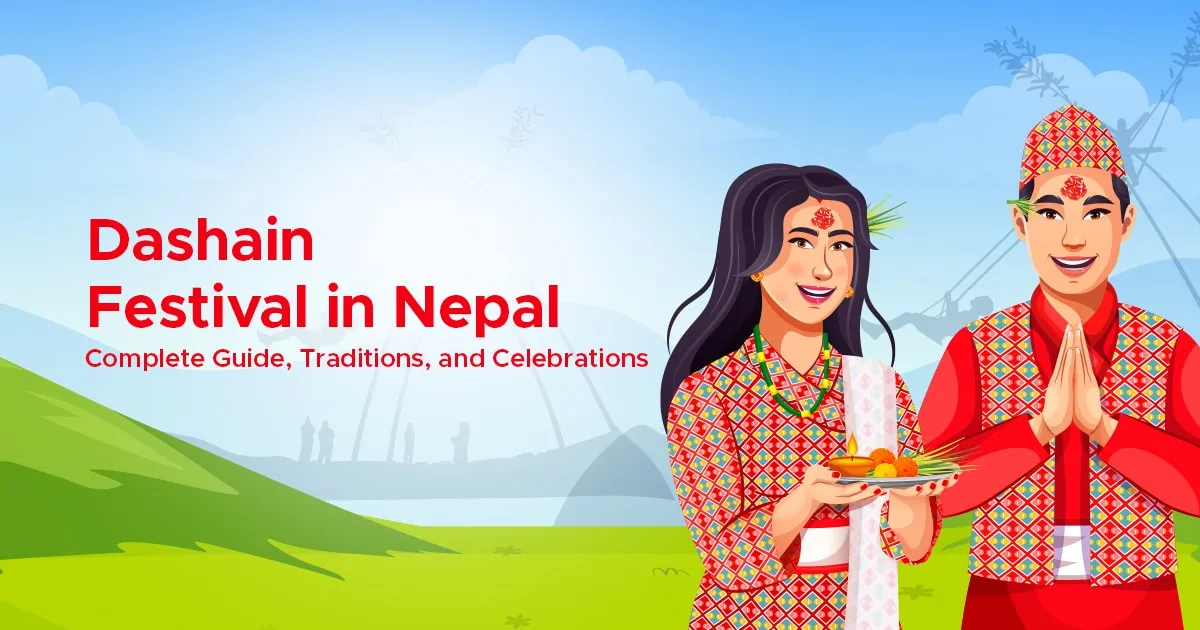
Dashain, also known as Bada Dashain or Vijaya Dashami, is the biggest and longest festival in Nepal. It is celebrated for fifteen days with happiness and excitement all over the country. Dashain is more than a holiday. It is a time for family gatherings, cultural traditions, and joy that brings people together. The festival is deeply connected with the Hindu religion and Nepali culture. Families clean and decorate their homes, prepare delicious food, and travel to meet their loved ones. As the most important national holiday in Nepal, Dashain is enjoyed by people in every village and city.
What is Dashain? Nepal’s Biggest Festival
The Spirit of Dashain: Victory, Family, and Joy
Dashain is celebrated for fifteen days and carries deep meaning for Nepali people. It shows the victory of good over evil. The festival is dedicated to Goddess Durga, who defeated demons after a long battle. Families come together during this time to share food, play games, and celebrate with love. The highlight is receiving tika, a mixture of rice, yogurt, and red powder, along with jamara, the sacred barley shoots, from elders. These blessings are believed to bring health, happiness, and good fortune. Dashain is not only a Hindu festival but also a time that represents togetherness and the strength of Nepali culture.
Why Dashain is So Important to Nepali People
Dashain is important because it unites families and communities. Many Nepali people who live abroad or in big cities return home during this festival. It becomes a time for reunion, where family members meet after a long time. Elders bless the younger ones with tika and jamara, and everyone enjoys meals and conversations together. Neighbors and communities also share the happiness of Dashain, making it a celebration of social harmony. The festival keeps cultural traditions alive and helps pass them on to the younger generation. For this reason, Dashain is seen as a symbol of love, unity, and Nepali identity.
The Feeling of Dashain in the Air
The arrival of Dashain changes the whole atmosphere of Nepal. The sky becomes clear and bright after the rainy season. Children and young people fly colorful kites, and markets are filled with shoppers buying new clothes and gifts. Families prepare their homes and cook special dishes to welcome guests. The sound of traditional music, especially the Malshree Dhun, can be heard everywhere, adding to the joy. Villages and cities look lively, and people are filled with excitement and anticipation. The festive mood makes Dashain the most awaited time of the year for Nepali people.
How Dashain Dates are Decided
Dashain does not come on the same days every year. It follows the Nepali lunar calendar, so it usually happens in the months of September or October. The exact dates are chosen by looking at the moon and then announced by religious leaders in Nepal. People wait for the official announcement so they can know the starting day and plan for travel, shopping, and family gatherings.
The festival always has a few important days. It begins with Ghatasthapana, when people plant jamara (barley seeds) as part of the ritual. Then comes Fulpati, when flowers and sacred items are brought into the home. Maha Ashtami is the day for special worship of Goddess Durga. Finally, on Vijaya Dashami, elders put tika and jamara on the foreheads of younger family members and give blessings. Even though the dates change a little every year, the way people celebrate and the happiness of Dashain always remain the same.
The Story Behind Dashain: Gods and Demons
Goddess Durga's Great Victory Over Mahishasur
The most important story of Dashain is about Goddess Durga and her battle with the demon Mahishasur. According to Hindu beliefs, Mahishasur was a very powerful demon who created trouble for the gods and humans. Goddess Durga fought him for nine days and nights and finally defeated him. This victory shows the power of good over evil and the strength of the divine feminine. The nine days of her battle are also celebrated as Navaratri in Hindu traditions. People remember this story every year during Dashain as a way to honor courage, justice, and goodness.
The Ramayana Story: Lord Rama's Win Against Ravana
Dashain is also connected to the epic story of the Ramayana. In this story, Lord Rama fought and defeated the demon king Ravana, who had caused a lot of trouble and injustice. His victory represents the triumph of truth and righteousness over lies and evil. This part of the festival reminds people that honesty and goodness always win in the end. Many people see this story as another reason to celebrate Dashain and follow the values of truth, fairness, and courage.
What Dashain Symbolizes for Everyone
Dashain is not only about stories from the past; it is also about love, blessings, and hope for the future. Elders give tika and jamara to younger family members as a way of showing care and giving good luck. People pray for health, prosperity, and success during the festival. Dashain also teaches important life lessons about justice, renewal, and the power of goodness. It is a time when everyone, young and old, feels part of the celebration and connected to family, friends, and the community. The festival brings people together and reminds them of the importance of love and kindness in everyday life.
The 15 Days of Dashain: A Detailed Guide to Traditions and Rituals
Day 1: Ghatasthapana
Dashain starts with Ghatasthapana, which is the first and most important ritual of the festival. On this day, families place a Kalash, a sacred pot filled with holy water, in a clean and sacred place at home. They also plant jamara, which are barley or corn seeds. The jamara grows over the next few days and becomes an important part of the tika ceremony. This day symbolizes new beginnings, hope, and blessings for the family. People pray for good health, happiness, and success as the festival begins.
Days 2-6: Nawa Durga
The next few days, from the second to the sixth, are dedicated to worshipping the nine forms of Goddess Durga, also called Nawa Durga. Families continue to take care of the jamara and perform daily prayers. People also clean their homes, decorate them, and prepare for the bigger rituals in the following days. This period is a time for devotion, reflection, and preparation. It helps everyone focus on the spiritual meaning of Dashain while getting ready to welcome relatives and guests.
Day 7: Fulpati
The seventh day of Dashain is Fulpati. On this day, sacred flowers, jamara, and other holy plants are brought into homes or carried in public processions. In the past, these processions went to historic sites such as Tundikhel in Kathmandu. Fulpati represents unity, respect for nature, and togetherness. Families gather to witness or take part in the rituals, and it reminds people of the importance of harmony and cultural traditions.
Day 8: Maha Ashtami
Maha Ashtami is dedicated to Goddess Kali, who represents courage and protection. Traditionally, animal sacrifices were made, but today many families use alternatives such as coconuts or pumpkins as offerings. The day is also called Kalaratri, meaning the night of darkness, which reminds people to be brave and devoted. Devotees visit temples, pray, and perform rituals to honor the goddess and seek her blessings for protection and strength.
Day 9: Maha Navami
On Maha Navami, people worship their tools, vehicles, and equipment to ensure safety and smooth work during the year. This day is also called Vishwakarma Puja in some regions. In Kathmandu, the Taleju Temple opens only on this day, and many devotees visit to offer prayers. This ritual shows gratitude for tools and creative power that help people in their daily lives and work.
Day 10: Vijaya Dashami
Vijaya Dashami is the most important day of Dashain. On this day, elders put red tika mixed with rice and yogurt, along with jamara, on the foreheads of younger family members. While doing this, they give ashirbad, or blessings, for health, success, and happiness. Families also give dakshina, which is money or gifts as a sign of love and respect. This day is all about family togetherness, respect for elders, and sharing joy.
Days 11-15: Subsequent Tika and Kojagrat Purnima
After Vijaya Dashami, families continue to visit relatives and give tika and blessings during the following days. These days are spent enjoying meals, visiting neighbors, and celebrating with friends. The festival ends on Kojagrat Purnima, the full moon night, dedicated to Goddess Lakshmi, the goddess of wealth. Families stay awake, pray, and light lamps under the full moon, asking for prosperity, happiness, and success in the coming year. This marks the peaceful end of Dashain and leaves everyone with joy, blessings, and a sense of togetherness.
Fun and Traditions: How People Celebrate Dashain
Delicious Food and Grand Family Feasts
No Dashain celebration is complete without food. Families prepare and enjoy a variety of special dishes during the festival. The most popular is khasi ko masu, which is goat curry, served with rice and pickles. People also make traditional sweets like sel roti, a type of sweet rice bread. Eating together during Dashain is more than just enjoying meals. It is a way to show love, unity, and happiness among family members. Sharing food brings everyone closer and makes the festival feel warm and joyful.
Flying Kites High in the Sky
Flying kites, called changa chait, is a favorite activity during Dashain. Children, young people, and even adults go outside to fly kites in open fields and rooftops. Many enjoy kite fighting, where they try to cut other kites from the sky using their strings. This fun activity is also believed to have a deeper meaning. People think that flying kites helps remind the gods to stop the rain after the monsoon and bring clear skies for the festival.
Swinging on Community-Built Bamboo Swings
During Dashain, villages and towns set up linge ping, which are bamboo swings, and rote ping, wooden Ferris wheels. These swings are built in open spaces for everyone to enjoy. Tradition says that each person should leave the ground at least once during Dashain, as it brings good luck and prosperity for the year. Swinging is not only fun, but it is also a way for communities to come together and celebrate joyfully.
Shopping for New Clothes and Exchanging Gifts
Buying and wearing new clothes is an important part of Dashain. People see it as a symbol of freshness, happiness, and a new beginning. Families often use their festival bonuses or savings to buy clothes, shoes, and other gifts. Exchanging gifts among family and friends makes the festival even more special. It is a way to show love, respect, and care while spreading joy and celebration.
The Sound of Dashain: Malshree Dhun
During Dashain, the traditional tune called Malshree Dhun is played everywhere. It is the official music of the festival and can be heard in homes, streets, markets, and temples. The melody of Malshree Dhun creates a festive mood, fills people with happiness, and reminds everyone that Dashain is here. Listening to this music is a special part of the celebration, connecting people to Nepali culture and tradition.
Dashain for Travelers: A Guide for Visitors in Nepal
What to Expect When Traveling During Dashain
If you are visiting Nepal during Dashain, it is important to plan ahead. Many people travel back to their hometowns, so buses, flights, and trains can be fully booked. Roads and public transport may be crowded. Offices, schools, and even some shops may be closed during the main days of the festival, so it is a good idea to check schedules before making plans. Despite the busy travel, this is the best time to see how Nepali families celebrate their biggest festival with joy and excitement.
How to Respectfully Join the Celebration
Visitors are welcome to experience Dashain, but it is important to be respectful of local customs. If invited to a home, enjoy the food, participate in celebrations politely, and greet people with a friendly “Happy Dashain.” When observing rituals, do not interrupt prayers or ceremonies. Showing kindness, curiosity, and respect will make your experience enjoyable and will be appreciated by locals.
Where to See Dashain Festivities
Dashain celebrations are visible everywhere, but some places offer special cultural experiences. Public spaces like Kathmandu Durbar Square host traditional processions, music, and decorations. Visiting villages during Dashain lets travelers see the heart of Nepali traditions, including kite flying, swings, and family rituals. Experiencing these celebrations provides a unique insight into the rich culture and festive spirit of Nepal.
Conclusion
A Summary of Nepal's Most Loved Festival
Dashain is the most important and beloved festival in Nepal. It is a time when people celebrate the victory of good over evil and honor stories from Hindu mythology. The festival also brings families together, as relatives travel from near and far to meet, share meals, and give blessings. Communities come alive with swings, kites, music, and cultural events, creating a feeling of happiness, unity, and togetherness. From planting jamara to receiving tika, from feasts to prayers, every part of Dashain shows the rich culture and traditions of Nepal.
Wishing You a Happy Vijaya Dashami!
During Dashain, homes, streets, and temples are filled with joy and celebration. We wish you and your family health, happiness, and prosperity during this festive season. May this Dashain bring peace, love, and togetherness to your life. Enjoy the tika, blessings, feasts, and fun with your loved ones, and make wonderful memories. Happy Vijaya Dashami!
FAQs About Dashain Festival
1. What is the Dashain festival?
Dashain is Nepal's biggest and longest Hindu festival, celebrating the victory of good over evil. It lasts 15 days and honours Goddess Durga's victory over the demon Mahishasura. It’s a time for family gatherings, blessings, and feasts.
2. When is Dashain celebrated in Nepal?
Dashain usually falls in September or October, depending on the lunar calendar. The exact dates vary each year, but the festival lasts for 15 days, with the main celebration on the 10th day, known as Vijaya Dashami.
3. Why do people put tika and jamara during Dashain?
The tika (a mixture of yoghurt, rice, and vermilion) and jamara (barley sprouts) are applied on the forehead as blessings from elders. The tika symbolizes victory, while the jamara represents prosperity and well-being.
4. What foods are eaten during Dashain?
Common foods include mutton curry, sel roti (a rice flour doughnut), kheer (rice pudding), and other hearty traditional dishes. Feasting with family and friends is an important part of the celebration.
5. Is animal sacrifice still practised during Dashain?
Yes, animal sacrifices, especially of goats and buffaloes, are still performed in some parts of Nepal to honour Goddess Durga. However, the practice is controversial, and many people are moving toward more symbolic sacrifices.
6. How is Dashain celebrated in modern times?
While the core rituals of Dashain remain, many urban families celebrate with more modern touches, such as travelling or holding smaller, simplified gatherings. Technology also allows Nepalis abroad to join in the celebrations virtually.