

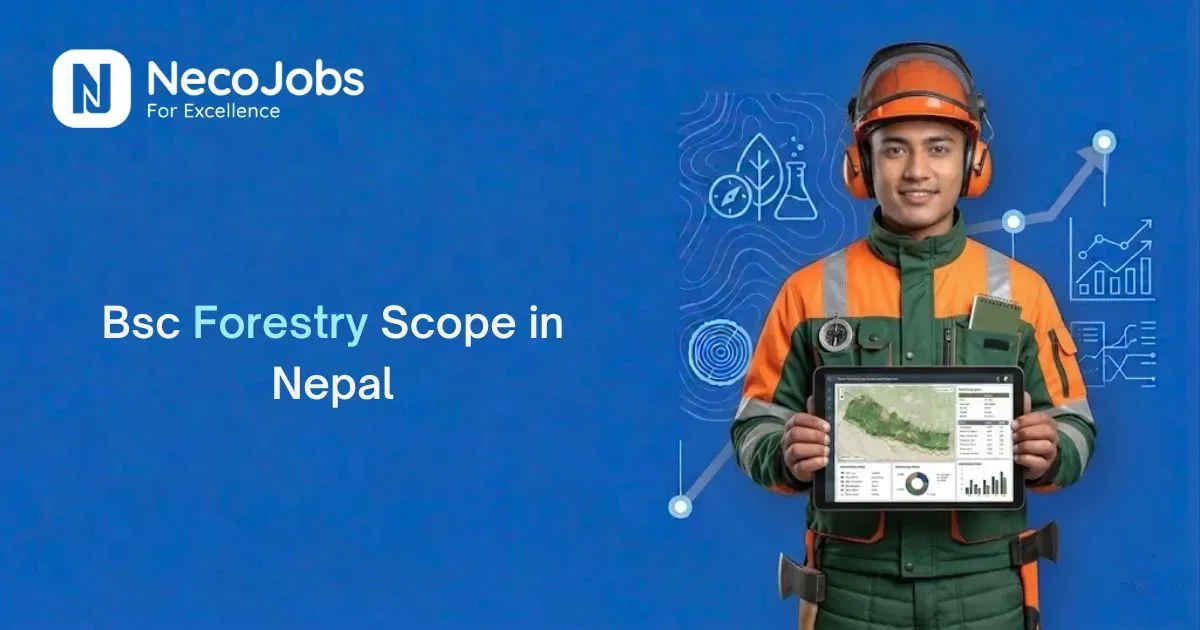
Nepal is known for its rich forests, wildlife, and natural resources, making it an ideal place to study BSc Forestry. This course is a good choice for students who love nature, environment, and outdoor work.
After completing BSc Forestry, students can find many career opportunities in Nepal. They can work in government offices, NGOs, INGOs, research centers, and private organizations. They can also contribute to forest conservation, wildlife protection, and environmental management.
In recent years, the demand for forestry professionals has been increasing in Nepal. Because of this, more students are choosing this field as a good career option. In this guide, we will cover the scope of BSc Forestry in Nepal, job opportunities, salary, required skills, and future career growth.
Table of Contents
- What is BSc Forestry?
- BSc Forestry Scope in Nepal
- Current Status of the Forestry Sector
- Future Opportunities in Forestry
- Role of Forestry in Sustainable Development
- Job Opportunities for BSc Forestry in Nepal
- 1. Government Forestry Jobs
- 2. Wildlife Conservation Jobs
- 3. Community Forestry Jobs
- 4. Environmental Consultant Jobs
- 5. Research Jobs
- 6. NGO and INGO Jobs
- Skills Required for a Successful Forestry Career
- 1. Forest Resource Management
- 2. GIS and Remote Sensing Skills
- 3. Research and Data Analysis
- 4. Communication and Project Management
- Salary of BSc Forestry in Nepal
- Entry-Level Salary
- Mid-Level Salary
- Senior-Level Salary
- Factors Affecting Salary
- How to Start a Career in Forestry?
- 1. Complete a BSc Forestry Degree
- 2. Learn Important Skills
- 3. Gain Practical Experience
- 4. Apply for Forestry Jobs
- 5. Build Professional Connections
- Conclusion
What is BSc Forestry?
BSc Forestry is a four-year bachelor’s degree related to forests, wildlife, and the environment. It is a good option for students who are interested in nature and want to build a career in this field.
After completing BSc Forestry, graduates can find job opportunities in different sectors related to forests and the environment. They can work in government offices, national parks, NGOs, INGOs, and private companies.
As Nepal is known for its large forest area and growing focus on environmental protection, the demand for forestry graduates is increasing. This makes BSc Forestry a good career choice for students looking for job opportunities in Nepal.
BSc Forestry Scope in Nepal
Current Status of the Forestry Sector
Forestry is an important sector in Nepal. Many forests are managed through community forestry programs, which help in protecting and caring for forests in a better way. Today, forestry is also linked with wildlife, tourism, agriculture, and local development, making it an important part of Nepal’s economy.
Future Opportunities in Forestry
As more environmental and conservation projects are coming to Nepal, the need for forestry professionals is also increasing. Projects related to forests, wildlife, water resources, eco-tourism, and climate change need people with forestry knowledge and skills. Because of this, more job opportunities are expected to be available in the future. This will help create more career options for people who want to work in the forestry sector.
Role of Forestry in Sustainable Development
Forestry plays an important role in protecting forests, wildlife, water sources, and other natural resources. Many people in Nepal also depend on forests for their daily needs and to earn a living. Proper forest management can protect these natural resources for future generations. It also supports local communities and helps in the overall growth and development of the country.
Job Opportunities for BSc Forestry in Nepal
BSc Forestry offers various job opportunities in Nepal. People with a forestry background can work in government offices, NGOs, INGOs, research centers, national parks, and private companies. As the forestry and environmental sector continues to grow, the demand for skilled professionals is also increasing. Below are some of the popular job options in this field.
1. Government Forestry Jobs
Government forestry jobs are one of the most popular career options in this field. These jobs are available in forest offices, national parks, wildlife reserves, and other government departments. Many people also prepare for Lok Sewa exams to get government jobs in forestry. In these jobs, people work in forest management, forest protection, and protecting natural resources.
2. Wildlife Conservation Jobs
Wildlife conservation jobs focus on protecting wild animals and their natural homes. These jobs are mostly available in national parks, conservation areas, and organizations that protect wildlife. People working in this field protect animals, save their homes in nature, and make sure wildlife is safe and not harmed. They also support conservation programs and take part in activities that help protect forests and wildlife.
3. Community Forestry Jobs
Community forestry jobs involve working with local people to manage and protect forests. People in this field support community forest groups and teach people how to use forest resources in a proper way. They also work with local communities on different activities related to forest conservation and management.
4. Environmental Consultant Jobs
Environmental consultant jobs are available in private companies, environmental projects, and development organizations. People in this field check how a project may affect forests, wildlife, water sources, and the environment. They provide suggestions to reduce environmental problems and support projects in a more environmentally friendly way.
5. Research Jobs
Research jobs are suitable for people who are interested in forests, wildlife, and the environment. People working in this field collect information, visit different places for fieldwork, and gather data related to forests and wildlife. They also study environmental problems and support organizations in understanding forest and nature-related issues. These jobs are available in research centers, universities, and different organizations.
6. NGO and INGO Jobs
Many NGOs and INGOs in Nepal work on projects related to forests, wildlife, climate change, and community development. People working in this field work with local communities, support conservation activities, and take part in environmental programs. These organizations run projects in different parts of Nepal, creating good job opportunities for people with a forestry background.
Skills Required for a Successful Forestry Career
To build a successful career in forestry, you need both technical skills and practical knowledge. Forestry workers help protect forests, manage natural resources, and support nature conservation. Having the right skills can help you find better job opportunities and grow your career in the forestry sector.
1. Forest Resource Management
Forest resource management is an important skill in forestry. It means understanding forests, wildlife, plants, and natural resources. People working in this field should know how to protect forests and use forest resources properly. This skill helps in keeping forests safe and healthy for the future. It is useful for jobs related to forest conservation, community forestry, and natural resource management.
2. GIS and Remote Sensing Skills
GIS (Geographic Information System) and remote sensing are important tools used in forestry. These tools help people make maps, study forest areas, and collect information about forests. They also help in finding changes in forests and understanding environmental problems. GIS and remote sensing skills are useful for jobs in government offices, NGOs, INGOs, and research organizations. Learning these skills can help increase job opportunities in the forestry field.
3. Research and Data Analysis
Research and data analysis are important skills for forestry professionals. People working in this field often visit forests, collect information, and study different environmental issues. They use the information they collect to understand problems and find better solutions. These skills are useful for research jobs, environmental projects, and conservation programs.
4. Communication and Project Management
Communication and project management skills are important in forestry jobs. Forestry professionals often work with local people, government offices, NGOs, INGOs, and private organizations. They need to share information clearly, work with different groups of people, and manage project activities. Strong communication, teamwork, and planning skills help in completing projects successfully and growing in a forestry career.
Salary of BSc Forestry in Nepal
Entry-Level Salary
People who are new to the forestry field and have up to 2 years of experience usually earn between NPR 20,000 to NPR 40,000 per month. Many start by working in NGOs, INGOs, private companies, or different forestry and environmental projects. During the first few years, they learn how forestry work is done and gain practical experience in the field.
Mid-Level Salary
Professionals with 3 to 5 years of experience can earn around NPR 40,000 to NPR 70,000 per month. As they gain more knowledge and experience, they are often trusted with bigger tasks and projects. Their work may include field visits, research activities, project support, and forest management work.
Senior-Level Salary
Professionals with more than 5 years of experience can earn NPR 70,000 to NPR 100,000 or more per month. They usually have a strong understanding of the forestry sector and may lead projects, guide junior staff, and help make important decisions. Their experience and skills play a big role in increasing their salary and career growth.
| Also Read: Tourist Guide Salary in Nepal |
Factors Affecting Salary
The salary of a forestry professional can be different from one person to another. Some people earn more, while others earn less. Here are some of the main factors that affect salary:
- Experience: People with more work experience usually earn more income. As they spend more years in the field, they gain practical knowledge and may get better job opportunities.
- Skills: Having extra skills can help increase salary. Skills like GIS, remote sensing, research, data analysis, and project management are often valued by employers.
- Education: Higher education can also lead to better pay. People with a master's degree or specialized training may have more career opportunities and higher earning potential.
- Organization: Salary often depends on where you work. Government offices, NGOs, INGOs, research organizations, and private companies may offer different salaries and benefits.
- Project Budget: Many forestry jobs are linked to projects. Projects with a larger budget may offer better salaries and additional benefits.
- Special Area of Work: People who work in areas such as GIS, wildlife conservation, environmental research, or environmental consulting may earn more because these skills are in demand.
How to Start a Career in Forestry?
A career in forestry is a good option for people who are interested in forests, wildlife, and the environment. Forestry professionals are responsible for protecting natural resources, managing forests, and supporting conservation activities. If you want to work in this field, you need the right education, skills, and experience. Here are some important steps to start a career in forestry.
1. Complete a BSc Forestry Degree
The first step is to complete a BSc Forestry degree from a recognized college or university. This course is all about forests, wildlife, biodiversity, natural resources, and environmental management. It gives the knowledge needed to work in forestry-related jobs and builds a strong foundation for a future career.
2. Learn Important Skills
Having the right skills can improve your chances of getting a job. Skills such as GIS, remote sensing, research, data collection, and report writing are commonly used in forestry work. Learning these skills can help you perform your job better and make your CV stronger when applying for jobs.
3. Gain Practical Experience
Getting practical experience is very important if you want to work in forestry. You can join internships, training programs, field visits, volunteer activities, or research projects. These opportunities help you learn how work is done in the real world and improve your knowledge and skills.
4. Apply for Forestry Jobs
After completing your studies, you can start applying for forestry jobs. Job opportunities are available in government offices, NGOs, INGOs, research centers, national parks, conservation projects, and private companies. Many students also prepare for Lok Sewa exams to get government jobs. Applying for jobs regularly can increase your chances of finding the right opportunity.
5. Build Professional Connections
Building professional connections can be very helpful when starting a career in forestry. You can join workshops, seminars, training programs, and other forestry events to meet professionals and learn from their experience. These connections can help you learn about new job openings, training programs, and career opportunities in the future.
Conclusion
BSc Forestry is a good career option for people who are interested in forests, wildlife, and the environment. It offers job opportunities in government offices, NGOs, INGOs, research organizations, national parks, and private companies. With the right skills and practical experience, forestry professionals can build a stable career in this field.
As, Nepal is known for its rich forests and natural beauty, making forestry an important profession in the country. For those interested in nature and conservation, it can be a rewarding and meaningful career choice.