


Flying an aircraft has always been a dream job for many in Nepal. With the growing aviation industry and more young people choosing careers in the pilot, becoming a pilot is now more achievable than ever. But how much do pilots really earn in Nepal? What does the career path look like? In this guide, we’ll explore pilot salaries, qualifications, training, and future opportunities in Nepal’s aviation industry.
Table of Contents
- Overview of Pilot Careers in Nepal
- Different Types of Pilot Positions
- The Role of a Pilot in Aviation
- Pilot Salary in Nepal
- Trainee Pilot
- Junior Officer Pilot / First Officer
- Captain Pilot
- International Pilot
- Factors Affecting Pilot Salaries
- 1. Experience and Flying Hours
- 2. Type of Aircraft Operated
- 3. Airline Type and Reputation
- Required Qualifications and Skills
- 1. Essential Pilot Licenses (PPL, CPL, ATPL)
- 2. Technical Skills Required for Pilots
- 3. Importance of Soft Skills in Aviation
- Training and Education for Pilots
- 1. Local Training Options in Nepal
- 2. International Training Opportunities
- 3. Continuing Education and Skill Development
- Career Path and Growth Opportunities
- From Trainee to Captain
- Specialization and Niche Areas in Piloting
- Opportunities Beyond Flying: Training, Management
- Industry Trends and Future Outlook
- Impact of Aviation Trends on Salaries
- Emerging Challenges and Opportunities in Pilot Careers
- Conclusion
Overview of Pilot Careers in Nepal
Becoming a pilot in Nepal starts with proper training. Aspiring pilots usually begin as students with little or no income while focusing on earning their first flying license. This journey includes passing medical tests, theory exams, and completing required flight hours, and it typically takes one to two years.
Nepal’s aviation industry is steadily growing, with both domestic and international flights increasing every year. Because of this expansion, there are now more job opportunities for trained and qualified pilots. Career growth in this field depends on experience, skill level, and the type of airline a pilot works for. Over time, as pilots gain more flight hours and advanced certifications, they can progress into higher positions and enjoy better career opportunities.
Different Types of Pilot Positions
There are various types of pilot jobs in Nepal, and salaries differ depending on the role. Some pilots fly commercial jets for national airlines, while others work in the logistics or transport sectors , which relate closely to logistics jobs.
Interestingly, there’s a noticeable gap between local and expat pilots. Expat pilots are often paid more and even have their taxes covered by the airlines. To enter this field, students must pass 10+2 with science and clear aviation entrance exams, along with obtaining a Class 1 medical certificate.
The Role of a Pilot in Aviation
A pilot is not just someone who flies planes; they’re responsible for making each flight safe and successful. They plan routes considering weather, check the aircraft before takeoff, and constantly stay in contact with air traffic control. During the flight, they monitor systems and inform passengers about any turbulence or delays. Every flight depends on the pilot’s skill, discipline, and quick decision-making.
Pilot Salary in Nepal
Trainee Pilot
At the starting point of a pilot’s journey, most are still in training and building required flight hours before entering airline service. In Nepal, this stage is more about learning than earning. A trainee pilot usually receives around NPR 25,000 to NPR 60,000 per month, often as a training allowance rather than a fixed salary. In many cases, the focus is on completing licensing requirements rather than income.
Junior Officer Pilot / First Officer
After obtaining a Commercial Pilot License (CPL), pilots begin their professional airline career as a First Officer. This is the entry-level position in commercial aviation where they assist the captain and gain real flight experience. In Nepal, the typical salary for a First Officer ranges from NPR 70,000 to NPR 200,000 per month, depending on the airline, aircraft type, and flight hours. New pilots usually start on the lower side and gradually move up with experience.
Captain Pilot
A Captain is a senior and highly responsible position in aviation. At this level, the pilot is fully in charge of the aircraft, crew, and passenger safety. In Nepal, a Captain generally earns between NPR 250,000 to NPR 700,000+ per month, depending on experience, airline, and aircraft category. Captains flying larger or international aircraft tend to earn significantly higher salaries compared to domestic routes.
International Pilot
International pilots represent the top level of aviation careers in terms of earnings. Those working with foreign airlines or operating long-haul international flights earn the highest salaries in the industry. In Nepalese currency, their monthly income typically ranges from NPR 500,000 to over NPR 1,200,000, along with additional benefits such as travel allowances, accommodation, and other perks depending on the airline.
Factors Affecting Pilot Salaries
Pilot salaries in Nepal aren’t fixed and can change based on several important factors. Airlines, aircraft, licenses, and experience levels all play a role in determining how much a pilot earns. Let's explore how these factors shape their income.
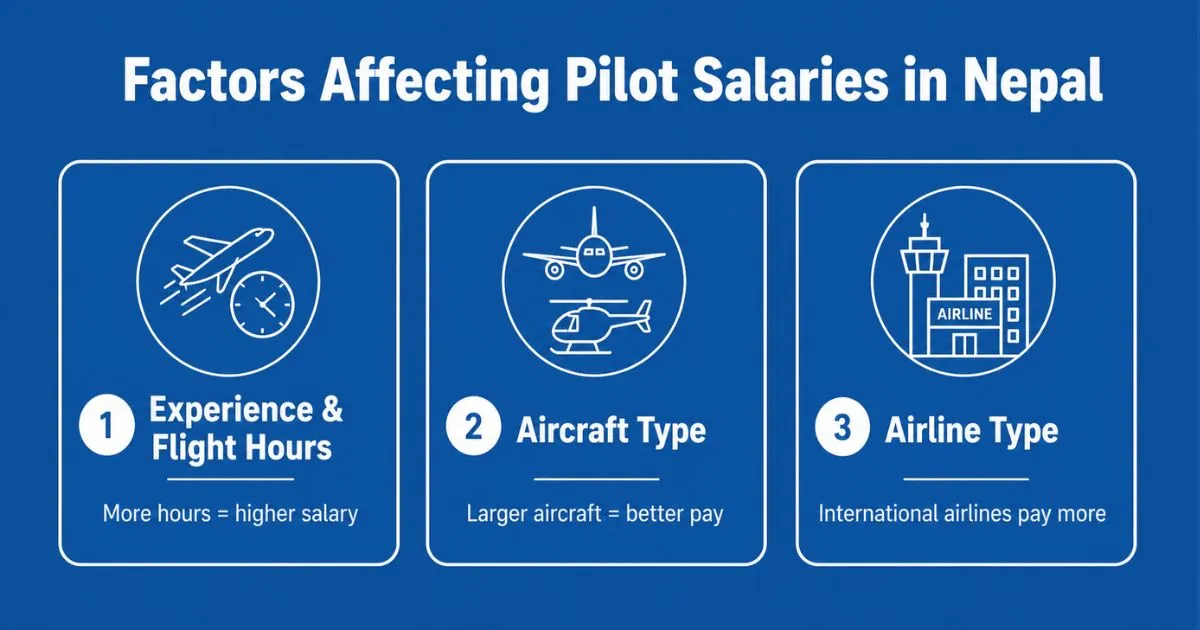
1. Experience and Flying Hours
A pilot with less than two years of experience typically earns around NPR 800,000 to NPR 1,200,000 per year. In comparison, helicopter pilots in the same experience level usually earn between NPR 500,000 to NPR 700,000 annually.
To become a licensed pilot, candidates must complete at least 200 flight hours at a certified training school. Many aspiring pilots also choose to study abroad for advanced training, which can improve their skills and increase their chances of securing better career opportunities in the aviation industry.
2. Type of Aircraft Operated
What a pilot flies directly affects their salary. Those with PPLs fly small planes, while CPL and ATPL holders operate commercial jets. Nepal Airlines uses modern aircraft like Airbus A320 for international flights. Helicopters are also common, with over 10 companies employing 30+ pilots. Pilots earn more as they start flying larger aircraft instead of smaller ones.
3. Airline Type and Reputation
Not all airlines pay the same. International airlines offer better salaries, benefits, and working conditions. Domestic airlines often run tight schedules and pay less. However, even within Nepal, some airlines offer competitive packages based on aircraft type and route complexity.Pilots who fly long international routes usually earn more than those who fly short domestic flights.
Required Qualifications and Skills
Becoming a pilot is not just about dreams — it needs qualifications and discipline. In Nepal, aspiring pilots must complete their 10+2 in science with at least 50% in Physics, Chemistry, and Math.Students must pass special aviation entrance exams, and having a Class 1 medical certificate is required to become a pilot.
1. Essential Pilot Licenses (PPL, CPL, ATPL)
A Private Pilot License (PPL) is the first step, costing around USD 35,600. To work professionally, one needs a Commercial Pilot License (CPL), which costs about USD 60,000. For senior roles like Captain, an Airline Transport Pilot License (ATPL) is required. Nepal has training centers like Aerosim and Everest Flight Academy offering these programs.
2. Technical Skills Required for Pilots
Beyond flying, pilots need strong technical skills. They must pass tough written exams and meet strict medical standards. A solid background in science is essential. Pilots must stay updated with aviation rules, flight systems, and emergency procedures. Regular re-certification and practice are also necessary.
3. Importance of Soft Skills in Aviation
Soft skills are equally important. Good communication, decision-making under pressure, teamwork, and problem-solving help pilots handle both regular flights and emergency situations. Confidence, calmness, and leadership make a strong pilot in the sky.
Training and Education for Pilots
Training is the foundation of a pilot's career. After completing 10+2 science, students can join certified aviation schools in Nepal. These schools provide classroom lessons and real flying experience. Pilot training usually takes one to two years and includes medical tests and written exams.
1. Local Training Options in Nepal
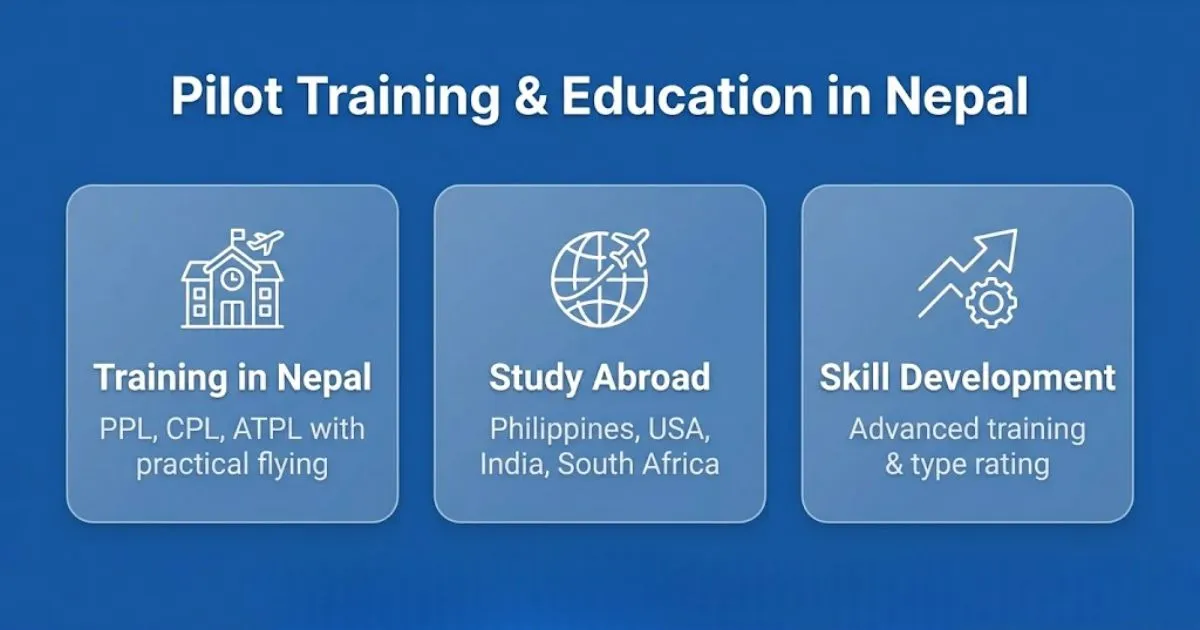
Nepal has several reputed aviation training institutes offering PPL, CPL, and ATPL courses. These programs combine theory and practical lessons. Students also undergo regular tests and flying time to earn their licenses. With the growing aviation sector, local training is becoming more accessible.
2. International Training Opportunities
Many Nepali students choose to study abroad in countries like the Philippines, South Africa, India, or the USA. These programs offer high-quality training and broader exposure. However, after returning, pilots must convert their licenses through the Civil Aviation Authority of Nepal (CAAN).
3. Continuing Education and Skill Development
Pilot training in Nepal doesn’t end after getting a license. Many pilots choose to study further by doing a bachelor’s or master’s degree or by getting trained on specific types of aircraft. Keeping their skills updated helps them grow in their careers and stay competitive in both Nepal and abroad.
Career Path and Growth Opportunities
Pilots in Nepal often start as trainees. This stage focuses on building flight hours under instructor supervision, usually with low or no salary. Over time, they move to higher ranks like First Officer and then Captain.
From Trainee to Captain
The journey from a trainee to Captain depends on flying hours and experience. License conversion (especially if trained abroad) also plays a role. As Nepal’s aviation industry grows, more pilots are advancing faster with better opportunities.
Specialization and Niche Areas in Piloting
Some pilots specialize in areas like helicopter rescue missions or cargo flights.Pilots who work for international airlines get higher pay and also receive extra benefits like travel allowances. Education level, like a master's degree, also impacts long-term earnings.
Opportunities Beyond Flying: Training, Management
Not all pilot careers are limited to flying. With experience, pilots can move into training, safety management, or operations. Aviation schools and airlines also hire experienced pilots as instructors or administrators, creating more career options.
Industry Trends and Future Outlook
Nepal’s aviation industry is expanding slowly but steadily. More routes, more airlines, and newer planes are creating new job opportunities. The country’s mountainous geography offers unique training experiences that can strengthen a pilot’s skills.
Impact of Aviation Trends on Salaries
Salary trends are also changing.Pilots who have international certificates and advanced training usually earn higher salaries. Male helicopter pilots earn around 11% more than female pilots, showing ongoing gender pay gaps. However, the average pay raise for pilots is higher than the national average, showing that this career continues to grow in value.
Emerging Challenges and Opportunities in Pilot Careers
New pilots in Nepal face some common challenges. One is converting foreign licenses into Nepali ones, which takes time and extra cost. Flight training itself is expensive, and finding a job with enough flying hours can be difficult at first. Most airlines prefer experienced pilots, so fresh graduates often struggle to get hired.
But the good news is, Nepal’s aviation sector is growing. More airlines and new routes are creating better chances for trained pilots. Also, international programs and airline partnerships are helping pilots build their careers fast.
Conclusion
Becoming a pilot in Nepal is a rewarding but demanding journey. While the training requires a significant investment of time and money, the career offers exciting opportunities, both at home and abroad. With the right qualifications and determination, aspiring pilots can achieve great success in this dynamic field.