


A notice period is a key part of employment in Nepal that ensures a smooth transition when an employee leaves a job or when an employer ends a contract. It helps maintain professionalism, avoid sudden disruptions, and protect both parties’ rights. Understanding notice period rules in Nepal is important for employees as well as employers. Whether you are planning to resign or manage staff, knowing your rights and responsibilities can save you from confusion and legal issues.
Table of Contents
- What is a Notice Period?
- Definition of Notice Period
- Purpose of Notice Period in Employment
- When Notice Period Applies
- Notice Period Rules in Nepal
- Legal Framework under Nepal Labor Act
- Employer Obligations
- Employee Obligations
- When Notice Period is Mandatory
- Notice Period Duration in Nepal
- Notice Period for Permanent Employees
- Notice Period for Probation Employees
- Notice Period for Contract Employees
- Employee Rights During Notice Period
- 1. Salary and Benefits During Notice Period
- 2. Leave Policy During Notice Period
- 3. Right to Fair Treatment
- 4. Experience Letter and Clearance
- Employer Rights During Notice Period
- 1. Assigning Work During Notice Period
- 2. Recovery of Dues
- 3. Managing Handover Process
- Can Notice Period Be Waived in Nepal?
- Mutual Agreement Between Employer and Employee
- Notice Period Buyout Option
- Company-Specific Policies
- What Happens If Notice Period is Not Served?
- Legal Consequences
- Salary Deduction or Penalties
- Impact on Future Employment
- How to Give Notice Period in Nepal
- 1. Inform Your Employer First
- 2. Write a Proper Resignation Letter
- 3. Serve the Full Notice Period
- 4. Complete Work and Handover
- Common Mistakes to Avoid During Notice Period
- 1. Leaving Without Proper Notice
- 2. Poor Communication
- 3. Incomplete Handover
- Conclusion
What is a Notice Period?
Definition of Notice Period
A notice period is the time an employee has to keep working after giving a resignation or after the employer tells them about termination. In simple words, it is the last working period before leaving a job. During this time, the employee still needs to complete their daily work and responsibilities. This period helps both the employee and employer get ready for the change in a smooth and proper way, without creating sudden problems at work.
Purpose of Notice Period in Employment
The main purpose of a notice period is to keep the work running smoothly in the company. It gives the employer enough time to find a new employee or manage the work with other team members. At the same time, it allows the employee to finish their pending tasks and hand over their work properly. Because of this, both sides can avoid confusion, delays, and work issues, and maintain a good professional relationship.
When Notice Period Applies
A notice period applies when an employee resigns from a job, when an employer decides to end employment, or when a job contract is completed. In Nepal, most companies clearly mention the notice period in the job contract or company rules. So, it is very important for employees to read and understand their agreement before joining or leaving a job.
Notice Period Rules in Nepal
Legal Framework under Nepal Labor Act
According to the Labor Act 2017, the notice period depends on how long an employee has worked in the company:
- If the job duration is up to 4 weeks, at least 1 day notice must be given
- If the job duration is 4 weeks to 1 year, at least 7 days notice must be given
- If the job duration is more than 1 year, at least 30 days notice must be given
If an employer does not give proper notice, they must pay salary equal to the notice period. This rule helps protect employees and ensures fair treatment.
Employer Obligations
Employers have some important duties during the notice period. They must give proper notice before removing an employee from the job, except in serious cases like misconduct or breaking company rules. Employers should not suddenly remove employees without a valid reason. During the notice period, they must pay full salary, allowances, and other benefits. They should also help make the leaving process smooth by allowing proper handover of work and giving important documents like an experience letter and clearance.
Employee Obligations
Employees also have responsibilities during the notice period. After resigning, they must keep working for the required time mentioned in their job contract or company rules. During this time, they should complete all their remaining work, support their team, and properly hand over their tasks to another employee. They should also follow company rules and behave properly. Being professional and respectful during this time is very important, as it helps maintain a good relationship with the employer and can help in future job opportunities.
When Notice Period is Mandatory
In most formal jobs in Nepal, serving a notice period is required for both employees and employers. Employees cannot leave a job immediately without informing the company. In the same way, employers must also follow proper steps before ending a job. However, the exact notice period time and rules can be different depending on the company, type of job, and job agreement. So, it is always important to read and understand your job contract clearly before joining or leaving a job.
Notice Period Duration in Nepal
Notice Period for Permanent Employees
For permanent employees, the notice period usually depends on how long they have worked in the company. Employees who have worked for a longer time may have a longer notice period compared to new employees. In many companies in Nepal, the notice period is usually between 15 days to one month or even more. The exact duration is clearly mentioned in the job contract or company policy. That is why employees should always check and understand their agreement to know their exact notice period before planning to leave a job.
Notice Period for Probation Employees
Employees who are in the probation period usually have a shorter notice period compared to permanent employees. In most cases, if an employee has worked for less than 1 year, the notice period is generally 7 days. This is because probation is a trial or evaluation phase where the company checks the employee’s performance and suitability for the job. During this time, both the employee and employer have more flexibility, so companies often allow quicker resignation or termination, making the notice period shorter and easier to manage.
Notice Period for Contract Employees
For employees working on a contract basis, the notice period depends on the terms and conditions mentioned in the contract. However, if the contract does not clearly mention it, the general notice period is 1 day (up to 4 weeks), 7 days (4 weeks to 1 year), and 30 days (more than 1 year). Different companies may still have different rules, so the notice period can vary from one contract to another. That is why it is very important for employees to carefully read and fully understand their contract before signing, so they do not face any confusion or problems later.
Employee Rights During Notice Period
1. Salary and Benefits During Notice Period
Employees have the right to receive full salary during the notice period, just like their regular working days. This means there should be no delay or unfair deduction in salary. Along with salary, employees should also receive all other benefits such as allowances, bonuses, incentives, or any other agreed payments mentioned in the job contract. Even during the notice period, the employee is still officially working, so all payments and benefits must be given properly as per company policy.
2. Leave Policy During Notice Period
In many companies, employees can take leave during the notice period, but they usually need approval from their manager or employer. Some companies may restrict leave during this time to make sure work handover is completed properly. In some cases, if the employee has unused leave balance, it may be adjusted during the notice period or they may get payment for it. The exact rule depends on the company’s leave policy.
3. Right to Fair Treatment
Employees have the right to be treated fairly and respectfully during the notice period. Even if the employee is leaving the job, the employer should not behave differently or create pressure, stress, or a negative work environment. There should be no discrimination or unfair treatment. The employee should be treated professionally and given a supportive environment until their last working day.
4. Experience Letter and Clearance
After completing the notice period, employees have the right to receive important documents such as an experience letter and clearance. The experience letter shows the employee’s role, work period, and performance in the company. Clearance confirms that the employee has completed all tasks and returned company property if any. These documents are very important when applying for new jobs, as they help build trust with future employers.
Employer Rights During Notice Period
1. Assigning Work During Notice Period
Employers have the right to assign work to employees during the notice period. Even if an employee has resigned, they are still part of the company until their last working day. This means they must continue doing their daily tasks and responsibilities. Employers can give new tasks, set deadlines, and expect the employee to complete the work properly. This helps the company continue its work without any interruption and ensures that important tasks are not left incomplete.
2. Recovery of Dues
If an employee has any pending dues, the employer has the right to recover them before the final settlement. These dues can include company property like laptops, ID cards, office equipment, documents, or any financial amount owed to the company. Employers may ask the employee to return all items before leaving. If anything is not returned, the employer may adjust the cost from the final salary. This process helps ensure that everything is properly settled before the employee leaves the job.
3. Managing Handover Process
Employers have the right to make sure that employees complete a proper handover of their work during the notice period. This includes explaining tasks, sharing files, transferring responsibilities, and helping other team members understand the work. Employers can guide the employee on how to complete the handover properly. A good handover process helps avoid confusion, reduces work delays, and ensures that the company’s work continues smoothly even after the employee leaves.
Can Notice Period Be Waived in Nepal?
Mutual Agreement Between Employer and Employee
Yes, a notice period can be waived(cancelled) if both the employer and employee agree. This means both sides decide that the employee does not need to complete the full notice period. This usually happens when both the employee and employer are comfortable with an early exit and there is no problem in managing the work. However, this decision should be clearly discussed and agreed by both sides to avoid any confusion later.
Notice Period Buyout Option
In some cases, employees can choose a notice period buyout option. This means the employee pays an amount equal to the remaining notice period salary instead of working during that time. By doing this, the employee can leave the job immediately without completing the notice period. However, this option depends on company policy, and not all companies allow it. Employees should always confirm this with their employer before making a decision.
Company-Specific Policies
Different companies may have different rules for notice period waivers. Some companies may allow early exit or buyout options, while others may strictly require employees to complete the full notice period. The rules can vary based on company policy, job role, and employment contract. That is why it is always important to read and understand your company’s policy and job agreement carefully before taking any step.
What Happens If Notice Period is Not Served?
Legal Consequences
If an employee does not serve the notice period, it may lead to legal problems. This usually happens when the employee breaks the terms mentioned in the job contract or does not follow company rules. In some cases, the employer may take legal action if the situation is serious. It can also create disputes between the employee and employer. That is why it is always better to follow the proper process and serve the notice period as required.
Salary Deduction or Penalties
If an employee leaves the job without completing the notice period, the employer may deduct salary or apply penalties. For example, the company may cut the amount equal to the remaining notice period from the final salary. In some cases, other benefits or payments may also be affected. These rules are usually mentioned in the employment contract, so it is important to understand them clearly before leaving a job.
Impact on Future Employment
Not serving a notice period can create a negative impact on your professional image. Future employers may ask about your previous job, and leaving without proper notice may give a bad impression. It can also create difficulty in getting an experience letter or reference from your previous company. Because of this, it is always better to leave a job in a proper and professional way.
How to Give Notice Period in Nepal
Giving a notice period properly is important to leave your job in a professional way. It helps maintain a good relationship with your employer and avoids any confusion or problems. Following the correct process also makes your job exit smooth and supports your future career.
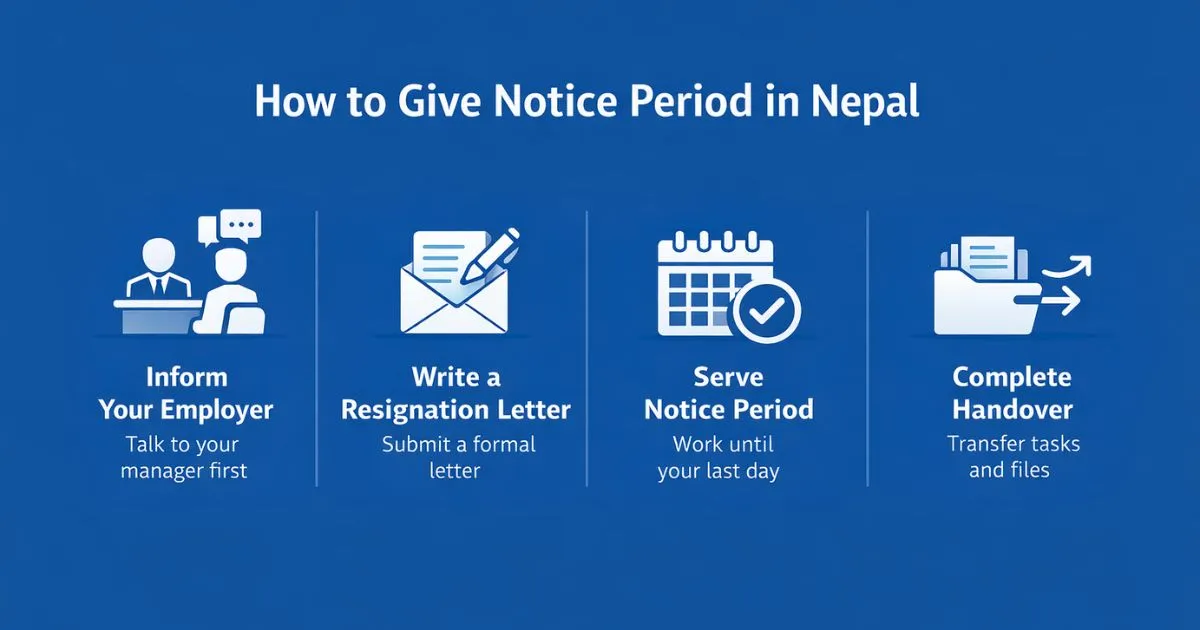
1. Inform Your Employer First
Before submitting your resignation, you should first inform your manager or employer about your decision. It is better to have a direct conversation, either in person or through a call. This shows respect and professionalism. Informing early also gives the company time to prepare for your exit.
2. Write a Proper Resignation Letter
After informing your employer, you should write a simple and professional resignation letter. In the letter, clearly mention your resignation, notice period, and your last working day. You can also add a short thank you message for the opportunity. A proper resignation letter creates a good impression and keeps everything clear.
3. Serve the Full Notice Period
Once your resignation is accepted, you should continue working during the notice period. Follow company rules and complete your daily responsibilities as usual. Do not reduce your effort just because you are leaving. Serving the full notice period helps maintain your professional image.
4. Complete Work and Handover
During the notice period, make sure to finish all your pending work. You should also properly hand over your tasks to another employee or team member. Share important files, documents, and instructions clearly. A proper handover helps the company continue work smoothly after you leave.
Common Mistakes to Avoid During Notice Period
1. Leaving Without Proper Notice
One of the biggest mistakes employees make is leaving a job without giving proper notice to the employer. This can break company rules and may also go against the job contract. Leaving suddenly can create problems for the company and affect your professional image. It can harm your career, reduce chances of getting a good reference, and create difficulties when applying for future jobs. That is why it is always important to inform your employer and follow the correct notice period.
2. Poor Communication
Poor communication during the notice period can create confusion at the workplace. If you do not properly inform your manager or team about your tasks, progress, or handover, it can lead to delays in work. Clear communication is very important during this time. You should regularly update your team, answer questions, and share important information. This helps maintain a smooth workflow and shows your professionalism.
3. Incomplete Handover
Not completing a proper handover is another common mistake. If you leave without sharing your work details, files, or responsibilities, it can create problems for your team. It may also delay ongoing work and affect company performance. A proper handover means clearly explaining your tasks, sharing necessary documents, and helping others understand your work. Completing this step properly leaves a good impression and helps maintain a positive relationship with the employer.
Conclusion
The notice period in Nepal is very important for a smooth change when leaving or ending a job. It clearly explains the rights and responsibilities of both employees and employers, which helps avoid confusion and problems at work. Understanding the rules, duration, and legal parts of the notice period makes the whole process easier and more clear. Following these rules not only protects your legal rights but also helps you leave your job in a professional way, maintain a good relationship with your employer, and support better career opportunities in the future.