


The Nepal Army is one of the most respected government institutions in Nepal, offering stable careers, competitive salaries, and long-term benefits. It is not just a job, but a full career that gives security, chances to grow, and many benefits.
Soldiers get regular pay, promotions, and extra allowances. Knowing the salary is important for new recruits to plan their future and manage their money. For soldiers already in the army, it helps to see how their pay can grow with experience, promotions, and extra benefits. This guide will explain the salary for every rank including base pay, extra allowances, special pay for technical or aviation roles, and retirement benefits.
Table of Contents
- Understanding Nepal Army Pay Scale
- Nepal Army Rank Structure
- 1. Commissioned Officer Ranks in Nepal Army
- 2. Junior Commissioned Officer (JCO) Ranks
- 3. Other Ranks (Soldiers) in Nepal Army
- Nepal Army Salary (Rank-Wise Pay Scale)
- Nepal Army Allowances and Extra Benefits
- 1. Risk and Field Allowances
- 2. Food, Uniform, and Housing Facilities
- 3. Medical and Health Benefits
- Nepal Army Pension and Retirement Benefits
- Pension System in Nepal Army
- Retirement Age and Service Duration
- Gratuity and Post-Retirement Benefits
- Other Facilities Provided to Nepal
- 1. Education Support for Soldiers’ Families
- 2. Insurance and Welfare Programs
- 3. Leave and Travel Benefits
- How to Join the Nepal Army
- Eligibility Criteria for Nepal Army Recruitment
- Nepal Army Selection Process
- Physical and Medical Requirements
- Is Nepal Army a Good Career in Nepal?
- Conclusion
Understanding Nepal Army Pay Scale
Joining the Nepal Army is more than just taking a job, It is one of the most respected career. Soldiers protect the country, and the army gives fair pay and benefits for their service. For new recruits, knowing the salary helps plan life and manage money. For current soldiers, it shows how pay increases with experience, promotions, and extra allowances. This guide will cover the salary for all ranks, from Sipahi (Private) to Chief of Army Staff. It will also explain allowances, technical and aviation pay, and retirement benefits, so anyone reading can clearly understand total income.
Nepal Army Rank Structure
1. Commissioned Officer Ranks in Nepal Army
Commissioned officers are the top leaders in the Nepal Army. They guide and control many soldiers and make important plans for the army. Their job is to lead the team and make sure everything runs properly. People usually become officers after completing special army training and higher education. The main officer ranks in the Nepal Army are Lieutenant, Captain, Major, Lieutenant Colonel, Colonel, Brigadier General, Major General, Lieutenant General, and General. Each higher rank means more responsibility and leadership. Officers with higher ranks manage more soldiers and important tasks. Because of their bigger role, they also receive higher salaries, better facilities, and more respect within the army.
2. Junior Commissioned Officer (JCO) Ranks
Junior Commissioned Officers, also called JCOs, work between officers and regular soldiers. They help officers manage the soldiers and make sure everyone follows the rules and instructions. JCOs are important because they help keep discipline and guide soldiers during training and daily work. The main JCO ranks in the Nepal Army are Jamadar, Subedar, and Subedar Major. Most JCOs start their career as soldiers and slowly get promoted after many years of hard work and good performance. Because they have a lot of experience, they help teach and support younger soldiers. Their role is very important for keeping the army organized and disciplined.
3. Other Ranks (Soldiers) in Nepal Army
Other ranks are the basic soldier positions in the Nepal Army. These ranks include Sipahi (Soldier), Lance Corporal, Corporal, and Sergeant. Most people join the army as a Sipahi, which is the starting position. After gaining experience and doing well in their duties, soldiers can get promoted to higher ranks like Lance Corporal, Corporal, and Sergeant. Soldiers do many important jobs such as training, guarding places, helping during emergencies, and supporting army missions. Even at the starting level, soldiers receive a government salary, food, uniforms, and other benefits. With time and hard work, they also have the chance to move to higher ranks and build a long career in the Nepal Army.
Nepal Army Salary (Rank-Wise Pay Scale)
The Nepal Army salary is provided by the Government of Nepal and varies by rank. Lower ranks receive less pay, while higher ranks earn more. Each rank has a fixed basic salary, and as personnel get promoted, their salary increases step by step.
In addition to basic pay, they receive allowances such as food, housing, uniform, risk, and field allowances, which increase the total monthly income. Overall, salary increases with rank and experience, but the final amount can vary depending on duties and working conditions.
Below is the detailed rank-wise salary structure of the Nepal Army based on the latest official pay scale:
Nepal Army Allowances and Extra Benefits
The Nepal Army provides different allowances and extra benefits to support soldiers during their service. These benefits help them manage daily life, especially when they are working in difficult or risky conditions. Along with salary, these facilities make army jobs more stable and secure.
1. Risk and Field Allowances
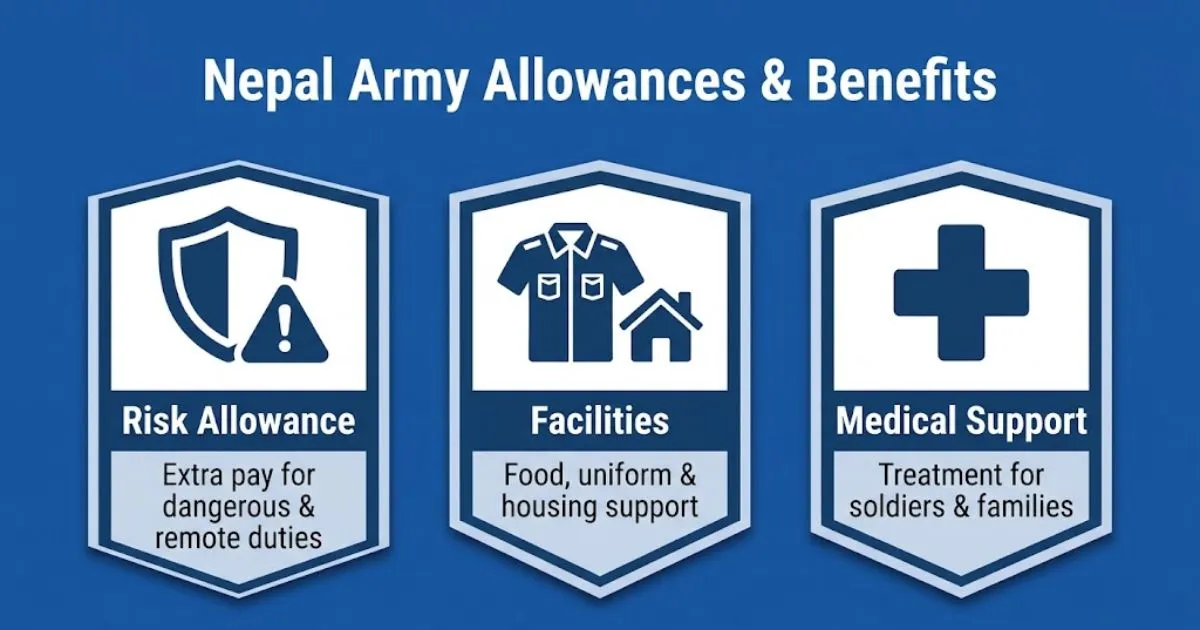
Nepal Army soldiers sometimes work in difficult and dangerous places such as border areas, remote mountains, and disaster-affected locations. Because these duties can be risky, the Nepal Army provides risk allowance and field allowance to support the soldiers. The amount of allowance depends on the location and the type of duty. Soldiers who work in more dangerous or remote areas usually receive higher allowances. These payments are given in addition to the basic salary. This means soldiers working in challenging places can earn more money compared to those working in normal areas.
2. Food, Uniform, and Housing Facilities
The Nepal Army also provides basic facilities to help soldiers during their service. Soldiers receive army uniforms and necessary equipment from the army, so they do not need to buy them on their own. In many cases, soldiers also receive food or meal support while they are on duty. This helps reduce their daily expenses. The army may also provide housing or living facilities depending on the soldier’s rank and posting location. If housing is not available, some soldiers may receive housing support to help manage their living costs.
3. Medical and Health Benefits
Medical support is another important benefit in the Nepal Army. Soldiers can receive treatment at army hospitals and military medical centers. These services may include health check-ups, treatment for sickness, and emergency medical care if needed. In many cases, family members of soldiers can also receive medical support. This healthcare support helps soldiers stay healthy and continue their duties. It also reduces medical expenses and gives peace of mind to soldiers and their families.
Nepal Army Pension and Retirement Benefits
Pension System in Nepal Army
The Nepal Army provides a monthly pension to soldiers after they complete the required years of service and retire from the army. The pension amount usually depends on the rank and total years of service. For example, if a soldier retires as a Sipahi after around 20 years of service, they may receive a pension of about NPR 18,000 to NPR 25,000 per month. If someone retires at a higher rank such as Subedar or Major, the pension can be much higher, sometimes around NPR 35,000 to NPR 60,000 or more per month. This pension helps retired army personnel have a regular income even after leaving the service.
Retirement Age and Service Duration
The retirement age in the Nepal Army depends on the rank and type of job. Soldiers in lower ranks may retire earlier because their duties require more physical work. For example, a Sipahi may retire around the age of 40–45, while higher officers can serve longer. Some senior officers may continue working until 55–60 years of age depending on their position. In general, the longer a person serves in the army, the better their retirement benefits and pension amount will be.
Gratuity and Post-Retirement Benefits
Along with the monthly pension, retired Nepal Army personnel may also receive a gratuity payment, which is a one-time lump sum amount given at the time of retirement. For example, a soldier who serves for many years may receive a gratuity of around NPR 5 lakh to NPR 15 lakh or more, depending on rank and years of service. Retired army personnel may also get insurance support and access to certain welfare programs. These benefits help former soldiers manage their expenses and live comfortably after retirement.
Other Facilities Provided to Nepal
1. Education Support for Soldiers’ Families
The Nepal Army also helps soldiers with their children’s education. Some army schools are available where the children of army personnel can study. These schools usually provide good education for army families. In many cases, the cost of education in these schools is lower for soldiers’ families. Sometimes the army may also provide scholarships or financial help for students. This support helps soldiers make sure their children can study well while they are working in the army.
2. Insurance and Welfare Programs
Nepal Army soldiers also receive insurance and welfare support. This support helps if a soldier faces an accident, injury, or other emergency while working in the army. In such situations, the insurance program can provide money to help the soldier or their family. Welfare programs may also provide support when soldiers or their families need help. These programs are important because they help protect soldiers and give their families financial support during difficult times.
3. Leave and Travel Benefits
Nepal Army soldiers also get leave from work so they can rest and spend time with their families. They can take annual leave, special leave, and other types of leave based on army rules. These leaves allow soldiers to visit their homes and take a break from their duties. When soldiers travel to meet their families, they may also receive travel support or travel allowance from the army. These benefits help soldiers stay connected with their families while continuing their service in the Nepal Army.
How to Join the Nepal Army
Joining the Nepal Army is a step-by-step process where candidates must meet basic requirements and pass different tests. You need the right age, education, and physical fitness to apply. After that, you must go through written, physical, and medical tests. These steps help the army select strong and capable people for service.
Eligibility Criteria for Nepal Army Recruitment
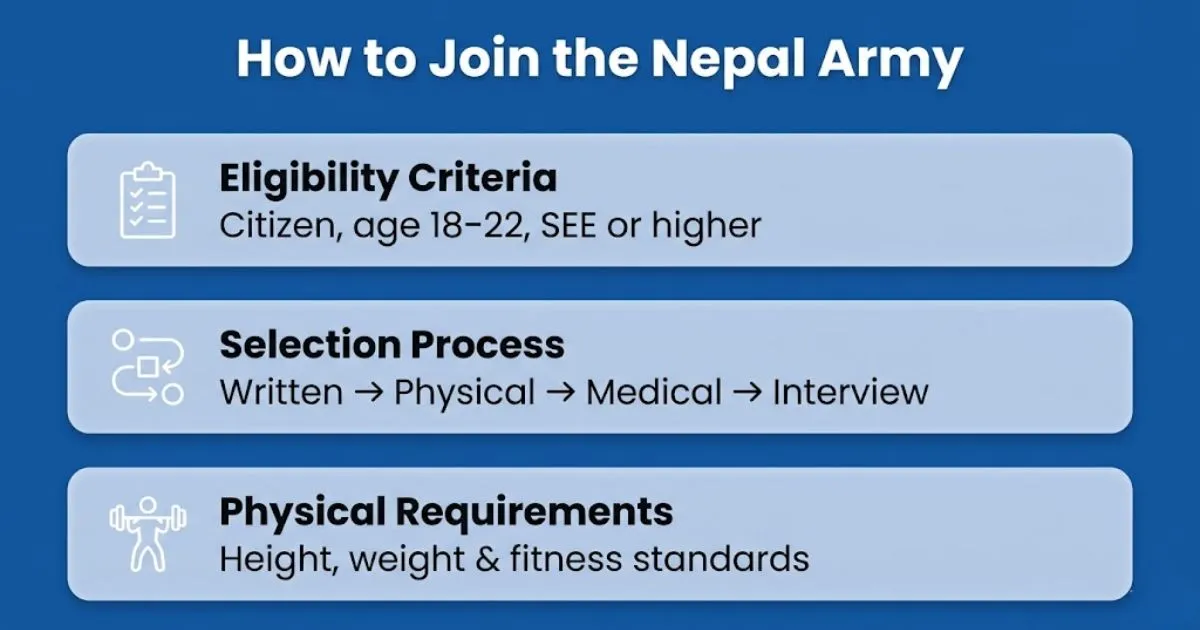
To join the Nepal Army, candidates must meet some basic requirements. First, the applicant must be a citizen of Nepal. Candidates must also meet the age limit mentioned in the recruitment notice, which is usually around 18 to 22 years for entry-level positions like Sipahi. Education is also required. For many soldier positions, candidates must have passed at least SEE (Secondary Education Examination). For officer-level posts, higher education such as +2 or a Bachelor’s degree may be required. In addition, candidates must meet certain physical standards such as height, weight, and overall fitness to qualify for Nepal Army recruitment.
Nepal Army Selection Process
The Nepal Army selection process includes several steps to choose the right candidates. First, applicants may need to take a written exam that tests basic knowledge. After that, candidates must pass a physical fitness test, which may include activities like running, push-ups, and other exercises that check strength and stamina. Candidates who pass the physical test must then go through a medical examination to make sure they are healthy and fit for military service. In some cases, an interview may also be part of the process. Only candidates who successfully pass all these stages are selected for training and final recruitment.
Physical and Medical Requirements
Physical fitness is very important for joining the Nepal Army. Candidates must meet specific height and weight requirements set by the army. For example, many Sipahi positions require a minimum height of about 5 feet 3 inches (160 cm) for male candidates, and about 5 feet (152 cm) for female candidates. The minimum weight is usually around 50 kg for males and about 42–45 kg for females, but the weight should also match the person’s height and body condition. During the physical test, candidates may need to complete activities such as running, push-ups, and endurance exercises. A medical check-up is also done to check eyesight, overall health, and physical condition. Only candidates who are physically and mentally fit can join the Nepal Army.
Is Nepal Army a Good Career in Nepal?
The Nepal Army is considered one of the most respected and secure careers in Nepal. Many young people choose this profession because it offers job security, stable salary, and long-term benefits. Once a person joins the Nepal Army, they receive a regular government salary, allowances, and other facilities. Like other government jobs in Nepal, the army also provides stable employment and structured promotions, which means soldiers can continue working for many years with financial stability.
Another reason why the Nepal Army is a good career option is the opportunity for career growth and promotion. Soldiers can move to higher ranks based on their experience, performance, and training. As they get promoted, their salary and responsibilities also increase. Compared to many other government jobs in Nepal, the Nepal Army offers competitive salaries, allowances, housing support, and pension benefits after retirement. Because of these advantages, many people see the Nepal Army as a reliable and rewarding long-term career.
Conclusion
The Nepal Army salary offers a good pay structure along with many benefits such as allowances, medical support, housing facilities, and pension after retirement. From entry-level soldiers to senior officers, the Nepal Army provides a clear career path where people can grow through promotions and experience. With regular salary and government benefits, it gives long-term financial security.
For many young people in Nepal, joining the Nepal Army is not only about earning money but also about serving the country with pride and respect. It is a stable government job that offers discipline, career growth, and retirement benefits. If you are looking for a secure and respected career in Nepal, the Nepal Army can be a very good option to consider.
You can also read about Nepal Police Salary and British Army Salary to compare different security force career options and their benefits.