


Starting your career in Nepal can feel exciting, but also a bit confusing in the beginning. One of the best ways to start is by getting an internship. An internship gives students and fresh graduates a chance to learn how real work happens. You get to understand how offices work, how people communicate, and what different job roles actually involve before choosing a long-term career.
In Nepal, internship opportunities are growing in many fields like IT, business, media, and hospitality. Because of this, young people now have more chances to gain experience and build their skills early.
This guide will help you understand how to find the right internship, how to apply properly, and how to do well once you get selected. By following these steps, you can learn faster, build confidence, and create a strong base for your future career.
Table of Contents
- Why Internship is Important in Nepal
- 1. Gain Practical Experience
- 2. Build Your Professional Network
- 3. Explore Career Options
- 4. Improve Your CV
- 5. Develop Important Skills
- 6. Opportunity for Full-Time Job
- Types of Internships Available in Nepal
- By Industry & Sector
- By Payment
- By Work Style
- Where to Find Internship Openings in Nepal
- 1. Online Job Portals
- 2. Professional Networking Platforms
- 3. Company Websites
- 4. University and College Support
- 5. Networking and Referrals
- How to Apply for an Internship
- 1. Build a Strong CV or Resume
- 2. Write a Cover Letter That Feels Real
- 4. Follow Up After the Interview
- How to Do Well in Your Internship
- 1. Be Proactive
- 2. Ask Questions and Take Feedback
- 3. Build Good Relationships
- 4. Understand the Work Environment
- 5. Keep Track of Your Work
- Conclusion
Why Internship is Important in Nepal
Starting your career without experience can be difficult in Nepal. That’s why internships are very important. They help you learn practical skills, understand how real work happens, and prepare you for your future job. Below are some main reasons why doing an internship in Nepal is important.
1. Gain Practical Experience
Internships help you use what you have studied in real life. Instead of only reading books, you get to work on real tasks like projects, coding, marketing, or office work based on your field. This helps you understand how companies work, how teams communicate, and how problems are solved. It also builds your confidence and prepares you for your first job.
2. Build Your Professional Network
During an internship, you meet people like managers, seniors, and coworkers. These people can guide you, give advice, and support your career growth. In Nepal, connections are very important when it comes to finding jobs. The people you meet during your internship can help you find new opportunities or even recommend you for jobs in the future.
3. Explore Career Options
If you are not sure about your career, an internship helps you understand what is right for you. You can try different types of work and see what you enjoy and what you don’t. This helps you make better decisions about your career before choosing a full-time job or further studies.
4. Improve Your CV
Having internship experience makes your CV stronger. It shows that you have worked in a real environment and understand basic job responsibilities. Employers in Nepal prefer candidates who already have some experience. Even a small internship can help you stand out from other applicants.
5. Develop Important Skills
Internships help you improve both soft and technical skills. Soft skills include communication, teamwork, time management, and problem-solving. Technical skills depend on your field, like coding, designing, writing, or accounting. These skills are very important for getting a good job in Nepal.
6. Opportunity for Full-Time Job
Many companies in Nepal hire interns as full-time employees if they perform well. If you show good work, discipline, and a positive attitude, you may get a job offer from the same company. Even if that doesn’t happen, the experience and skills you gain will help you find a job more easily in the future.
Types of Internships Available in Nepal
By Industry & Sector
Internships in Nepal are available in many kinds of work. Each type of internship gives you different experiences and skills. Choosing the right one helps you learn more and decide what kind of job you like. Here are the main types:
1. Tech & IT
Technology jobs are growing fast in Nepal. In these internships, you can help make computer programs or apps (software), design websites or apps to look nice and easy to use (UI/UX), protect computers and online information (cybersecurity), or help sell products online (digital marketing). You will learn useful skills and see how teams work together in a real company. This is good if you like computers or working online.
2. NGOs & INGOs
These are organizations that help people and communities. You can help with social work, research, surveys, or awareness programs. For example, you may organize an event, collect information, or teach people about health, education, or the environment. You will learn how to work in a team, plan work, and do real projects. These internships are great for learning while helping others.
3. Media & Journalism
If you like writing, telling stories, or making videos, media internships are a good choice. You can work in newspapers, TV, radio, or online media. You may write articles, report news, take photos, make videos, or manage social media pages. These internships help you learn how media works and also build a collection of work to show in the future.
4. Business & Finance
Companies like banks, shops, or offices offer internships in money management, marketing, and human resources. You can help with accounting, making marketing plans, or assisting HR teams. You will learn how offices run daily and gain skills useful for many jobs.
5. Engineering
Engineering internships include civil, electrical, computer, and architecture fields. You may help plan and design projects, check machines or systems, or support engineers in their work. These internships teach you practical skills and how engineers solve real problems.
6. Hospitality & Tourism
Hotels, resorts, and travel agencies offer internships in guest services, events, tours, and hotel management. You may help check in guests, organize trips, or help customers. These internships teach teamwork, communication, and organizing skills. They also show you how the tourism and hotel business works in Nepal.
By Payment
Internships in Nepal can be different depending on whether you get money or not. Here are the main types:
1. Paid Internships
In these internships, you get a monthly salary while you work and learn. Paid internships are common in tech companies, banks, and big businesses. This is good if you want to earn money while gaining experience. You also learn how companies work, meet professionals, and practice real skills that will help in your future job.
2. Stipend-Based Internships
These internships give a small amount of money to cover basic costs like meals, travel, or other small expenses. They are usually offered by NGOs, small companies, or new startups. The main focus is learning and gaining experience, but you still get a little help for your daily costs.
3. Unpaid Internships
These internships do not give any money. The main goal is to learn new skills and gain experience. You might help with tasks, projects, or research. Even without pay, unpaid internships are very useful because you can learn a lot, meet professionals, and make connections that can help you get a paid job in the future.
By Work Style
Internships also vary depending on where and how you work. Here are the main types:
1. On-site Internships
You go to the company’s office and work there every day. This is common in cities like Kathmandu, Pokhara, and Lalitpur. You will learn how an office works, how to work in a team, and what a normal workday looks like. It helps you understand workplace culture and meet people in person.
2. Remote/Virtual Internships
You work from home and communicate with your team online through emails, video calls, or chat. This type of internship is very flexible. You can work with companies that are far away or even in other cities. It is good for students who cannot travel to the office every day.
3. Hybrid Internships
This is a mix of working in the office and from home. Some days you go to the office, and other days you work from home. Hybrid internships give you both the experience of a real office and the freedom to work remotely. You can learn teamwork, manage your time, and get used to different ways of working.
Where to Find Internship Openings in Nepal
Finding an internship in Nepal is an important step to start your career. Internships help you gain experience, learn new skills, and understand how real work is done. Instead of using only one method, it is better to try different ways to increase your chances.
1. Online Job Portals
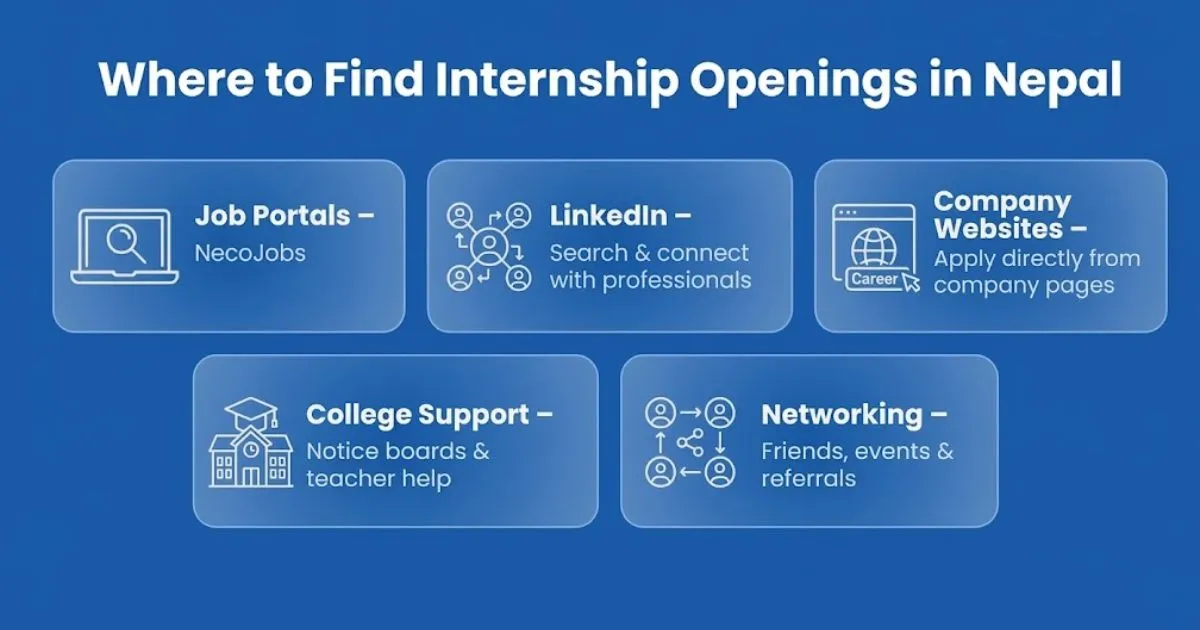
Online job websites are one of the easiest ways to find internships in Nepal. Platforms like NecoJobs, InternNepal and InternSathi share many internship openings in different fields. You can search for internships based on your interest and location. You can also create a profile, upload your CV, and apply directly. These websites are updated every day, so it is important to check them regularly. Applying early can also improve your chances.
2. Professional Networking Platforms
Platforms like LinkedIn are also helpful for finding internships. You can create a professional profile with your education, skills, and projects. Then you can search for internships in Nepal. You can also follow companies and connect with people who work there. Sometimes, recruiters post jobs directly, so staying active can help you find more opportunities.
3. Company Websites
Many companies post internship openings on their own websites. Companies like F1Soft, Chaudhary Group, and Ncell have a “Careers” page. You can visit these pages and apply directly. Checking company websites often can help you apply early. It also shows that you are interested in working with that company.
4. University and College Support
Your college can also help you find internships. Many colleges share internship notices through notice boards, emails, or online groups. Teachers, seniors, and counselors can guide you and give helpful advice. Some internships are only shared through colleges, so it is important to stay connected and ask regularly.
5. Networking and Referrals
In Nepal, personal connections are very important. Talking to friends, seniors, family members, or people already working can help you find internships. You can also attend events like workshops or seminars to meet new people. Sometimes, people can recommend you for an internship, which can increase your chances of getting selected.
How to Apply for an Internship
Applying for an internship may feel confusing at first, but if you follow the right steps, it becomes much easier. From preparing your CV to following up after the interview, each step plays an important role in helping you get selected. Here is a clear guide to help you apply with confidence.
1. Build a Strong CV or Resume
Your CV is the first thing an employer will check, so it should be clear and well structured. Add your contact details, education, skills, projects, and any experience you have. If you have not worked before, you can include college projects, volunteer work, or personal work that shows your ability.
Try to adjust your CV for each internship you apply for. Highlight the skills and experience that match the role. Keep the layout clean so it is easy to read. A well prepared CV helps employers quickly understand what you can offer.
2. Write a Cover Letter That Feels Real
Your cover letter should show your interest in the company. Avoid copying from templates. Write in your own words so it sounds natural and honest.
In your cover letter, explain:
- Why you want this internship.
- How your skills or experience can help the company.
- What you want to learn from this opportunity.
Keep your points clear and focused. A good cover letter shows effort and makes a strong impression.
3. Prepare for the Interview
Before going to the interview, learn about the company and what they do. This helps you answer questions better and shows that you are serious about the role.
Practice common questions like:
- Tell me about yourself
- Why do you want this internship
- What skills can you bring
Also think of a few questions to ask the interviewer. You can ask about the team or the type of work you will do. During the interview, stay calm, be confident, and speak honestly. Your behavior and attitude are very important.
4. Follow Up After the Interview
After the interview, send a short thank you email. Thank the interviewer for their time and show that you are still interested in the role. Following up shows professionalism and respect. It also helps the employer remember you and can improve your chances of getting selected.
How to Do Well in Your Internship
An internship is a great way to gain real work experience and improve your skills. The way you perform can also impact your chances of getting a full time job later. If you stay focused, keep a positive attitude, and learn from your work, you can make your internship truly valuable.
1. Be Proactive
Do not wait for instructions all the time. Take initiative and look for ways to contribute to your team. If you complete your assigned work early, ask your supervisor for additional tasks or offer help to your coworkers. This shows that you are serious about your work and ready to take responsibility. Employers always notice interns who are active and willing to go the extra mile.
2. Ask Questions and Take Feedback
If you do not understand something, ask questions instead of guessing. It helps you avoid mistakes and learn faster. When your supervisor gives feedback, listen carefully and try to improve your work based on their suggestions. Regular feedback helps you understand your strengths and areas where you need to improve. This habit shows that you are open to learning and growing.
3. Build Good Relationships
Make an effort to connect with your colleagues, managers, and fellow interns. Be polite, respectful, and open in your communication. Good relationships at the workplace can help you learn new things and create future opportunities. The people you meet during your internship can guide you, recommend you, or even help you find a job later.
4. Understand the Work Environment
Every company has its own work culture and expectations. Take time to observe how things are done and follow the workplace rules. Be punctual, respect others, and maintain a professional attitude. Understanding the work environment helps you adjust quickly and become a reliable team member.
5. Keep Track of Your Work
Maintain a record of the tasks you complete, the projects you work on, and the skills you develop during your internship. This will help you when you update your CV or prepare for job interviews. You can clearly show what you have learned and how you have contributed, which makes your profile stronger.
Conclusion
Internships in Nepal are a great first step toward building your career. They help you gain real work experience, learn useful skills, and understand how workplaces actually function. This experience also builds your confidence and prepares you for future opportunities.
If you stay active, ask questions, and give your best effort, you can create a strong impression. Building good connections during your internship can also help you find job opportunities later. The skills and experience you gain now can play a big role in shaping your future career.