

Choosing between government and private jobs is one of the most important career decisions in Nepal. Both sectors offer unique advantages in terms of salary, benefits, job security, and career growth. While government jobs are known for stability and long-term benefits, private jobs often provide faster growth and higher earning potential. Understanding the differences can help you make a smart career choice based on your goals, skills, and lifestyle preferences.
Table of Contents
- Overview of Government Jobs and Private Jobs
- Government Jobs
- Private Jobs
- Government vs Private Jobs: Key Differences Overview
- 1. Job Structure and Work Environment
- 2. Recruitment Process in Nepal
- 3. Skill Requirements and Eligibility
- Salary Comparison: Government vs Private Jobs
- 1. Government Job Salary Structure in Nepal
- 2. Private Job Salary Trends in Nepal
- 3. Which Sector Pays More?
- Benefits and Perks Comparison
- 1. Government Job Benefits (Pension, Allowances, Job Security)
- 2. Private Job Benefits (Bonuses, Incentives, Flexibility)
- 3. Work-Life Balance Comparison
- Career Growth and Promotion Opportunities
- 1. Promotion System in Government Jobs
- 2. Career Advancement in Private Sector
- 3. Skill Development and Learning Opportunities
- 4. Which Sector Offers Faster Growth?
- Job Security: Government vs Private Jobs
- 1. Stability in Government Jobs
- 2. Risks in Private Jobs
- 3. Economic Impact on Job Security
- Work Culture and Job Satisfaction
- 1. Work Pressure in Government Jobs
- 2. Work Environment in Private Companies
- 3. Employee Satisfaction Comparison
- Government vs Private Jobs in Nepal: Which is Better?
- Best Choice for Freshers
- Best Option for Long-Term Stability
- Choosing Based on Career Goals
- Conclusion
Overview of Government Jobs and Private Jobs
Government Jobs
Government jobs in Nepal are jobs offered by ministries, departments, and public offices. People usually get these jobs by passing exams conducted by the Public Service Commission (Lok Sewa Aayog). These jobs include roles in administration, teaching, health services, police, and other government sectors. Because of this system, government jobs are seen as stable and well-managed.
Many people choose government jobs because they offer long-term security. Once you get the job, it is usually permanent. Government jobs also provide a fixed salary with regular increases. Along with that, employees get benefits like allowances, paid leave, and pension. The working hours are mostly fixed, so it becomes easier to maintain a good work-life balance.
Private Jobs
Private jobs in Nepal are offered by companies, businesses, NGOs, and startups. These jobs are available in many fields like IT, banking, marketing, hospitality, and manufacturing. Unlike government jobs, private jobs focus more on skills and performance. This makes them a good option for people who want to grow based on their ability.
One of the biggest advantages of private jobs is faster growth. If you perform well, you can get promoted quickly and earn more. Salaries are not fixed and depend on your skills and experience. Many companies also provide bonuses and incentives. Private jobs also offer a more active work environment where you can learn new skills and gain practical experience, although job security may be lower compared to government jobs.
Government vs Private Jobs: Key Differences Overview
1. Job Structure and Work Environment
Government jobs have a clear and fixed structure. Each employee has defined duties, and work is done based on rules and guidelines. The work environment is more formal, and tasks are usually planned in advance. Because of this, the workload is steady and pressure is lower. This makes government jobs a good option for people who want a stable routine and less stress at work.
Private jobs are more flexible and fast-paced. The work environment can change quickly, and employees need to adjust to new tasks and responsibilities. You may have to handle multiple tasks and meet deadlines. While this can feel challenging, it also helps you learn new skills and grow faster in your career.
2. Recruitment Process in Nepal
Getting a government job in Nepal takes time and strong preparation. Candidates must pass written loksewa exams, interviews, and sometimes training programs. These exams are very competitive because many people apply for a limited number of positions. As a result, it can take months or even years to secure a government job.
In contrast, private jobs have a much faster hiring process. Most companies select candidates through interviews and simple skill tests. Some also look at your past experience and practical knowledge. In many cases, you can get a job within a few weeks, which is helpful if you want to start earning quickly.
3. Skill Requirements and Eligibility
Government jobs mainly focus on academic qualifications and exam results. Candidates must meet certain requirements such as education level and age limits. If you perform well in exams, you can get selected, even if you do not have much practical experience.
Private jobs focus more on what you can do in real work situations. Employers look for skills like communication, problem-solving, and the ability to complete tasks properly. They also value experience and how well you can adapt to the job.
Key difference:
- Government jobs focus on education and exam performance
- Private jobs focus on skills and practical ability
Because of this, your choice should depend on your strengths, whether you are better at academic exams or practical work.
Salary Comparison: Government vs Private Jobs
Salary is one of the most important factors when choosing between government jobs and private jobs in Nepal. Both sectors offer different salary structures and growth patterns. Government jobs provide a fixed and stable income, while private jobs offer more flexibility and higher earning potential based on skills and performance. Understanding these differences helps you choose the right career based on your financial goals.
1. Government Job Salary Structure in Nepal
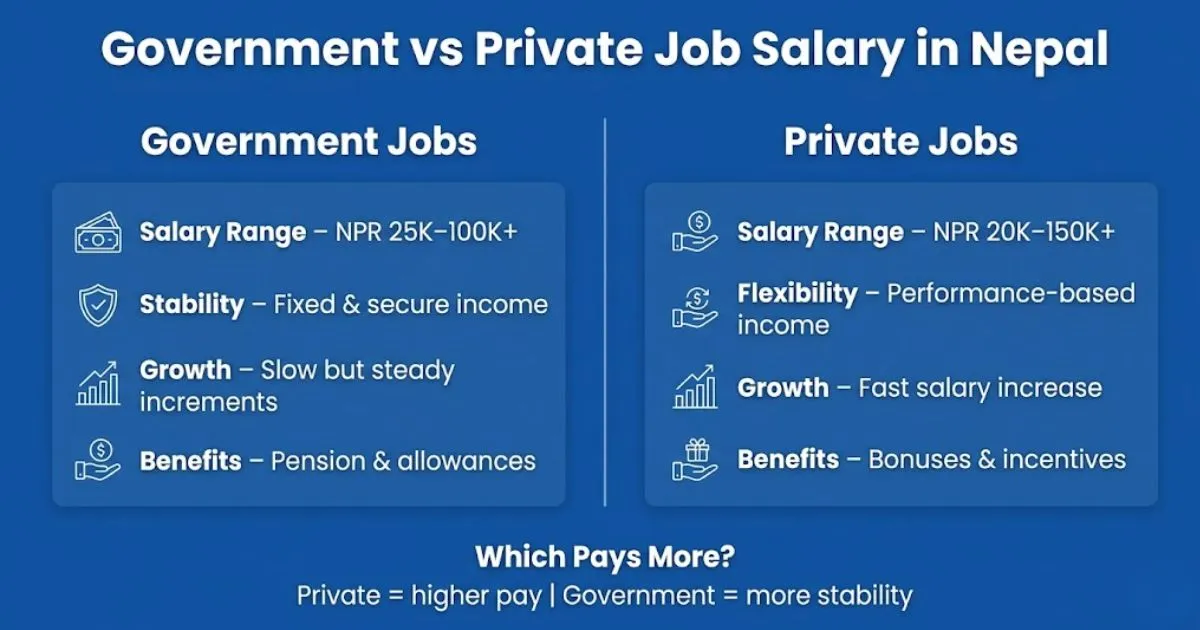
Government job salaries in Nepal follow a fixed pay scale set by the government. The starting salary usually ranges from NPR 25,000 to NPR 45,000 per month depending on the level and position. Along with the basic salary, employees also receive allowances such as housing, travel, and medical support.
Over time, the salary increases through regular increments and promotions. For higher-level positions, salaries can reach NPR 60,000 to NPR 100,000+ per month. Even though the starting pay may not be very high, the steady increase and long-term benefits like pension make government jobs a reliable option for financial stability.
2. Private Job Salary Trends in Nepal
Private job salaries in Nepal vary based on the industry, company, and skills required. At the entry level, salaries usually start from around NPR 20,000 to NPR 40,000 per month. However, in high-demand fields like IT, banking, and digital marketing, salaries can go higher, often ranging from NPR 50,000 to NPR 150,000+ per month for skilled professionals.
In addition to salary, private jobs often include bonuses, incentives, and performance-based increments. This means your income can grow quickly if you perform well. Because of this, many professionals prefer private jobs for higher earning potential.
3. Which Sector Pays More?
In general, private jobs tend to pay more, especially in industries with high demand and skilled roles. Professionals with strong skills and experience can earn significantly higher salaries in the private sector.
However, government jobs provide a stable and consistent income along with long-term benefits like pension and allowances. So, while private jobs may offer higher pay, government jobs offer financial security. The better option depends on your career stage, skills, and long-term goals.
Benefits and Perks Comparison
1. Government Job Benefits (Pension, Allowances, Job Security)
Government jobs in Nepal are known for strong and long-term benefits. These benefits make them a popular choice for people who want a secure future and steady income. One major advantage is that many of these benefits continue even after retirement, which helps in long-term financial planning.
Some of the main benefits of government jobs include:
- Pension: Employees receive a monthly income after retirement, which helps cover daily expenses.
- Job security: Once you get the job, it is very stable and the risk of losing it is low.
- Allowances: Extra money is given for housing, travel, and other daily needs along with the salary.
- Paid leave: Employees get leave for sickness, personal reasons, and public holidays.
- Medical support: Basic health services and medical costs are supported.
Because of these benefits, government jobs are a good option for people who want a safe and stable career for the long term.
2. Private Job Benefits (Bonuses, Incentives, Flexibility)
Private jobs offer benefits that depend on your work and performance. These jobs are a good choice for people who want to grow faster and increase their income over time. The better you perform, the more rewards you can receive.
Some of the key benefits of private jobs include:
- Bonuses: Extra money given when you perform well or when the company does well, which increases your total income.
- Incentives: Rewards given for achieving targets or completing tasks successfully.
- Flexible working hours: Employees can sometimes adjust their working time, which helps in managing personal life.
- Work from home: Many companies allow employees to work from home, especially in IT and digital jobs.
- Training and development: Companies provide training so employees can learn new skills and improve their career.
- Career growth opportunities: Employees can get promoted faster and move to higher roles based on their performance.
These benefits help employees earn more, improve their skills, and build a strong career over time.
3. Work-Life Balance Comparison
Work-life balance plays an important role when choosing between government jobs and private jobs. In government jobs, working hours are usually fixed, and the workload is more controlled. Employees can complete their tasks within office hours without too much pressure. Because of this, they get enough time for family, rest, and personal activities, which helps maintain a healthy daily routine.
In private jobs, the situation can be different. Work can be more demanding, and employees may need to handle multiple tasks, meet deadlines, and sometimes work extra hours. This can feel stressful, especially in busy companies. However, many private companies are now improving their work culture by offering flexible working hours, leave options, and work-from-home facilities. This is helping employees manage their work and personal life better than before.
Career Growth and Promotion Opportunities
1. Promotion System in Government Jobs
In government jobs, promotions are usually based on seniority and years of experience. Employees move to higher positions step by step after completing a certain number of years in a role. This system ensures fairness, as everyone follows the same process. However, it can also make career growth slower, especially for those who want quick progress.
In many cases, employees may need to wait several years before getting promoted, even if they perform well. While this provides job stability and a clear career path, it may feel limiting for people who are ambitious and want faster growth in their careers.
2. Career Advancement in Private Sector
Private jobs offer faster career growth compared to government jobs. Promotions in private companies are mostly based on performance, skills, and results. If you work well and meet targets, you can move to higher positions in a shorter time.
This system motivates employees to improve their skills and take on more responsibilities. It also gives ambitious individuals a chance to grow quickly and increase their income. Because of this, many young professionals in Nepal prefer private jobs for better career advancement opportunities.
3. Skill Development and Learning Opportunities
Private companies focus a lot on employee development. Many organizations provide training programs, workshops, and learning opportunities to help employees improve their skills. Employees also get exposure to new technologies, tools, and industry trends, which helps them stay updated and competitive.
Government jobs, on the other hand, offer fewer opportunities for continuous learning. While some training is provided, it may not be as frequent or advanced as in private companies. As a result, skill development can be slower in government jobs compared to private jobs.
4. Which Sector Offers Faster Growth?
When it comes to career growth, private jobs clearly offer faster progress. Employees can get promotions, salary increases, and new responsibilities based on their performance. This allows them to grow quickly in their careers.
Government jobs provide steady but slower growth. Promotions take time, but the career path is stable and secure. In the end, the better option depends on your career goals. If you want fast growth and higher income, private jobs are a better choice. If you prefer stability and a gradual career path, government jobs may suit you more.
Job Security: Government vs Private Jobs
1. Stability in Government Jobs
Government jobs in Nepal are known for strong job security. Once you get selected, the job is usually permanent, and the risk of losing it is very low. Employees receive a fixed salary every month, along with regular increments and benefits. This makes it easier to plan for the future and manage expenses without worry.
Another reason government jobs are considered secure is that they are less affected by business losses or market changes. Even during difficult times, employees continue to receive their salary and benefits. Because of this stability, government jobs are a good choice for people who want a safe and long-term career.
2. Risks in Private Jobs
Private jobs come with some level of risk. Job security depends on the company’s performance, market condition, and overall business growth. If a company faces losses or reduces its staff, employees may lose their jobs. This makes private jobs less stable compared to government jobs.
To stay secure in private jobs, employees need to keep improving their skills and performance. Those who learn new skills and adapt to changes have better chances of keeping their jobs and growing in their careers. While private jobs offer good income and growth, they also require continuous effort to stay competitive.
3. Economic Impact on Job Security
Economic conditions play an important role in job security, especially in the private sector. During economic downturns or financial crises, many companies may reduce costs by cutting jobs or limiting hiring. This can create uncertainty for employees working in private jobs.
Government jobs, however, are less affected by such situations. Since they are funded and managed by the government, employees usually continue to receive their salary and benefits even during tough times. Because of this, government jobs provide more stability during economic changes, while private jobs may involve higher risk.
Work Culture and Job Satisfaction
1. Work Pressure in Government Jobs
Government jobs in Nepal usually have lower work pressure compared to private jobs. The work is planned and follows a fixed system, so employees know their responsibilities clearly. Deadlines are generally manageable, and there is less urgency in day-to-day tasks.
Because of this, employees can complete their work without too much stress. Fixed working hours also help them maintain a steady routine. This type of work culture is suitable for people who prefer a calm environment and want to avoid high-pressure situations in their job.
2. Work Environment in Private Companies
Private companies often have a fast-moving and competitive work environment. Employees are expected to complete tasks on time, meet targets, and deliver good results. The workload can be higher, and deadlines may be strict, especially in growing industries.
Although this can sometimes feel stressful, it also helps employees learn faster and improve their skills. People get more exposure to real work situations, teamwork, and new technologies. This makes private jobs a good option for those who want to grow quickly and gain experience.
3. Employee Satisfaction Comparison
Job satisfaction depends on what a person values more in their career. Some people prefer stability, while others look for growth and new challenges. Government jobs offer security, fixed hours, and a stable routine, which can lead to higher satisfaction for those who want peace of mind.
Private jobs, on the other hand, can be more satisfying for people who enjoy learning, taking challenges, and earning more. Even though the pressure is higher, the chances of growth and career progress can make the job more rewarding. In the end, satisfaction depends on your personal goals and work preferences.
Government vs Private Jobs in Nepal: Which is Better?
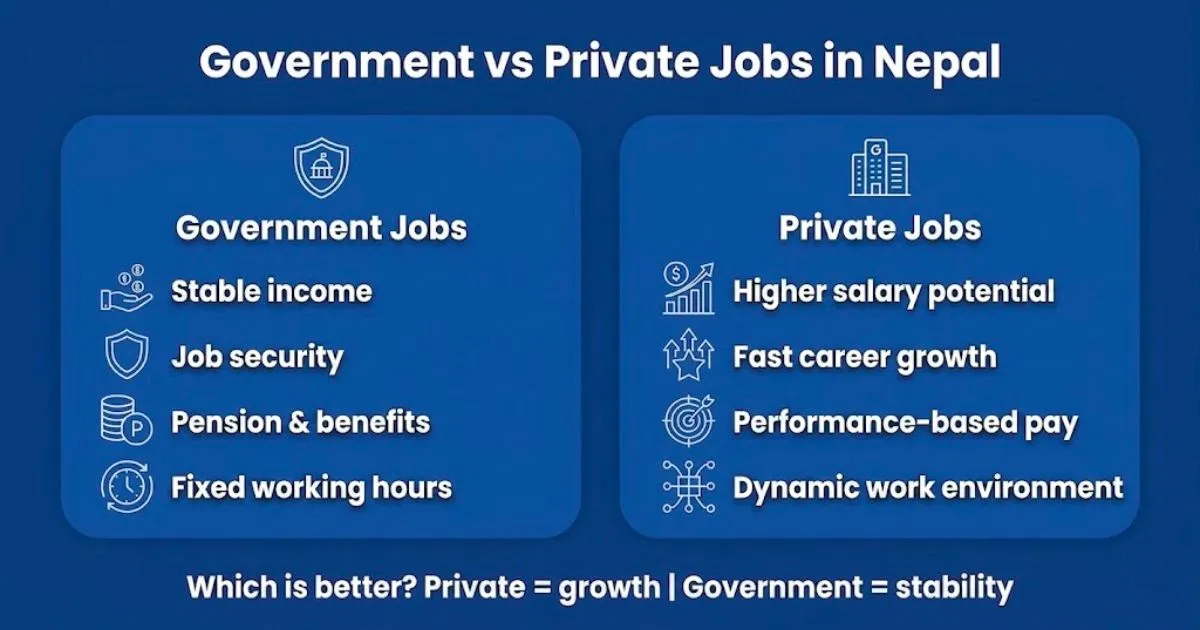
Choosing between government jobs and private jobs in Nepal depends on your career goals, lifestyle, and priorities. Both options offer different benefits. Government jobs focus on stability and long-term security, while private jobs offer faster growth and higher earning potential. Understanding your needs will help you choose the right path.
Best Choice for Freshers
For fresh graduates in Nepal, private jobs are often a better starting point. They help you enter the job market quickly and gain real work experience. Instead of waiting for long government recruitment processes, you can start working, learn new skills, and build your career step by step.
Why choose private jobs as a fresher:
- Quick job entry: Hiring in private companies is faster, so you can start your career without long waiting periods.
- Practical skill development: You learn real-world skills like communication, teamwork, and problem-solving from the beginning.
- Industry exposure: You get a chance to work in different sectors such as IT, banking, marketing, and more.
- Faster career growth: Good performance can lead to early promotions and salary increases.
- Better learning opportunities: You can work with new tools, technologies, and modern work systems.
Best Option for Long-Term Stability
Government jobs are a strong option for people who want long-term stability and a secure future. These jobs provide steady income, fixed benefits, and support even after retirement, which makes them highly reliable.
Why choose government jobs for stability:
- Strong job security: Once selected, the chances of losing the job are very low, even during difficult times.
- Fixed and stable income: Salaries are regular, with yearly increments and clear pay structure.
- Retirement benefits: Pension and other benefits help maintain financial security after retirement.
- Less work pressure: Work is more structured, and deadlines are usually manageable.
- Better work-life balance: Fixed working hours allow more time for family and personal life.
Choosing Based on Career Goals
Choosing between government jobs and private jobs depends on your personal goals, lifestyle, and priorities. Both options have their own advantages, so it is important to understand what you want from your career.
Choose private jobs if you want:
- Higher earning potential: Salaries can increase quickly based on your skills and performance.
- Faster promotions: Career growth is quicker, and you can move to higher roles in less time.
- Skill-based career growth: Your progress depends on your ability, not just experience or seniority.
- Dynamic work environment: You can work in fast-growing industries and learn new things regularly.
Choose government jobs if you want:
- Long-term security: A stable job with low risk and steady income.
- Predictable career path: Promotions happen in a fixed system over time.
- Financial safety: Benefits like pension, allowances, and paid leave provide long-term support.
- Balanced lifestyle: Fixed hours and lower pressure help maintain a comfortable routine.
In the end, the right choice depends on what matters more to you, fast growth and higher income or stability and long-term security.
Conclusion
Both government jobs and private jobs have their own benefits and challenges. There is no single option that is perfect for everyone. The right choice depends on your personal goals, career plans, and what you expect from your job. Some people prefer stability and long-term security, while others focus on growth, learning, and higher income.
By understanding the key differences between government jobs and private jobs, you can make a better and more confident decision. It is important to choose a career path that matches your skills, interests, and future plans so that you can grow and stay satisfied in the long run.
Looking for the right job opportunity in Nepal? Explore the latest jobs on our platform and take the next step in your career journey today.