


Government jobs in Nepal are highly respected for their stability, attractive salary structure, and long-term benefits. Every year, thousands of candidates prepare for Lok Sewa exams hoping to secure a permanent government position. Understanding the government job salary in Nepal, including pay scale, allowances, and benefits, is essential before applying. This guide provides a detailed overview of the latest salary structure and key factors aspiring candidates should consider.
-
Table of Contents
- Overview of Government Job in Nepal
- Why Government Jobs Are Popular in Nepal
- Basic Salary vs Gross Salary
- Salary Structure Under Civil Service Rules
- Latest Government Pay Scale in Nepal
- 1. Federal Government Salary Scale
- 2. Provincial Government Salary Structure
- 3. Local Level Government Salary System
- 4. Annual Budget Changes and Salary Revision
- Position-Wise Government Job Salary in Nepal
- Section Officer Salary in Nepal
- Nayab Subba (NASU) Salary
- Kharidar Salary
- Nepal Police Salary Structure
- Nepal Army Salary Structure
- Government Teacher Salary (Primary, Secondary, Higher Secondary)
- Government Job Allowances and Benefits in Nepal
- 1. Dashain Allowance
- 2. Dearness Allowance
- 3. House Rent Allowance
- 4. Medical and Insurance Benefits
- 5. Pension and Retirement Benefits
- Salary Comparison: Government vs Private Jobs in Nepal
- Salary Stability
- Job Security
- Long-Term Career Growth
- Factors That Affect Government Job Salary in Nepal
- 1. Experience and Years of Service
- 2. Promotion and Level Upgrade
- 3. Geographic Location and Posting Area
- Conclusion
Overview of Government Job in Nepal
Government job in Nepal follows a fixed and clear system set by the government. The pay is decided by the national budget and is based on job level and position. Every employee receives a basic salary and some extra allowances. The salary system is the same for people in the same level, which makes it fair and transparent. Because of this clear structure, many people trust government jobs for stable income and long-term career security.
Why Government Jobs Are Popular in Nepal
Government jobs are very popular in Nepal because they offer strong job security and regular monthly salary. After passing the Lok Sewa exam and completing the probation period, the job becomes permanent. Employees work fixed hours and receive salary on time. They also get yearly salary increases, promotions, Dashain allowance, and pension after retirement. For many Nepali families, a government job means financial safety and social respect. That is why competition for government vacancies is very high.
Basic Salary vs Gross Salary
In government jobs, basic salary is the fixed monthly pay based on your level and post. This is the main amount set by the government. Gross salary, however, is the total money you receive after adding extra benefits like dearness allowance and house rent allowance. So, the amount deposited in your bank account is usually higher than the basic salary. Understanding this difference helps you know the real income of a government job in Nepal.
Salary Structure Under Civil Service Rules
Government salary in Nepal follows the Civil Service rules and yearly national budget. The pay system is divided into levels, usually from Level 4 to Level 12 and above. Each level has a fixed starting salary and yearly grade increase. When employees gain experience or get promoted, their salary increases. This system makes sure everyone in the same level gets equal pay. It also helps employees grow step by step in their government career.
Latest Government Pay Scale in Nepal
1. Federal Government Salary Scale
The federal government salary scale in Nepal is decided by the annual national budget. The salary depends on job level and position. For example, Level 4 employees earn around NPR 26,000 to 28,000 basic salary per month, while Level 6–7 officers earn about NPR 34,000 to 42,000. Section Officers (Level 8) receive around NPR 47,000+, and higher officials like Joint Secretaries (Level 11–12) can earn NPR 65,000 to 75,000 or more as basic salary. In addition to this, employees receive yearly grade increases and allowances, which increase total monthly income.
2. Provincial Government Salary Structure
Provincial government employees follow almost the same pay scale as the federal government. Their basic salary is also based on level. For example, Level 4–5 staff earn around NPR 26,000 to 32,000, and Level 6–7 employees earn about NPR 34,000 to 40,000 per month. Senior provincial officers can earn NPR 50,000 to 70,000+ depending on their level. Some provinces may provide small extra allowances based on their budget, but overall, the salary structure remains similar to the federal system.
3. Local Level Government Salary System
Employees working in municipalities and rural municipalities also follow the national government pay scale. Entry-level staff earn around NPR 26,000 to 30,000 basic salary. Mid-level officers earn approximately NPR 35,000 to 50,000, while higher-level officials may earn NPR 60,000 or more. In some local areas, especially remote regions, employees may receive additional remote area allowance. Even with small differences, the main salary structure remains similar across all levels of government in Nepal.
4. Annual Budget Changes and Salary Revision
Government job salary in Nepal is reviewed every year during the national budget announcement. If the economy allows, the government may increase basic salary by a few thousand rupees or adjust allowances. For example, in previous updates, salary increments ranged from NPR 2,000 to NPR 5,000 depending on the level. Dearness allowance and grade increments are also adjusted from time to time. Therefore, candidates should always check the latest budget update to know the current government job salary figures.
Position-Wise Government Job Salary in Nepal
Section Officer Salary in Nepal
A Section Officer is a mid-level government officer who works in ministries and government offices. The basic salary of a Section Officer is around NPR 47,000 to 52,000 per month. Besides the basic pay, they receive allowances like dearness allowance and Dashain allowance, which increase the total monthly income. Their main work includes managing office tasks, checking reports, and supervising staff. Because of good salary, promotion chances, and strong job security, many students prepare for this position through Lok Sewa exams.
Nayab Subba (NASU) Salary
Nayab Subba (NASU) is one of the most popular government jobs in Nepal. The basic salary of a NASU is about NPR 34,000 to 38,000 per month. Along with the basic salary, they also receive government allowances and yearly salary increases. Their main duties include handling files, preparing documents, and helping senior officers in daily office work. Many candidates prefer this job because it offers stable income, fixed working hours, and long-term career growth.
Kharidar Salary
Kharidar is an entry-level government job for candidates who have completed +2 education. The basic salary of a Kharidar is around NPR 26,000 to 30,000 per month. Even though the starting salary is lower than officer-level jobs, employees receive yearly grade increases and promotion opportunities. The job mainly includes clerical work, record keeping, and supporting senior staff. It is a good option for those who want to start a government career early and grow step by step.
Nepal Police Salary Structure
Nepal Police salary depends on rank and position. A Police Constable earns around NPR 26,000 to 30,000 per month as basic salary. Higher ranks like Sub-Inspector and Inspector earn about NPR 40,000 to 55,000 or more. Police officers also receive risk allowance, uniform allowance, and other service benefits. Because of these extra facilities, the total income is higher than the basic salary. Police jobs are popular due to job security and public service role.
Nepal Army Salary Structure
Nepal Army salary is based on rank and years of service. A Soldier (Sipahi) earns around NPR 26,000 to 30,000 per month as basic salary. Higher officers like Captain and Major can earn NPR 50,000 to 70,000 or more. Army staff also receive food allowance, medical facilities, and housing support. These extra benefits make the total salary package attractive. Army jobs are respected and offer long-term security.
Government Teacher Salary (Primary, Secondary, Higher Secondary)
Government teachers in Nepal are paid based on their teaching level and qualification. A Primary Level teacher earns around NPR 30,000 to 35,000 per month. Secondary and Higher Secondary teachers earn about NPR 40,000 to 55,000 or more. Teachers also receive annual salary increases, Dashain allowance, and pension after retirement. Because of stable income and regular holidays, government teaching jobs are highly preferred in Nepal.
Government Job Allowances and Benefits in Nepal
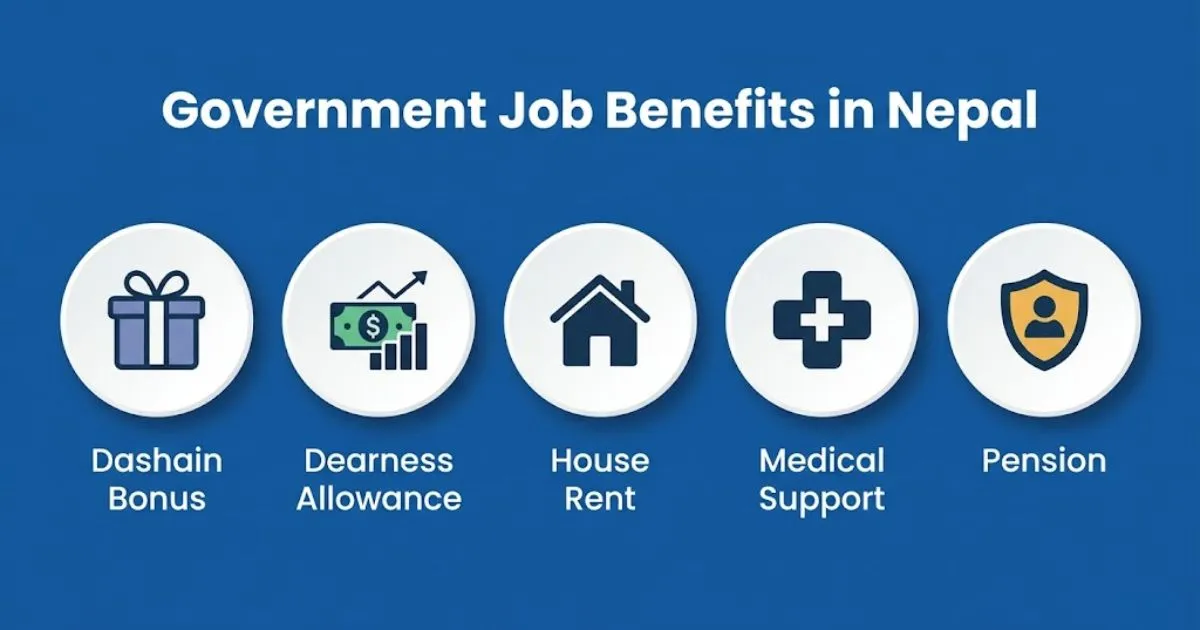
Government jobs in Nepal offer many allowances and long-term benefits that make them secure and attractive. These benefits help employees manage their daily expenses, support their families, and plan for a safe future after retirement.
1. Dashain Allowance
Dashain allowance is one of the most attractive benefits of a government job in Nepal. Every year before Dashain festival, government employees receive a bonus equal to one month’s basic salary. For example, if someone’s basic salary is NPR 40,000, they receive NPR 40,000 as Dashain allowance. This extra payment helps employees manage festival expenses. Because of this benefit, many people see government jobs as financially secure and supportive during major festivals.
2. Dearness Allowance
Dearness allowance is given to help government employees manage rising prices and living costs. This amount is added to the basic salary every month. When inflation increases, the government may adjust this allowance through the national budget. It helps employees maintain their standard of living even when market prices go up. Dearness allowance is an important part of the total government job salary in Nepal.
3. House Rent Allowance
House rent allowance is provided to some government employees, especially those who are posted away from their hometown. This allowance helps them pay for rented rooms or houses. The amount may vary depending on the posting location and government rules. Employees working in cities or remote areas may receive different support. This benefit reduces the financial burden of living in a new place.
4. Medical and Insurance Benefits
Government employees in Nepal receive medical benefits under official rules. In many cases, part of the treatment cost is covered or reimbursed by the government. Some employees also receive insurance support during their service period. These medical facilities help reduce health expenses for employees and their families. Because of this benefit, government jobs provide better financial safety compared to many private jobs.
5. Pension and Retirement Benefits
Pension is one of the biggest advantages of a government job in Nepal. After completing the required years of service, employees receive a monthly pension after retirement. This pension provides regular income even after leaving the job. In addition, some retirement benefits and gratuity may also be provided. Because of lifelong pension support, many people choose government jobs for long-term financial security.
Salary Comparison: Government vs Private Jobs in Nepal
Salary Stability
On average, a government employee in Nepal earns around NPR 30,000 to 50,000 per month depending on level and position. The salary is fixed under the government pay scale and is paid on time every month. In comparison, the average private job salary in Nepal ranges from NPR 20,000 to 45,000 per month, depending on the company and industry. However, private sector income can sometimes be delayed or affected by company performance. Because of fixed pay and timely payment, government jobs offer better salary stability overall.
Job Security
Government jobs provide strong long-term job security. After confirmation, employees continue to receive regular salary and benefits until retirement. In contrast, private jobs may offer similar or even higher average salary, but job security is lower. Companies may reduce staff during financial problems or management changes. So, even if a private employee earns around NPR 40,000 per month, the risk of job loss is higher compared to a government employee with similar pay. This makes government jobs safer in the long run.
Long-Term Career Growth
In the private sector, salary growth can sometimes be faster, especially in banks, IT companies, and multinational firms. An employee may start with NPR 25,000 to 30,000 and quickly move to NPR 50,000+ based on performance. However, government jobs offer steady and predictable growth. Employees receive yearly grade increments and promotions, gradually increasing their salary over time. Although the growth may be slower, it is more secure and stable. For many people in Nepal, this steady growth and pension benefit make government jobs more attractive overall.
Factors That Affect Government Job Salary in Nepal
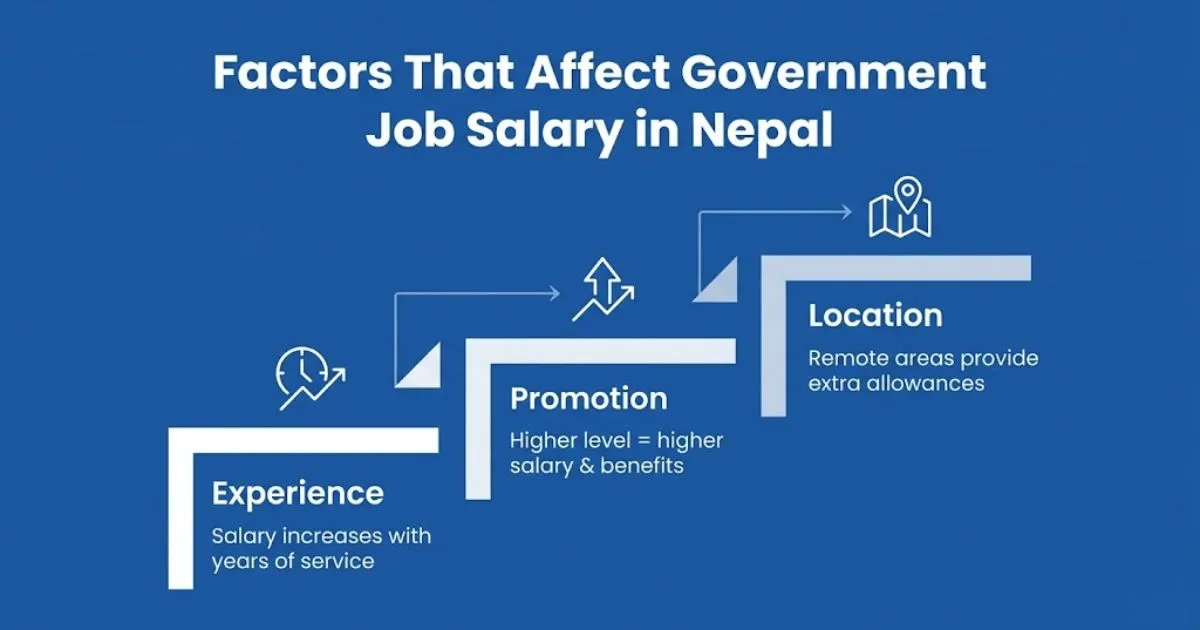
Government job salary in Nepal is not fixed at one level for all employees. It depends on several important factors such as experience, promotion, and work location. These factors together decide how much a government employee earns each month and how their income grows over time.
1. Experience and Years of Service
Experience plays an important role in government job salary in Nepal. Every year, government employees receive a grade increment, which increases their basic salary slowly. For example, an employee earning NPR 30,000 per month may receive yearly increments that raise the salary step by step. The longer a person works in government service, the higher their total monthly income becomes. In addition, long service also helps in getting promotion opportunities. Because of this system, government jobs offer steady and predictable salary growth over time.
2. Promotion and Level Upgrade
Promotion is another key factor that affects government salary in Nepal. When an employee is promoted to a higher level, the basic salary increases significantly. For example, moving from Level 5 to Level 6 or 7 can increase salary by several thousand rupees per month. Higher levels also come with better allowances and more benefits. Promotions are usually based on years of service, internal exams, and performance evaluation. Therefore, career growth in government service directly increases salary and overall income.
3. Geographic Location and Posting Area
Posting location can also affect total government job income. Employees who work in remote or difficult areas may receive extra allowance in addition to their basic salary. This is called remote area or hardship allowance. For example, someone posted in a rural or mountain region may earn more than someone in a city office at the same level. These extra benefits help cover living and travel expenses. So, the place where an employee is posted can impact their total monthly salary in Nepal.
Conclusion
Government jobs in Nepal gives regular monthly income, steady salary growth, and strong job safety for the future. The salary increases step by step with more years of work and promotion to higher levels. From Kharidar to senior officer, the pay becomes higher over time. Employees also get extra benefits like Dashain bonus, pension after retirement, and medical help. Because of these benefits, many people in Nepal prefer government jobs.
If you are preparing for Lok Sewa or thinking about applying for a government job, check the latest salary details before you apply. Knowing the pay scale and benefits will help you plan your career in a better way.