


Starting a company in Nepal is a good option if you want to run your own business legally. Whether you want to open a retail shop, IT company, consultancy, restaurant, or online business, registering your company gives it a legal identity. It also helps you build trust with customers, banks, and business partners.
Many people think company registration is difficult. In some cases, it can be, but the process becomes much easier when you understand the required steps and prepare the necessary documents. You need to choose the right company type, prepare the required documents, and complete the registration process.
In this guide, you'll learn the company registration process, required documents, costs, and the steps to start a company in Nepal.
Table of Contents
- Types of Companies You Can Register in Nepal
- 1. Private Limited Company
- 2. Public Limited Company
- 3. Non-Profit Company
- 4. Foreign Company
- Requirements to Start a Company in Nepal
- 1. Minimum Number of Shareholders
- 2. Directors Required
- 3. Registered Office Address
- 4. Required Capital
- 5. Company Name Selection
- Documents Required for Company Registration
- 1. Citizenship Certificate
- 2. Passport-Sized Photos
- 3. Memorandum of Association (MOA)
- 4. Articles of Association (AOA)
- 5. Office Address Proof
- 6. Other Required Documents
- Step-by-Step Process to Register a Company in Nepal
- Step 1: Reserve the Company Name
- Step 2: Prepare the Required Documents
- Step 3: Submit the Application
- Step 4: Pay the Registration Fee
- Step 5: Receive the Certificate of Incorporation
- What to Do After Company Registration
- 1. Obtain a PAN Certificate
- 2. Register for VAT (If Required)
- 3. Open a Business Bank Account
- 4. Register with the Local Government
- Company Registration Cost and Time in Nepal
- Conclusion
Types of Companies You Can Register in Nepal
Before you register a company, it is important to choose the right company type. The type of company you choose depends on your business goals, the number of owners, and the type of work you want to do. Nepal allows different types of companies, and each one has its own rules and benefits.
1. Private Limited Company
A Private Limited Company is the most common type of company in Nepal. It is a good choice for startups, small businesses, and family businesses. Most people choose this type because it is easier to manage than other company types. The owners have limited liability, which means their personal property is usually protected if the company has debts or financial problems. If you are planning to start a small or medium-sized business, a Private Limited Company is often the best option.
2. Public Limited Company
A Public Limited Company is suitable for large businesses that want to grow and raise money by selling shares to the public. This type of company has more legal rules and requires more shareholders than a Private Limited Company. It is usually chosen by businesses that plan to expand across Nepal or even outside the country.
3. Non-Profit Company
A Non-Profit Company is created to work for society instead of earning profits. It is commonly used by organizations that work in education, health, charity, social service, or community development. Any income earned by the company is used to support its activities rather than being shared among the members.
4. Foreign Company
A Foreign Company is a business that is registered outside Nepal but wants to operate in Nepal. Foreign investors can start a company in Nepal after meeting the legal requirements and getting approval from the concerned government authorities. This type of company is suitable for international businesses that want to invest or expand their services in Nepal.
Requirements to Start a Company in Nepal
Before you register a company in Nepal, you need to meet some basic requirements. These requirements make sure your company follows the law and can operate without problems. If you prepare everything in advance, the company registration process becomes faster and easier.
1. Minimum Number of Shareholders
The number of shareholders depends on the type of company you want to register.
- Private Limited Company: At least 1 shareholder is required, and it can have up to 101 shareholders.
- Public Limited Company: At least 7 shareholders are required, and there is no maximum limit.
A shareholder is a person or organization that owns part of the company.
2. Directors Required
Every company must appoint directors to manage its daily operations and make important business decisions.
- Private Limited Company: At least 1 director is required.
- Public Limited Company: At least 3 directors are required.
In many cases, a shareholder can also work as a director of the company.
3. Registered Office Address
Every company must have a registered office address in Nepal. This is the official address where the company receives government letters, legal notices, and other important documents. The address should be valid and available at the time of registration.
4. Required Capital
You also need to decide your company's authorized capital during registration. This is the maximum amount of share capital your company is allowed to issue. There is no minimum capital requirement for most private limited companies in Nepal, so you can choose an amount based on your business needs.
5. Company Name Selection
Choosing a company name is one of the first steps in company registration. The name should be unique and should not match or closely resemble the name of another registered company. Once your company name is approved by the Office of the Company Registrar, you can continue with the registration process.
Documents Required for Company Registration
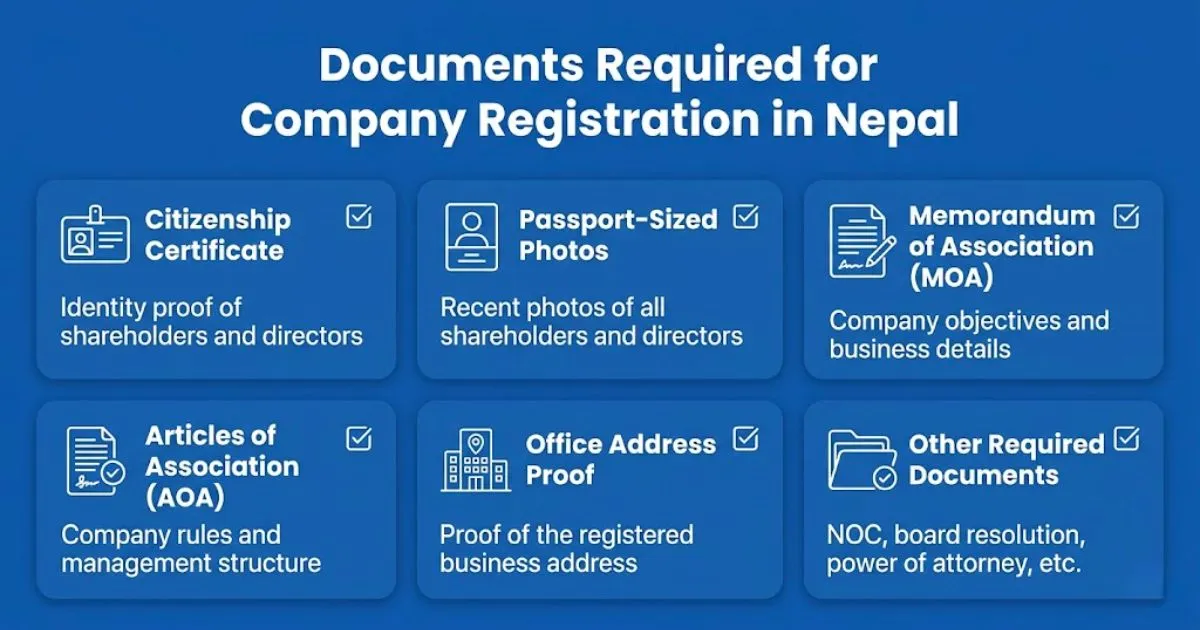
Before you register a company in Nepal, you need to prepare some important documents. Having all the required documents ready can save time and help you avoid delays during the registration process. While the required documents may be slightly different for some businesses, the documents below are commonly needed for most company registrations in Nepal.
1. Citizenship Certificate
You must submit a copy of the citizenship certificate of every shareholder and director. This document is used to confirm the identity of the people who own and manage the company. Make sure the copies are clear and valid before submitting them.
2. Passport-Sized Photos
Recent passport-sized photos of all shareholders and directors are also required. These photos are used for official company records during the registration process. It is a good idea to keep a few extra copies ready, as they may also be needed for PAN registration or other government procedures.
3. Memorandum of Association (MOA)
The Memorandum of Association (MOA) is one of the most important documents for company registration. It includes the company's name, business objectives, registered office address, and details about its share capital. In simple words, it explains what your company will do and what activities it is allowed to carry out.
4. Articles of Association (AOA)
The Articles of Association (AOA) contains the rules for running the company. It explains how directors and shareholders will manage the business, how meetings will be held, and how important decisions will be made. This document helps ensure that the company operates smoothly.
5. Office Address Proof
You must provide proof of your company's registered office address. This can be a house ownership certificate, rental agreement, or another valid document that confirms where your company is located. The office address should be correct because government notices and official letters will be sent there.
6. Other Required Documents
Depending on your business type, you may need to submit a few additional documents. These can include a No Objection Letter (NOC), board resolution, power of attorney, or other documents requested by the Office of the Company Registrar. It is always a good idea to check the latest document requirements before submitting your application to avoid delays.
Step-by-Step Process to Register a Company in Nepal
Registering a company in Nepal is easier when you follow the correct steps. If you prepare your documents and complete each step carefully, you can avoid delays and complete the registration process smoothly. Below are the main steps to register a company in Nepal.
Step 1: Reserve the Company Name
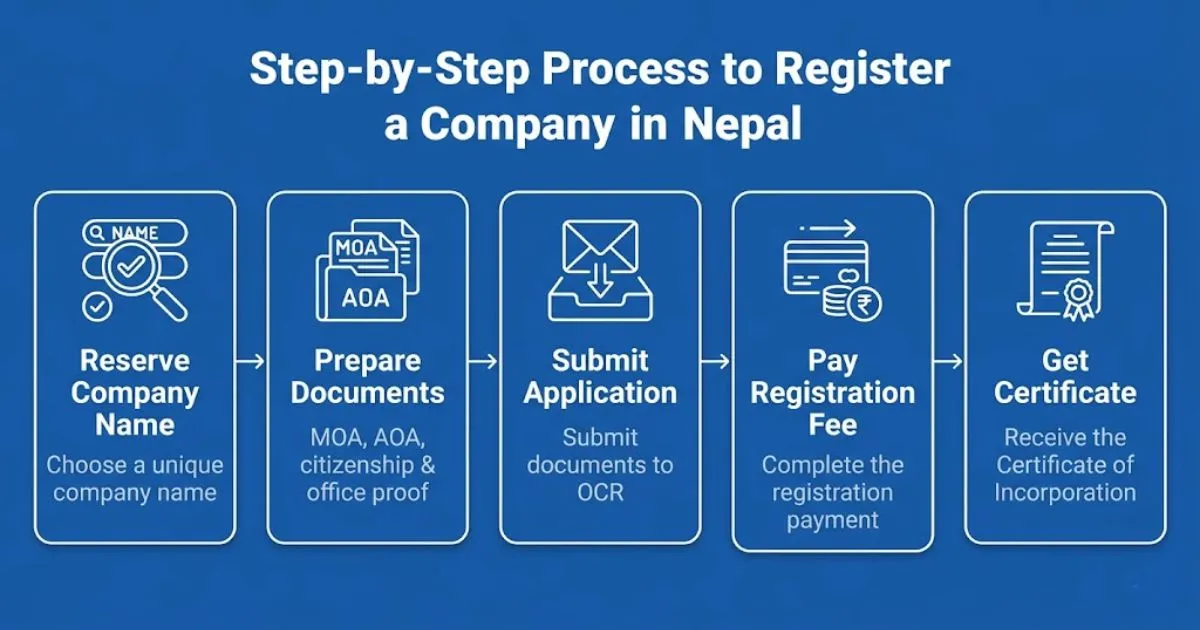
The first step is to choose a unique name for your company and apply for name approval through the Office of the Company Registrar (OCR). The company name should not be the same as or too similar to an existing registered company. If your preferred name is already taken, you will need to choose another one.
Step 2: Prepare the Required Documents
After your company name is approved, prepare all the required documents for registration. These usually include citizenship certificates, passport-sized photos, the Memorandum of Association (MOA), the Articles of Association (AOA), and proof of your registered office address. Make sure all the information is correct before submitting the documents.
Step 3: Submit the Application
Once your documents are ready, submit the company registration application to the Office of the Company Registrar. The office will review your application and check whether all the required documents and information have been provided. If any information is missing, you may be asked to make corrections before approval.
Step 4: Pay the Registration Fee
After your application is accepted, you need to pay the company registration fee. The registration cost depends on your company's authorized capital. Keep the payment receipt safely because it may be required during the registration process.
Step 5: Receive the Certificate of Incorporation
Once your application is approved and the registration fee has been paid, the Office of the Company Registrar will issue the Certificate of Incorporation. This certificate confirms that your company is legally registered in Nepal. After receiving it, you can continue with other registrations, such as obtaining a PAN, opening a business bank account, and starting your business operations.
What to Do After Company Registration
Registering your company is only the first step. After you receive the Certificate of Incorporation, there are a few more things you need to complete before your business can operate smoothly. These registrations help your company meet legal requirements and make it easier to run your business in Nepal.
1. Obtain a PAN Certificate
After registering your company, you should apply for a Permanent Account Number (PAN) from the Inland Revenue Department (IRD). A PAN is required for tax purposes and is needed to issue bills, file tax returns, and carry out many business activities. Most businesses cannot operate legally without a PAN.
2. Register for VAT (If Required)
Not every business needs to register for Value Added Tax (VAT). However, if your business meets the VAT registration requirements set by the government, you must register with the Inland Revenue Department. VAT registration allows you to collect VAT from customers and file VAT returns as required by law.
3. Open a Business Bank Account
You should open a business bank account in your company's name. This helps you keep your personal and business money separate. It also makes it easier to receive payments, pay suppliers, manage business expenses, and maintain proper financial records.
4. Register with the Local Government
Some businesses may also need to register with their local municipality or rural municipality before starting operations. The registration requirements can vary depending on your business type and location. It is a good idea to check with your local government office to make sure you have completed all the necessary registrations.
Company Registration Cost and Time in Nepal
The company registration cost in Nepal depends on your company's authorized capital. In general, companies with a higher authorized capital pay a higher registration fee. Besides the government fee, you may also have other costs, such as document preparation, legal services, and PAN registration. You can check the table below to see the registration fee based on your company's authorized capital.
If all your documents are ready and the information is correct, company registration in Nepal usually takes 3 to 15 working days. However, the process may take longer if there are problems with your company name, missing documents, or incorrect information. Preparing all the required documents before applying can help you complete the registration process more quickly.
Conclusion
Starting a company in Nepal is a great way to turn your business idea into a legal business. Although the registration process may seem a little difficult at first, it becomes much easier when you understand the required steps and prepare the necessary documents. By choosing the right company type, completing the registration process, and following the legal requirements, you can start your business with confidence.
Whether you are starting your first business or expanding an existing one, proper company registration gives your business a strong foundation for future growth. Take your time, follow the process carefully, and you will be ready to run your company legally in Nepal.